

Attract Bluebirds to Your Backyard: Meet Their 4 Key Needs
If you’re fond of backyard birds and how much colorful entertainment they provide for people of all ages, you’re no doubt curious about attracting much-loved bluebirds to your property. Be it mountain, western or eastern bluebirds, these elegant songbirds are well sought-after. Yet, like many other bird enthusiasts, you may not know how to attract bluebirds to your yard.
As with different species of birds, these vivid-colored minstrels search far and wide for the right type of environment, one that can support their specific dietary and nesting needs. Luckily, by reading our detailed article, you’ll not only learn exactly what they require to come to your garden, backyard or green space, but you’ll also discover how to set-up the perfect bluebird habitat. Read on to enjoy the benefits of these charming, bright thrushes no matter the season.
Table of Contents
- About bluebirds
- How to attract bluebirds to your home
- What to feed a bluebird
- Suet: a favorite wintertime treat
- Bird seed: do bluebirds eat that stuff?
- Water for your bluebird buddies
- How to ensure the perfect bluebird shelter
- Providing nesting sites
- Keeping an eye on your new neighbors
About bluebirds
There are three different types of North American bluebirds:
- Mountain bluebirds
- Western bluebirds
- Eastern bluebirds
These tiny thrushes, which are small to medium-sized ground living birds that mainly eat insects, other invertebrates, and fruit, are songbirds related to the gray catbird and American robin.
Although all three species of bluebirds are considered migratory, there’s actually a significant portion of the population that occupies their preferred habitat year-round. That’s to say, if you provide bluebirds with precisely what they need to survive, they’ll be motivated to stay on your property indefinitely. As such, many bird enthusiasts are able to attract bluebirds to their green space, regardless of the time of year.
Backyard birder or not, you’ll appreciate their unmatched plumage of rich blue backs and rust or pale underparts. Of course, just their gorgeous feathering makes them a desirable garden guest. However, their stunning looks aren’t the only reason these azure-winged singers are famous. Since they’re voracious insectivores, eating a large number of moths, insects, and larvae, they’re much-loved for pest-controlling perks.
But, when you combine their beautiful plumage and insect-eating habits with a delightful warbling serenade, it’s easy to see why anyone would want to attract these lovely little creatures. Though they indeed sing their tunes throughout the year, summer breeding season showcases some genuinely moving melodies.
More reading:
- How to Attract Cardinals
- How to Attract Blue Jays
How to attract bluebirds to your home
To attract bluebirds to your home, you’ll need to provide:
- The right type of food (for these often-finicky eaters)
- Clean, fresh water
- Nesting sites
- Shelter
Though certainly not an impossible feat, you will need some patience while trying to catch their discerning eye.
What to feed a bluebird
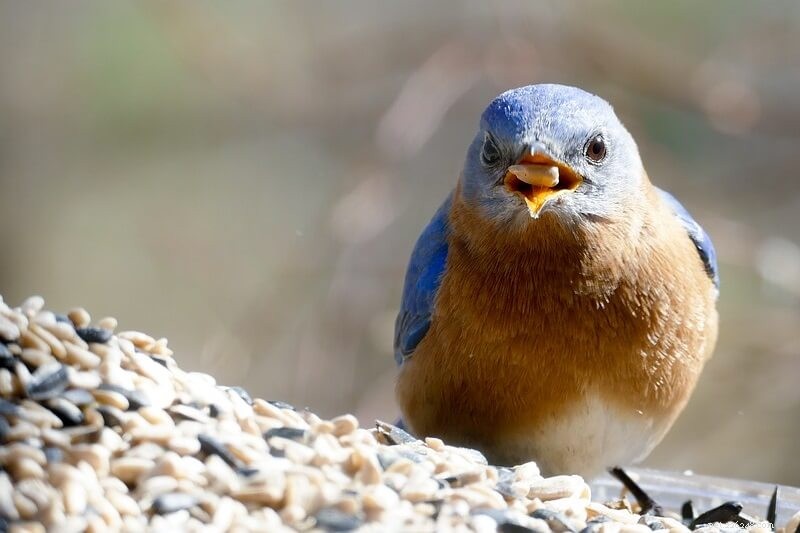
Bluebirds eat a broad assortment of insects, especially during the nesting season when hatchlings demand copious amounts of protein for adequate growth. Whether you’re attracting bluebirds, blue jays, cardinals or any other types of birds, it’s crucial to avoid pesticide use. Birds need a healthy food source, and if you’re continuously spraying your green space with poison, you’re naturally removing their primary source of sustenance.
To ensure there’s enough food for all the birds in your yard, consider augmenting the natural insect supply with additional:
- Crickets
- Grasshoppers
- Insect larvae
- Mealworms
To provide these treats, you can use platform, tray or ground feeders.
Aside from insects, bluebirds also eat an extensive assortment of berries, such as:
- Elderberry
- Holly
- Sumac
When you add these berry-producing bushes to your garden, they help design a bluebird-friendly landscape.
Suet: a favorite wintertime treat
Another excellent addition to their diet is suet. Offered as shreds or crumbles, suet is helpful for drawing bluebirds to your home, especially if you purchase the fruit or insect blends.
Bird seed: do bluebirds eat that stuff?
Now, when you think of feeding birds, no doubt birdseed it at the top of the list of bird food. However, bluebirds are a bit fussy with their grub, preferring fresh fruit and insects above all else. Having said that, many individuals have had great success with bird seed mixes, bluebird nuggets and suet nuggets, provided they purchase a blend that incorporates fruit, mealworms or other insects. While they do enjoy sunflower seeds and other varied mixes, your best bet is trying out something that incorporates their favorite foods.
Water for your bluebird buddies
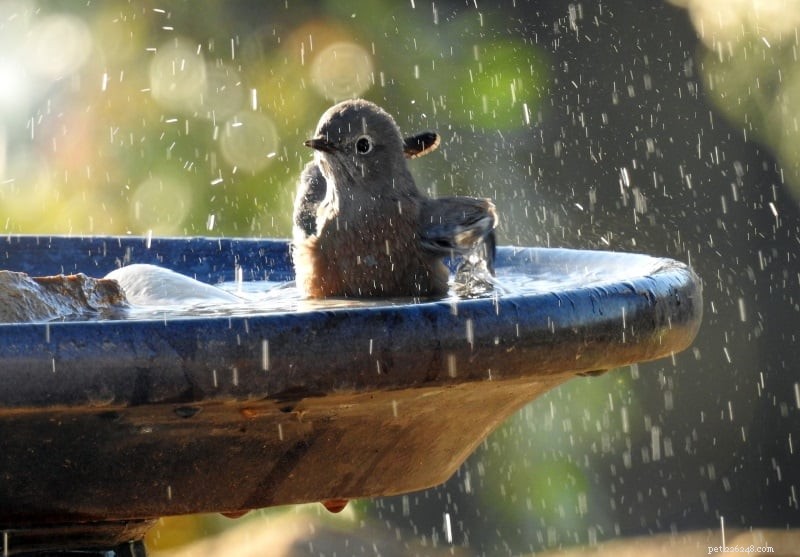
It’s no surprise that bluebirds need clean, fresh water for drinking, but they also require it for bathing as well. That’s why, if you install a birdbath in your green space, you’re more likely to have these visitors move in permanently. When looking for the ideal birdbath, acquire one with a full, low basin that can comfortably fit 1-2 inches of water. These thrushes travel in large groups, so you’ll be searching for a bath that can fit the whole family if need be.
Attract their attention further with a bath that has a fountain or a bubbler, they love glittering sparkles and splashing noises. As mentioned, these blue beauties travel in family flocks, so choose a design that can comfortably accommodate mom, dad, and the wee little ones. This feature is essential as you’ll sometimes witness close to a dozen birds all vying for a drink of water and some space to bathe. If you live in the winter areas or northern reaches of bluebird territories, you might want to invest in a heated birdbath to avoid frozen water in colder months.
How to ensure the perfect bluebird shelter
Bluebirds are less likely to visit a garden or green space with dense foliage or thicket-like growth. Instead, they usually prefer mature trees that are widely spaced. Ideally, you would keep just a select few mature trees in your yard, but also ensure low ground cover surrounding broad, open grassy areas. These give our ground-feeding thrushes security while foraging.
An excellent choice for plants is berry bushes as they provide a good food source. As well, they guarantee both shelter and food. In wintertime, add medium or large roosting boxes to supplement their shelter. Not only do these leave hollow spaces for roosting birds, but they also grant protection from freezing temperatures and storms.
Providing nesting sites
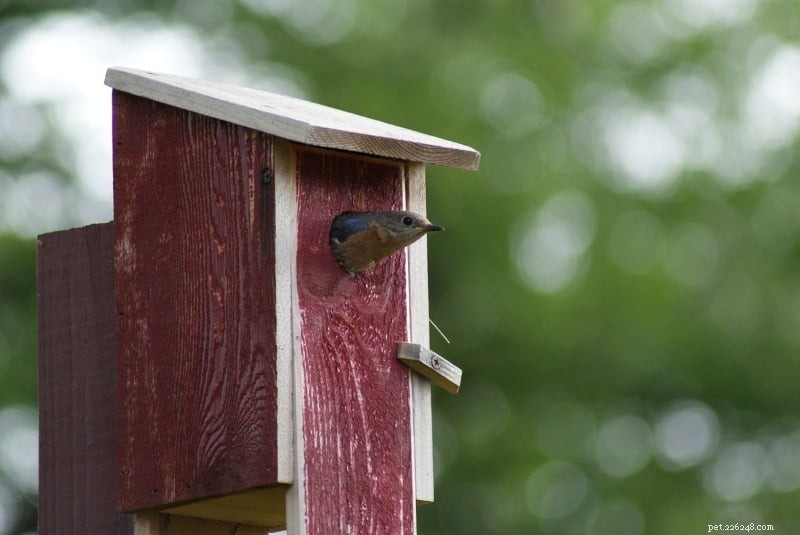
As cavity-nesting birds, bluebirds frequently set-up residence in appropriately-sized wooden birdhouses. Ideally, their houses should be in an open area above ground, about 4-7 feet high. The entrance should be facing away from the windiest direction.
To further attract their attention and nesting consideration, offer these songbirds nesting materials such as:
- Cotton scraps
- Pine needles
Keeping an eye on your new neighbors
Believe it or not, these feathered friends will need your help to monitor their homes. European starlings and house sparrows are commonly known to usurp bluebird nesting spots, harming the little thrushes in the process. As such, keep an eye on their birdhouses for such possible takeovers. If a bluebird family decides to migrate and moves out of their birdhouse, then encourage other bluebirds to move in by cleaning it out. That way, you’ll always have an influx of bluebird neighbors to share your green space.
- The Science of Dog Dominance: How They Build Social Hierarchies
- Determining Whether Your Dog Benefits from a Companion
- Identifying a Chihuahua: Key Traits & Characteristics
- The Power of a Cat's Vision: Understanding Their Superior Nighttime Sight
- Attract Orioles to Your Yard: Proven Feeding & Nesting Strategies
- The Life Cycle and Biology of Frogs: From Eggs to Adult
- Unraveling the Secrets Behind Peregrine Falcons' Record-Breaking Speed