

Great Blue Heron: Identification & Habitat Guide
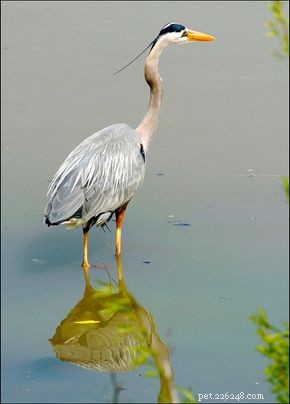 Great Blue Heron
Bird Spotting: A large, grayish bird with an elegant long neck, the great blue heron can be mistaken for similar-looking birds, such as the sandhill crane. The flight posture gives a clue as to which bird you have spotted. While the sandhill crane flies with its neck extended, the great blue heron roams the sky with a folded neck. The legs of the great blue are green and the bill is yellow.
Habitat: Great blue herons always make their homes near sources of water, such as lakes, ponds, rivers and marshes.
Nesting: This bird likes to nest and incubate its three to seven pale greenish-blue eggs in colonies. Their nests are shallow and constructed with sticks, but lined with softer materials. Nests can usually be found in a tree, but may also be placed on the ground concealed by the reeds of its marshy habitat.
Bird Bite: This bird does not have a discriminating palate. Fish, frogs, small mammals, reptiles and even birds can be on the menu of the great blue heron.
- Blue‑Rumped Parrot: A Gentle, Unique Companion for Apartment Living
- 4 Proven Strategies to Attract Blue Jays to Your Yard
- Song Sparrow – Quick Identification & Habitat Guide
- Turkey Vulture: Identification, Habitat, and Behavior
- Stunning Bird Photography: Owls, Great Blue Herons, and Weaverbirds
- Blue Jay: Characteristics, Habitat & Nesting
- Ideal Bluebird House Dimensions: Expert Design Tips