

Do Cats Experience Emotions? A Scientific Perspective
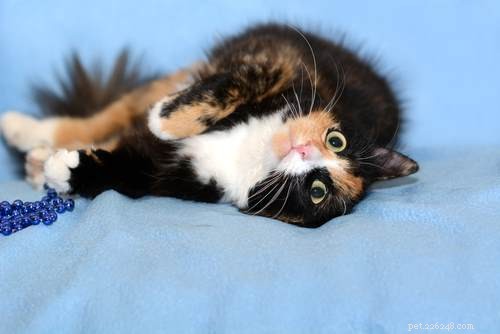
Cats are wrongly perceived as indifferent and ‘none of your business’ type pets. They are seen as self-centered, moody woman who knows how to get things done at any cost.
Various researches done on canine’s mind have piled up through years due to their higher Emotional Quotient (EQ), Intelligence Quotient (IQ), and other cognitive skills. Dogs with highest emotional intelligence include German shepherd, Labrador, etc.; imagine how trainable a German shepherd lab mix would be!
Do Cats Recognize Human Emotions?
Recent research on feline recognition of emotion has found that cats can recognize human gestures and expressions, and they behave differently to these emotions.
Cats can pick on human emotions. BBC mentions a study of Jennifer Vonk and Moriah Galvan, from Oakland University, that was conducted on 12 cats. It found that cat stayed near the owner during happy moods, i.e., smiling expression, and behaved defensively when the owner frowned or expressed anger.
Are Cats Emotionally Intelligent?
A new criterion of success at academic and practical level is high emotional quotient (EQ). Pets are considered emotionally intelligent and are role models for kids as well as elders to learn to handle emotions. Companion dogs are proven to polish children emotional responses in a better way, but cats are equally emotionally intelligent too.
Before the debate begins, it should be made clear that emotional intelligence is the self-awareness of emotions, managing emotions wisely, and having an ability to understand others’ emotions better. It helps in developing moral values and better social skills.
Charles Darwin studied emotions more than a hundred years ago and predicted that emotional exchange works way better than verbal interaction. His viewpoint is that “verbal channel, language, is a relatively poor medium for expressing the quality, intensity and nuancing of emotion and affect in different social situations…[and] the face is thought to have primacy in signaling effective information.” (1, 2)
1. Management of Emotions in Cats:
According to traditional thinking, emotions are culprits of bad decisions as it was portrayed in the tragic plays like Oedipus Rex and that of Shakespeare. Research has shown that emotional management is the key to making wise decisions.
Cats are good managers in terms of emotions, and use moods smartly by getting things done. A cat will complete the task no matter what and how.
You can see your purring ball chasing a rat for hours, or playing with the kid only to avoid fights. The owner’s happy moods are used by cats to convince him to pet her in the lap.
2. Understanding Human Emotions:
Companion pets are attuned to the owner’s mood swings and expressions and respond accordingly—as per their respective emotional intelligence.
If they stay in contact with the owner, they can boost his moods within no time. The sense of touch increases the release of oxytocin, the bonding hormones, as well as endorphins, the feel-good hormones.
3. Self-awareness of Emotions:
Regarding self-awareness of emotions in cats, no single answer can be provided. Some researchers consider that cats are well aware of their own emotions, and know how to use them for staying determined on a decision. Some consider that cats are not clear about their emotions, but are able to recognize human emotions, which act as precursors for a change of body language in cats.
Cats are emotionally intelligent in their unique way. Due to a lack of research on cat’s brain and emotional responses, no single line of defense can be drawn.
References:
1 Bradshaw, G.A. 2010. You see me, but do you hear me? The science and sensibility of trans-species dialogue. Feminism and Psychology, 20(3) 407-419.
2 Schore AN (2005b) A neuropsychoanalytic viewpoint: Commentary on Steven Knoblauch. Psychoanalytic Dialogues 15(6), 829-854.
About the author

Fiona Appleton is a Labrador owner. She is the manager of ultimatehomelife.com that has been developed to help people solve the troubles of pet ownership. She is an active advocate of animal protection campaigns. She wants people to understand that dog-behavior is reflective of our behavior.
- Pet Behavior
- Pet Breeds
- Pet Names
- Pet Adoption
- Pet Training
- Cat Stories
- Pet Health
- Adorable Pets
- Cats
- What Emotions Do Dogs Truly Experience? A Scientific Overview
- Exploring Canine Emotions: Do Dogs Experience Feelings?
- Understanding Cat Emotions: What Feelings Do Cats Experience?
- Understanding Feline Asthma: Symptoms, Causes, and Care
- Do Cats Have Belly Buttons? Discover Where the Navel Lies
- The Purpose of Cat Whiskers: How They Navigate and Protect
- Can Cats Eat Honey? A Vet‑Approved Guide to Raw Honey and Pet Health