

Understanding Cat Biting: Causes, Consequences, and Prevention Strategies
 As any cat owner out there knows, dogs are not the only ones that bite. Cat biting can come in the form of gentle love bites or in the form of rough, sudden bites that can lead to actual injuries.
In fact, cats can become extremely aggressive and their biting is nothing to be taken lightly. Wounds caused by cat biting can be serious and should always be dealt with properly. Since no cat owner wants to go through this, everything other than love bites is behavior that should be stopped. Cats can actually be trained out of biting by using some simple techniques.
However, it is ideal to train kittens not to bite their masters, not even during playing, so that this type of aggressive behavior does not come up when they are adults. But to be able to train a cat not to bite, it is essential that you understand why it is doing that in the first place. This will give you leverage in developing the ideal plan for your specific situation.
Why do cats bite?
First off, biting is instinctive behavior for cats, so you should never expect that you will train your cat to stop biting. What you can do is to train your cat to stop biting people. There are several types of situations during which cats resort to biting. Each of these is tailored to its cause.
1. Cat love bites vs Cat warning bites
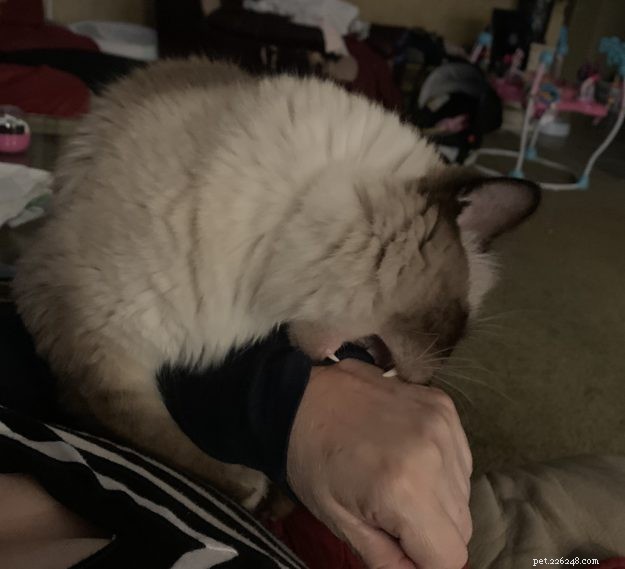
Love bites are a unique way of showing affection, which should be cherished and appreciated. These are more nibbles than bites. They are not supposed to hurt since they are intended as something positive. Cats usually give them during especially tender play sessions with their masters.
However, it is very important that owners know how to interpret their cat’s behavior. Love bites, which are a positive thing can easily be confused with warning bites. Sometimes when petting a cat, even if it looks like it is enjoying every moment of it, you may be surprised to get bitten suddenly.
This type of bite is a warning that you should stop petting the cat. This happens because cats get can get overstimulated when they are petted, which turns it into an unpleasant and maybe even painful experience for them. Their response is a warning bite.
To distinguish love bites from warning bites, all you have to do is pay attention to the cat’s behavior as you pet her. If you notice that it is getting agitated, if it is moving its tail, or making long meowing sounds, then you should look out for the warning bite.
On the other hand, if your cat is excited, rather than agitated, then you may be getting one of the good love bites.
How to Stop It
It is not up to you to decide when a cat becomes sensitive to your petting. What you can do to avoid warning bites is to pay attention to the cat’s behavior. If you notice it becoming increasingly agitated, then you should probably stop before you get bitten.
As for the love bites, enjoy them, but if they turn from nibbles to something more painful, then it may be time for you to put an end to it. Even if it springs from something positive, it is very important that you stop your cat every single time it bites you. If you notice any signs of stronger aggression, such as dilated pupils or the ears leaned back, you should know that your cat is ready to fight.
This is when you have to dominate it to contain the situation. Stop and slowly move away from the cat while watching her.
2. Teething
The teething phase kicks in when kittens lose their baby teeth, which happens at approximately 9 weeks. It lasts until the permanent teeth are fully formed, which happens at 5-6 months. During these months, kittens experience gum sensitivity of various intensities and even painful episodes, which is why they like to chew on as many things as they can.
A common mistake that cat owners make is to let their kittens bite them during the teething phase. Not only is this painful during those months, but it also makes cats believe that this is normal behavior, which means that they will continue to do so as adults.
How to Stop It
Managing the teething phase entails two essential steps:
A. Playing with the right toys The need that kittens feel to bite and chew on as many things as they can during the teething phase is extremely real. This is why it is very important that they have the right toys for this period. Chew toys will help them deal with most of the unpleasant things they feel. You have to play with them with the chew toys on a daily basis to engage them.
B. Bite-free playing When you play with your kitten, it is most likely going to resort to clawing and biting you. As soon as this happens, you have to alert it and put the play session to an end. Use a cue to alert it and use it every time the kitten bites you. Then, you have to become indifferent to the kitten’s attempts to get you to keep playing.
This will serve as a lesson and it will remember that biting makes you stop playing with it. This includes biting that you may not consider painful because your aim should be to stop the behavior altogether.
Never let your cat use your fingers as toys because it will grow up to bite them as an adult as well. While the training sessions with the kittens may be a bit tedious, they will prevent most of the following situations, which are far more difficult to deal with.
3. Regular biting when playing
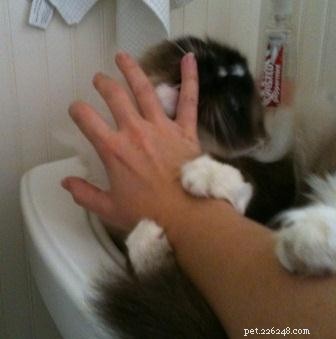
Cats get to bite on a regular basis if their owners have allowed them to do so as kittens. Since this is regarded as normal, tolerated behavior, they will bite every time they play with their masters. This happens when the interaction is initiated by the owner, but also when it the cat wants to play.
When the cats initiate the play session in an aggressive way, it may look and feel like an attack. A typical situation is when people have their ankles or feet bitten by their cats as they walk around the house.
This is called play aggression and it is directly linked to the cat’s instinct to hunt. It will direct the energy it has for hunting towards its owners, which means that they will get bitten and scratched because they are treated as prey.
How to Stop It
If your cat attacks you in the house and bites your feet, then the first thing you should deduce is that it is not getting enough attention and definitely not enough play time. While it might look and feel like an attack, your cat is most likely playing with you, in a more or less aggressive manner.
The best solution is to entertain your cat in a positive way. If your cat is trying to make up for all the animals it is not hunting in the wild, it is up to you to give it some toy animals to hunt around the house and to supervise the process. Simply put, you have to play with your cat every single day.
Use toys that will make your cat run and jump after them. The toy will simulate their pray and they will let out that hunting energy in a positive way, which will keep them from biting and attacking. Some cat owners complain that their cats do not enjoy playing. What they should consider is that they may have not found the right toy for their cat.
Ragdoll Cat Biting Issue Discussion on Floppycats’ Facebook
4. Sudden biting when playing
A very common situation that cat owners come across is getting bitten while playing when they least expect it.
The cat appears to be enjoying the time spent with the owner, and all of a sudden, it starts biting.
This type of behavior is usually liked to traumatic events in the cat’s early life. Ragdoll cats that come from catteries may have been taken away from their mother and siblings too soon or they may have not been socialized properly.
As for adopted Raggies, there is a chance that they have gone through trauma before they found their home. If the biting happens during petting, rather than playing, the cat might be protecting a certain area because it is sensitive in some way. Our Facebook community had some suggestions on this post and on this post.
How to Stop It
If your cat attacks you in the house and bites your feet, then the first thing you should deduce is that it is not getting enough attention and definitely not enough playtime. While it might look and feel like an attack, your cat is most likely playing with you, in a more or less aggressive manner.
The best solution is to entertain your cat in a positive way. If your cat is trying to make up for all the animals it is not hunting in the wild, it is up to you to give it some toy animals to hunt around the house and to supervise the process.
Simply put, you have to play with your cat every single day. Use toys that will make your cat run and jump after them. The toy will simulate their prey and they will let out that hunting energy in a positive way, which will keep them from biting and attacking.
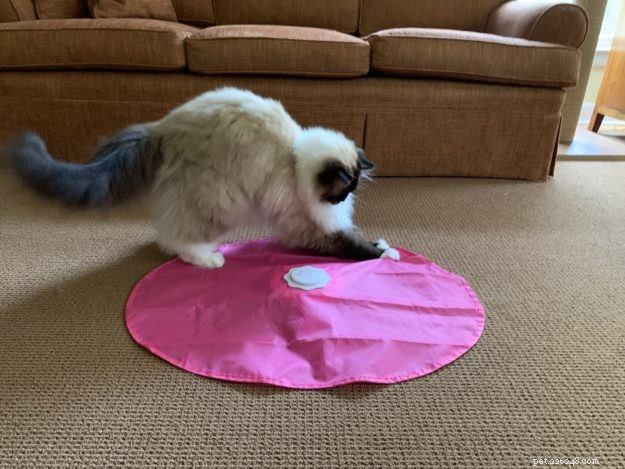
Some cat owners complain that their cats do not enjoy playing. What they should consider is that they may have not found the right toy for their cat.
The key to stopping this kind of behavior is figuring out what is causing it. However, that is not always possible. If that is the case, the owners can try out all the other methods and see if there is any improvement.
As an example, they can introduce more play sessions with various types of toys and stimulate the cat while teaching to be bite-free. If the cat resorts to biting only when a certain sensitive area is about to be touched, then it is important to get it to the vet. A full medical workout can shed some light on the matter because it may reveal if there are any local issues making the cat behave this way.

Aggressive biting Either of the situations described above may escalate to aggressive biting when the cat draws blood. In this situation, the issue is dominance and the cat will try its hardest to assert its spot as the alpha animal in the house.
Due to traumas from the past or because of recent emotional events for them, such as a welcoming a new member to the family or losing one, cats may feel the need to dominate their owners.
If they are permitted to do this, then there is going to be a fair share of biting involved. Please note that when aggressive behavior comes up because of deep-rooted traumas, it is much more difficult to pinpoint the triggers and the development of the behavior. https://www.facebook.com/floppycats/posts/10154128389943038
The most important thing that you have to do is to reestablish yourself as the dominant one. This does not mean that you will be aggressive in any way with the cat, but it does mean that you have to be as firm as possible. Do not use water sprays or newspapers because these only reinforce your cat’s aggressive behavior. Your aim is to dominate your cat, not to punish it.
This means that you have to speak in a firm voice and develop a cue to use every time after the biting takes place. Do not shout at the cat, but keep a firm voice. Another thing that will help you dominate your cat is to stare it in the eyes directly and fiercely. Dominance is all about the attitude, so you have to own your role 100%.
After the biting occurs, say the cue you have chosen, and ignore the cat completely for a few minutes. This will also emphasize that the biting is the problematic behavior. In addition, if your cat has not been neutered yet, then it may be time for you to make this step, especially if you have a male cat. After they are neutered, cats are usually calmer and the aggression may subside.

Wounds Caused by Cat Biting
Most of the time, cats bites lead to superficial wounds, but aggressive cats can cause serious injuries, so never underestimate them. Taking care of cat bite wounds is extremely important, even if they are not deep. Applying disinfectant is absolutely crucial, even though you know everything about the cat’s environment. You should also expect to feel quite a bit of pain.
When cats bite, they cause puncture wounds, which are usually accompanied by local inflammation and bruising. If you are bitten by a stray cat, an elderly cat, or one with unknown whereabouts, it is best to see a specialist. Cats have bacteria in their mouths, which they transmit when biting. This may lead to local infections of the cat bite, which should not be ignored.
Ragdoll Cat Behavior Problems
There could be a number of causes of wider behavioral problems with your cat. If they’ve picked up some aggressive traits then consider whether one of these may be the root cause.
Is your Ragdoll showing any signs of illness?
Consider whether you’ve noticed any changes in the way your cat is behaving in general, and whether they have any potential symptoms of illness, including a change in how frequently they’re using their litter box. One of the most common reasons for cats to bite is if they are in pain, whether that’s lashing out in general or because you’ve petted them in a sore area.
Biting may happen when your cat suffers from common health problems but if you’ve had your kitty for a long time and they’re uncharacteristically biting you then it might be a sign of a more severe pain, whether that’s a problem with the kidneys like a urine infection or bladder stones or something else.
If you think your cat might be misbehaving because of a potential illness, get them checked out by your veterinarian as soon as you can.
Is your cat spayed or neutered?
Neutering male cats and spaying females has a number of health benefits, one of which is either stopping or reducing behavior problems including aggression. It’s one of the reasons the AAFP recommends spaying and neutering because it increases the likelihood of cats being kept by their owners.
It can take up to a month after the procedure for your cat’s behavior to calm down. If it doesn’t – and it won’t always – then you can look into alternative reasons.
Does your kitty have a history of neglect or abuse?
It’s horrible to think, but sometimes a cat that you’ve picked up from the shelter might have gone through some pretty nasty abuse with their prior owner, or they might have been neglected. Rescue cats aren’t always comfortable with human interaction because you don’t know how previous humans have treated them. It might not even be a case of neglect or abuse, but if a Ragdoll kitten hasn’t been raised by a proper breeder they may not have picked up good behavior habits.
If your rescue cat has an aggressive temperament it may just take time to build that bond.
FAQs
How do I make my Ragdoll nicer?
If your cat is being aggressive, determine whether they are in pain or if they’re trying to warn you that something you’re doing is making them uncomfortable. They might just be playing in a way that you feel is too aggressive too.
Remember that just because the Ragdoll breed is known as one of the calmer cat breeds, that doesn’t mean every single cat is going to be really nice. Cats will always have their own personalities and characteristics, so you can’t guarantee that every cat will be relaxed with you.
If you want your cat to be nicer, you can try to spend more time with them and build that bond, but some cats may just be more aloof and not as much of a fan of socializing with you.
Why is my Ragdoll cat so aggressive?
Your cat may be aggressive due to hormones, particularly if they haven’t been neutered or spayed. It may also be a sign that they are in pain, or they may just be trying to assert dominance.
It’s not uncommon for cats to get a little bit bitey during grooming, if you’re trying to get a lot of mats out of their fur. Combing through matted hair can be painful and your cat will want you to stop. And so if you’re combing near the forehead or chin, close to the mouth, don’t be surprised if you get a bite.
If that could be the reason, try a different brush or comb, and make sure you keep on top of the tangles – there won’t be as many if you’re grooming your cat regularly.
Why does my cat bite me unprovoked?
If your cat is biting you unprovoked, be conscious of your own behavior. If you’re petting them, it might be making them uncomfortable or even causing them pain if they have an undetected illness.
Otherwise, your cat may be playing or trying to assert its dominance. Biting will usually have other behaviors tied to it, so keep an eye on your cat’s overall demeanor.
If your cat is normally placid but has started biting, check for symptoms of illness, including how often they’re using their litter tray – they might have a common health issue or something more serious like kidney disease, and the biting may be caused by frustration from the pain.
- Pet Behavior
- Pet Breeds
- Pet Names
- Pet Adoption
- Pet Training
- Cat Stories
- Pet Health
- Adorable Pets
- Cats
- Understanding Cat Biting: Causes, Prevention, and Effective Solutions
- Why Cats Overgroom: Causes & Proven Solutions
- The Science Behind a Cat’s Purr: What It Means and Why It Happens
- Understanding and Preventing Kitten Biting: A Practical Guide
- Dog Scooting Explained: Causes & Effective Solutions
- Stop Cat Biting: Proven Training & Quick Fixes for Gentle Pets
- Expert Guide to Stop Your Cat From Meowing at Night