

7 Proven Steps to Help Your Cat Feel Comfortable with Handling
- To begin training, pick a moment when your cat is feeling relaxed and in a familiar, safe environment with no distractions. Then set your training mat/towel out on the floor and sit at your cat’s level with a small pot of treats beside you.
- If your cat approaches and is calm (preferably standing still or sitting) say your chosen word, eg ‘touch’, and then move your hand to touch the cat in an area they like being touched, eg the side of the neck, for one second. To build a strong positive association with being touched, give them a treat directly afterwards.
- If your cat is comfortable with the handling, repeat steps one and two during short sessions that last a maximum of two minutes.
- Once your cat is comfortable with this, start moving your hand towards an area the cat is less comfortable with being touched. For example, move your hand from the side of the neck to the back of the neck. Again, repeat this process during short sessions that last a maximum of two minutes.
- When they are comfortable with this, you can then start to build up the duration of the handling from one second each time to two or three seconds.
- Once your cat is comfortable with this, you can then move the training session to different environments, eg on the table to prepare them for vet visits. Remember to keep using the training mat/towel.
- When you next take your cat to the vet, take the mat/towel with you and explain to your vet what you have been doing so they can work with you to hopefully make the check up a stress-free experience for everyone.
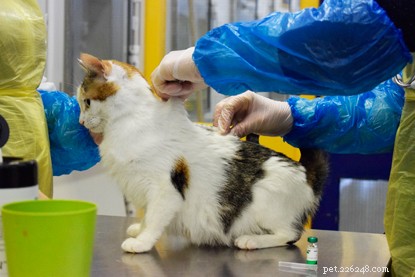
Getting your cat comfortable with handling should make vet visits easier
If, during training, your cat does indicate that they are uncomfortable, it means that you have moved too quickly and should go back a step. Make sure your moggy always has the option to move away throughout the training, never restrain them.
This training is only for cats who have a good bond with their owner but are uncomfortable with some areas of handling. It is not suitable for fearful cats that hide away from humans or show aggression towards them. In these instances, you should contact a qualified behaviourist for advice.
If you have any problems training your cat, take a look at our cat behaviour advice or contact a qualified behaviourist.
- Pet Behavior
- Pet Breeds
- Pet Names
- Pet Adoption
- Pet Training
- Cat Stories
- Pet Health
- Adorable Pets
- Cats
- 7 Proven Steps to Get Your Cat to Respond When You Call Their Name
- How to Teach Your Cat to Sit on Cue: Easy Steps & Tips
- How to Train Your Cat to Use a Cat Flap: Simple, Effective Steps
- Master Cat Training: Teach Your Feline Fun Tricks Today
- Master Clicker Training for Your Cat: Strengthen Bonds & Positive Behavior
- How to Train Your New Kitten: Essential First Steps
- Master Cat Sign Language: 3 Proven Steps for Clear Communication