

Interview: Dr. Tony Buffington – Leading Veterinary Scientist & Educator
Interview with Dr. Tony Buffington, DVM, PhD, DACVN
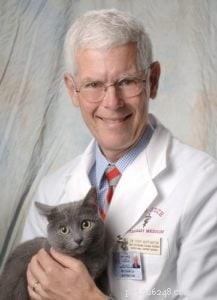 Dr. Tony Buffington is an emeritus professor of veterinary clinical sciences at The Ohio State University College of Veterinary Medicine, a clinical professor (volunteer) at the UC Davis School of Veterinary Medicine, and an honorary research fellow at the University of Bristol, School of Veterinary Sciences. He received bachelors, masters and PhD degrees in nutrition and the Doctor of Veterinary Medicine degree from UC Davis, and is board-certified in veterinary nutrition. His clinical interests include developmental origins of health and disease, stress effects on disease, obesity, evidence-based medicine, and effective medical communications. His research has documented the effects of environmental stressors on disease in cats, and the role of effective environmental enrichment in mitigating them to promote recovery. Dr. Buffington has published more than 120 scientific papers, 30 book chapters, and 3 books.
How did you get interested in cats? How old were you when you had your first kitty?
I grew up on an Angus cattle ranch in central California, so I’ve been around cats (and many other species of animals) for as long as I can remember. I guess I got my very own first kitty, a tabby male named Baxter, as a wedding present from a friend of my wife.
Do you have cats now?
No, we don’t. Baxter lived with us from 1972-1992. We got an orphaned kitten, Stormy, in 1993, who was with us until 2012. At that time I was close to retirement and our return from Ohio to California, so we have waited until we get settled to get another. I’d like to get a littermate pair this time, who probably will be with us for the rest of our lives. 🙂
In this video, I found out that you got into this business (although I am unsure of what “this business” is exactly) because cats stopped using the litter box. I would love to learn the top three reasons you have discovered as to why cats don’t use the litter box.
I certainly didn’t discover them all, but, in order of decreasing likelihood, I’d say they are:
- Perception of threat (from the environment, owners, other animals, etc.)
- Inadequate litter box management.
- Some disease affecting the urinary system (there are many).
There is a nice handout for owners by the AAFP here
I see you have an eBook, Cat Mastery, available for download on iTunes. Would you recommend that book for long-term cat owners as well as first time cat owners?
Yes, I think we all can continue to learn more about cats (at least I continue to learn about them!) Is it available in print? Unfortunately not, because it is in the interactive iBook format. Or can you buy it Yes, it is available in the iBook website. I also have an iTunes U course based on the book, which is free (and needs to be updated….)
Over the last 30 years, what have been some of the most rewarding parts of your research?
Having the money, freedom and collaborations to pursue my research interests. I received NIH funding in 1993 to study cats with chronic lower urinary tract signs as a naturally occurring model of a chronic pelvic pain syndrome in women called interstitial cystitis. During the next 20 years we discovered the cause of the syndrome in cats, and an approach to treatment that has become the standard of practice in veterinary medicine. (A review paper is here: Idiopathic Cystitis in Domestic Cats-Beyond the Lower Urinary Tract) I’m currently working with my physician colleagues to see how well a comparable approach can be offered to humans (with fibromyalgia – its a long story….), with promising preliminary results.
And what have been some of the most frustrating parts of your research? Securing funding, and the ever-increasing administrative “e-busy work” load. Can you share a specific instance or series of instances?
The “payline” for NIH grant in 1993 was about 20%, meaning that the top 20% of proposals were funded. It currently is closer to 5% due to continuing restrictions on federal funding of research. This is an issue of concern to all Americans, because it not only means that less research is funded, but that only “safe” studies (ones with little risk) are funded, and investigators are motivated to report only the findings most likely to secure additional funding rather than those most likely to advance medical science. At the university level, at least 3 additional levels of administrative hurdles have been added. And while I understand and appreciate the problems that have necessitated their implementation, then also serve to dampen ones ardor for undertaking investigations that may take months to obtain approval for innocuous studies by experienced investigators who have the subjects (human and animal) best interests in mind.
If a cat owner is having a behavioral issue with their cat, where do you suggest they first go to get some answers?
Their veterinarian. I say this knowing full well that it might sound like self-interest, and that there are a variety of medical causes of behavioral signs. Veterinarians also can offer referral to a variety of behavior specialists if needed, based on their prior professional experience with them. If your veterinarian does not have such experience, owners can ask for referral to someone who does.
Has your appreciation for the feline species changed since you began this journey?
Oh absolutely! Cats fascinate me because they are marvelous, independent creatures that are easy to be around with minimal investment of effort and understanding. I also think that their ready response to positive, and inability to respond to negative, interactions serve as model we would do well to emulate in our interactions with other animals and people.
What’s the biggest mistake you see cat owners consistently make when it comes to being a cat owner?
Not understanding their “telos” (described here: http://www.vetstreet.com/our-pet-experts/understanding-the-catness-of-cats), or essential nature, and assume that they are just like dogs or humans.
As you know, I first discovered your existence through the TED-Ed video. How did the Ted-Ed opportunity come about?
I don’t know; they contacted me.
Were you pleased with how they put your lesson together?
Yes, I was. 🙂
Will you be doing additional lessons with them?
I’d be happy to if they ask; they were very pleasant and professional to work with.
A sincere thanks to Dr. Buffington for doing an interview with us.
- Pet Behavior
- Pet Breeds
- Pet Names
- Pet Adoption
- Pet Training
- Cat Stories
- Pet Health
- Adorable Pets
- Cats
- Dr. Sarah Brandon Discusses Safe Cannabis Therapy for Cats
- Caring for Geriatric Cats – Dr. Jean Hofve, DVM Shares Expert Insights
- Interview with Dr. Sarah Brandon, DVM: Expert Insights on Essential Oils for Cats
- Cat Dental Care Masterclass: Dr. Sarah Brandon, DVM Reveals Holistic Techniques
- Dr. Sarah Brandon, DVM: Pioneering Holistic Hemp Pet Care
- Essential Vaccinations for Cats: Insights from Dr. Sarah Brandon, DVM
- Grain-Free Cat Food: Dr. Jean Hofve Explains Its Impact on Feline Health