

Is Your Cat Losing Hair Around Its Neck? Common Causes & Solutions
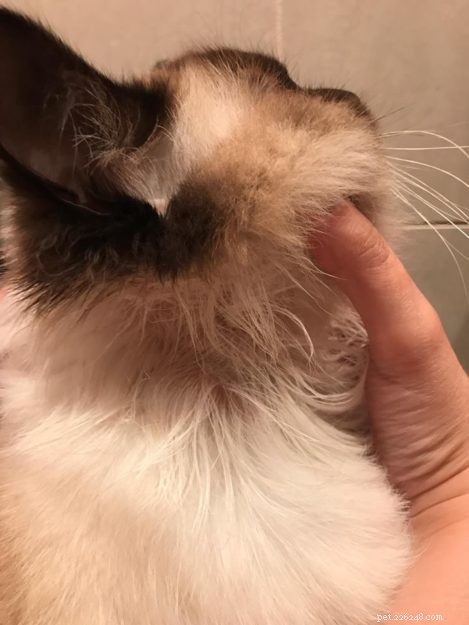
If your cat has been losing hair around their neck, you might be about ready to tear out your own hair trying to find answers. (This question came up over on Facebook.) There are a lot of different reasons cats might be losing hair around their necks, which range in degrees of seriousness. Here some possible causes to investigate:
Why is My Cat Losing Hair Around Their Neck?
- An irritating collar
- Diet (dry cat food)
- Food allergies (many purebreds are allergic to chicken, grains, and sometimes fish)
- A particularly bad pollen season causing seasonal allergies
- An allergic reaction to a new detergent, perfume, candle, etc.
- Flea allergies
- Flea medicine irritating the back of the neck
- A reaction to a drug
- Hormonal imbalance or glandular problems
- Stress
- Alopecia
- Bacterial or fungal infections
- Mange – caused by a cluster of ear or skin mites
- Ringworm
- Pemphigus Foliaceus – an autoimmune disease that manifests hair loss and skin irritation

If your cat is losing their hair, here are a few possible cat hair loss treatments to try:
- Put apple cider vinegar or hydrogen peroxide on a cotton ball and dab it on the itchy spot.
- Make sure they are on a good flea control.
- Immunotherapy for allergies.
- Give them colloidal silver or put it on them.
- Stay on your your vet to run allergy tests. Some treatments your vet might recommend include special shampoo, steroids, a shot of Prednisone, Atopica, or Apoquel.
- Get a biopsy to rule out more serious cat health problems.
- Change diets
- Switch to wet food (or at least 50/50) diet.
- Try a novel protein diet, like rabbit.
- If you try different diets, your cat will need to be on a diet for at least a month to determine whether or not they are allergic to it.
Try basic solutions like checking on their collar or changing their diet first, but if the hair loss doesn’t go away, the best thing to do is to talk to your vet and see what tests or treatment they recommend.
Defining cat hair loss
Cat hair loss doesn’t always look the same. It might develop as bald patches across your cat’s body, or an area of hair loss, patchy fur or even just fur that is generally thinning. There could be various reasons for your cat losing fur not just around their neck but elsewhere too.
These are suggestions for some of the possible causes, but you should always seek proper medical advice if you are worried about your cat’s hair loss.
- Cancer in Cats
There are some forms of cancer in cats that can cause the hair follicles to die. One of these is Neoplasia. It’s not very common but other symptoms can include abnormal swellings, weight loss, sores and a loss of appetite. If your cat is losing hair and has any of these other symptoms, book an appointment with your veterinarian as soon as possible.
- Endocrine Disorders
Feline alopecia can be caused by a disorder of the endocrine system. If your cat has symmetrical hair loss on their body without any rash, and you’ve seen no signs of trauma or your cat grooming too much, it may be a form of alopecia caused by an endocrine disorder or thyroid imbalance.
- Infections
Various infections can sometimes cause hair loss in cats, whether they are caused by bacteria, fungus or parasites. They may cause a cat to itch which can cause over-grooming, or the infection may be the direct cause of the hair loss.
- Allergies
Allergies are one of the most common causes of hair loss. They can be caused by all manner of allergens, and will often prompt your cat to lick the itching areas until bald spots appear. If you spot your cat showing abnormal behavior and grooming themselves to the point of baldness, you should get them tested to see if an allergic reaction is the cause.
- Fleas
Some cats are allergic to flea saliva. So if the cat has fleas, the pest’s saliva may irritate and itch the skin even more, causing felines to overgroom to the extent that fur begins to fall out.
- Ringworm
Feline ringworm, despite the name, is actually a fungal infection and one of the most common skin infections in cats that can cause hair to fall out if left untreated. While it can sometimes resolve itself, this may take up to a year or more and can cause repeated hair loss as well as crusty skin or scabs. If you suspect ringworm then speak to a health professional to get it treated for the comfort of your cat.
- Notoedric Mange
Also known as Feline Scabies, this is a highly contagious skin infection caused by a parasite. It can trigger skin problems including dry lesions, as well as causing alopecia. It can progress to the point of causing skin loss if it is not diagnosed and treated.
- Pyoderma
Pyoderma is a skin infection that can affect dogs and cats. There can be a number of causes that allow the skin’s natural defenses to break, which allows bacteria to develop. Common symptoms along with hair loss include oozing sores, crusts, a rash and a foul odor.
- Cushing’s Disease
Also know as hyperadrenocorticism, this is an uncommon disease that tends to affect dogs more than cats. It causes skin to become fragile, which can lead to wounds developing and hair loss in patches. It can also cause your cat to feel weak or to be excessively thirsty.
Diagnosis of Cat Alopecia
Because there are so many potential causes of cat alopecia, your veterinarian will start by looking at the characteristics of the hair loss. Is it even or patchy, where on the body is the cat losing hair, and are there any clear skin issues?
They will look for fleas, or signs of fleas having recently lived on your cat, and then begin to check other symptoms. They may take a skin biopsy or culture to determine the cause if it is not immediately obvious.
How to Spot an Issue
As ever, when you notice your cat behaving out of the ordinary, you should monitor them and make a note of any changes to their mood, activity levels or appetite, as these can all help a veterinarian to make a diagnosis.
One of the most common signs is your cat over-grooming. If they are spending more time licking or rubbing an area then check it to see if the fur is still healthy or if it is looking like it is thinning.
Treatment
The treatment for cat hair loss will depend on the root cause. It might be something simple, like swapping a collar or removing an allergen from their diet, or it could be an effective flea treatment, along with related products to help kill fleas on surfaces in your home.
If it’s caused by skin disorders, hyperthyroidism or an infection, then medication will be prescribed to help manage it. And in the more rare cases that it’s a symptom of a serious illness, your veterinarian will advise on the treatment plan.
Healthy diet, healthy fur, healthy kitty
If your cat isn’t losing clumps of hair but generally has a poor quality coat, you may need to address their diet. A healthy cat diet is essential for the maintenance of healthy fur, and is a good indication of your cat’s general health as well.
Your cat needs the right balance of protein and nutrients. Speak to your veterinarian if you think they may have a diet problem, and if you do change their diet, make sure you give it at least a month to see the effect.
FAQs
Why is my cat losing hair?
There are many potential causes of a cat losing hair, whether it’s an allergy to dust or food, a ringworm infection, abnormal hormone levels, fleas or even just irritation from a collar. In some cases it can also be caused by some more serious conditions.
Why is my cat’s fur falling out from the ears?
If you’re wondering why your cat’s hair is falling out from around, in front of or on their ears, there could be a number of causes. Some ear mites could cause hair loss as well as redness, while fleas, ringworm or mange may be another cause.
Will hair grow back?
For many of the common causes of cat hair loss, it will grow back, provided the issue is treated correctly. Some conditions can permanently kill hair follicles, but these don’t tend to be as common.
How is alopecia treated?
The treatment for alopecia varies depending on the cause. Some forms of cat alopecia that are congenital or hereditary may not be treatable. Others may involve a cream to reduce skin irritation, or medications to remove an infection.
What can your vet do to help?
Your vet will be able to identify the cause of your cat’s hair loss and recommend a treatment plan, or help you to work out what may be causing hair loss if it’s an allergen in your home. They might also identify cat anxiety.
If your cat is anxious and is overgrooming, your vet will be able to help you work out what could be causing this behavior and how you can help your cat feel more relaxed.
What do bald patches on cats look like?
Bald patches can take any shape and may be symmetrical on your cat, depending on the cause. Often, they are in streaks where your cat has been licking too aggressively. You might also spot thinning patches instead of completely bald ones. When grooming your cat, keep a look out for any irregularity in the coat.
Have you ever dealt with hair loss in cats around the neck? What was the cause? What treatments did you use? Share here!
More Cat Health Related Articles
 Red Light Therapy for Cats
 How to Give a Cat a Worming Tablet {Stress-Free & Effective Options}
 My Cat is Throwing Up Clear Liquid
 Why Do Cats Chatter Their Teeth?
Pin it here!
- Pet Behavior
- Pet Breeds
- Pet Names
- Pet Adoption
- Pet Training
- Cat Stories
- Pet Health
- Adorable Pets
- Cats
- Understanding Cat Tooth Loss: Causes, Signs, and Care
- Cat Tooth Loss Explained: Causes, Symptoms, and Care
- What Causes Hair Loss in Dogs and Cats? Expert Guide to Diagnosis and Treatment
- Understanding Unexplained Weight Loss in Cats: Causes and What to Do
- Why Cats Lick Your Hair: Insights, Causes, and Solutions
- Why Cats Scratch Their Food Bowls: Understanding the Behavior
- Why Your Cat Rolls Over: Decoding Playful, Comforting, and Attention-Seeking Signals