

Ragdoll Cats: How Their Color Points Transform With Age
Originally posted Oct 10, 2018
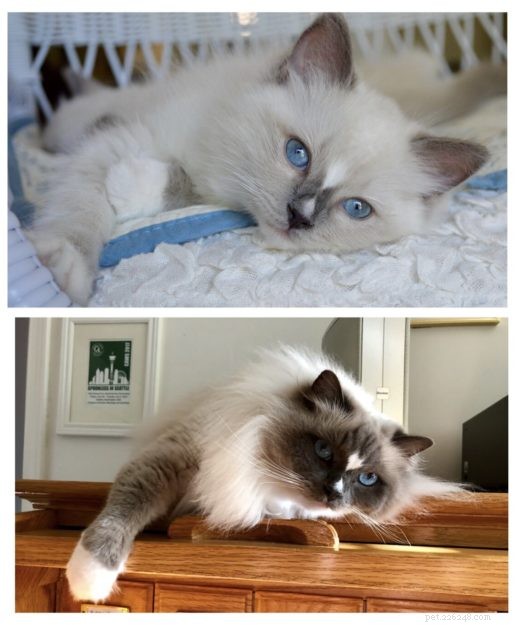

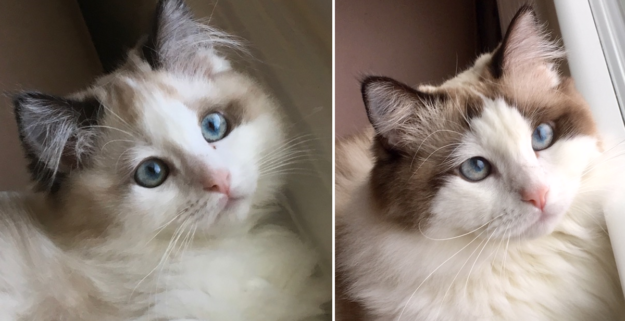 Body temperature varies greatly with age. Young cats have alert metabolisms, which keeps their temperature up. In fact, the areas in their extremities which are colder are rather small. With age, their metabolism slows down, which causes their body temperature to go down with it. This is when the first changes in color can be noticed in a color-pointed cat, as they will get darker.
Depending on the specific genetic background of the cat, this could mean that the darker areas in the extremities will get larger, that the lighter area will also get darker, or even both. When cats reach old age, their body temperature falls, both in their extremities and systemically. As a result, the darkening of the fur is more intense in senior cats.
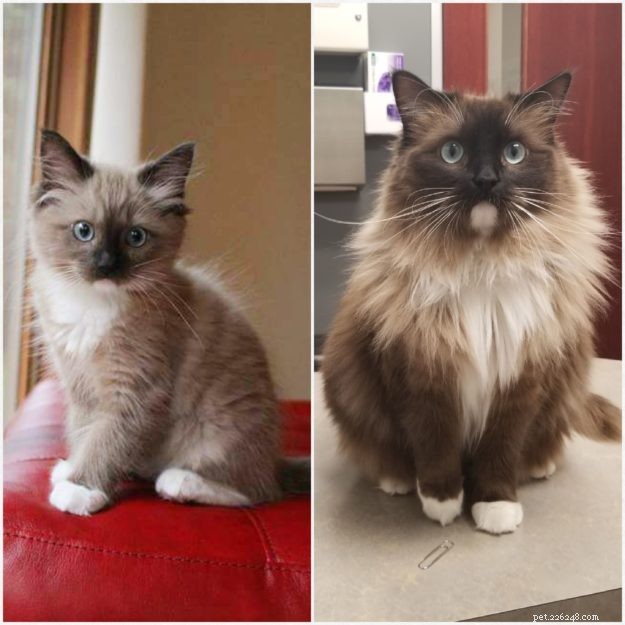
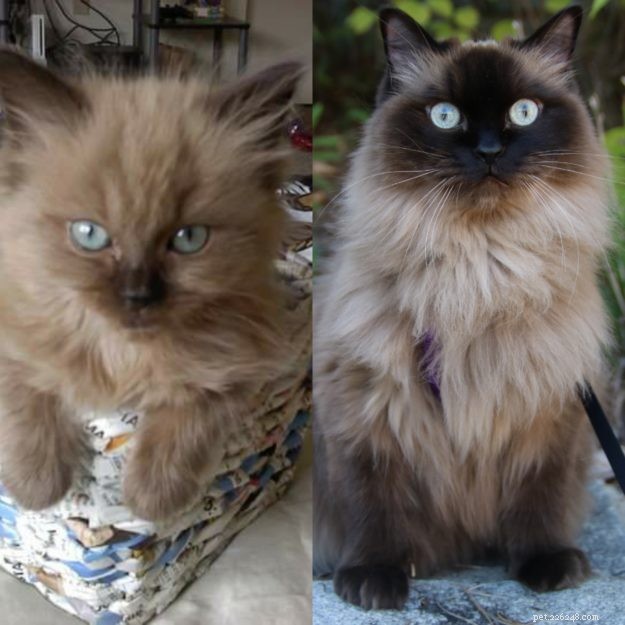
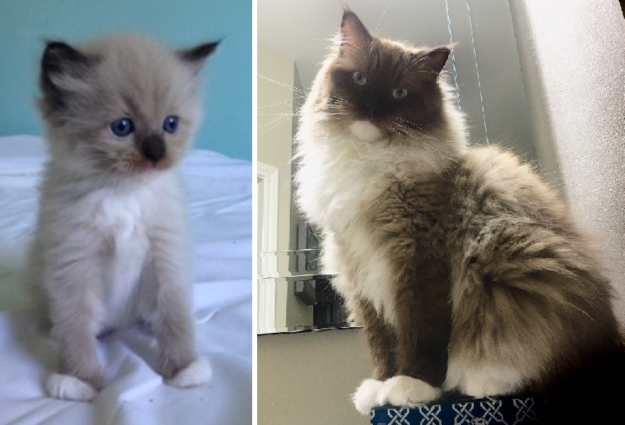
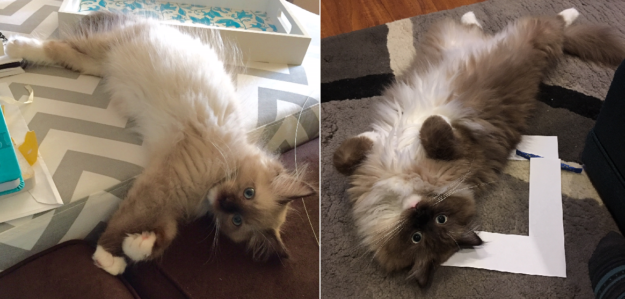
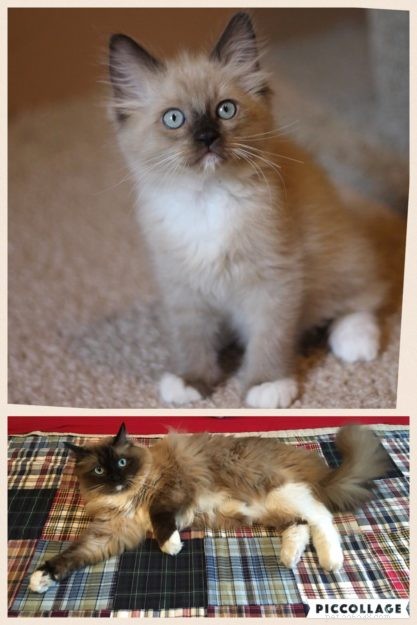
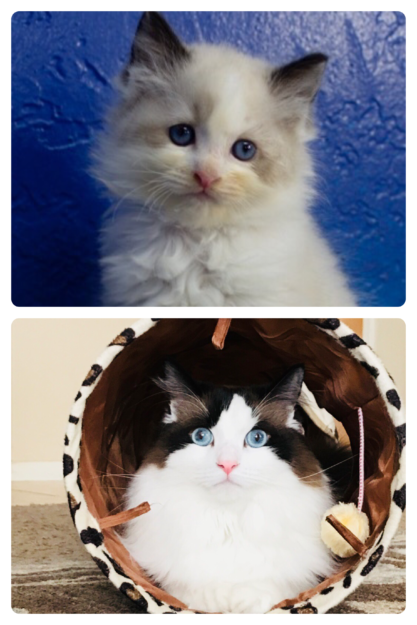
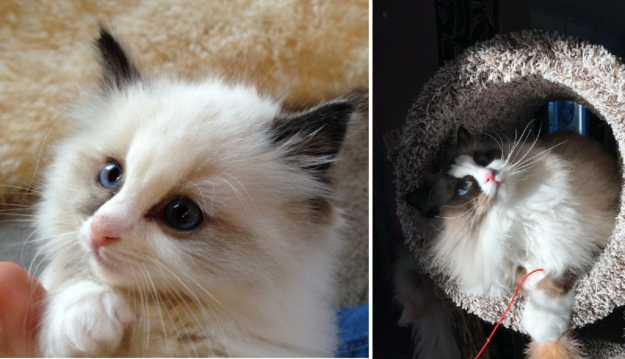
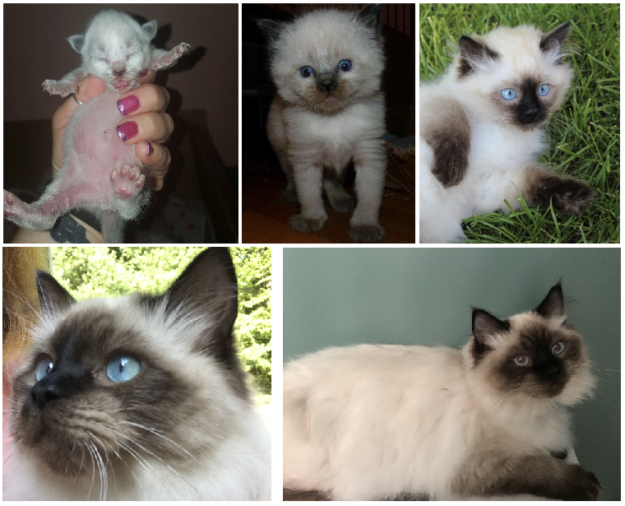
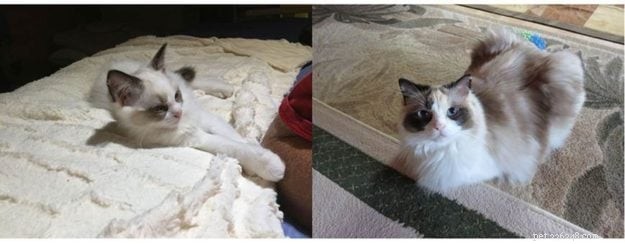
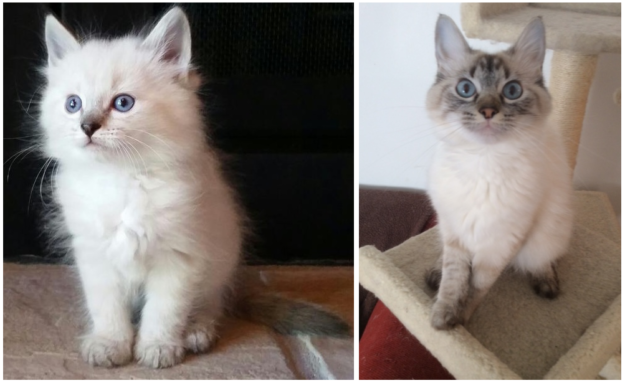
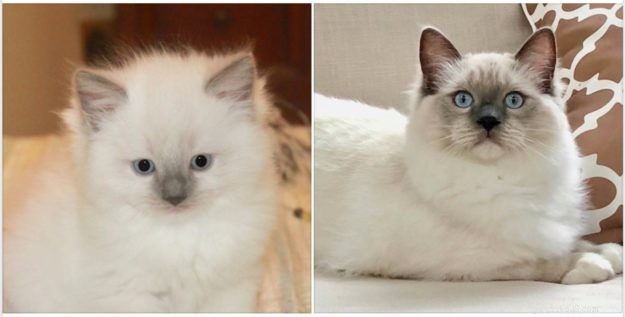
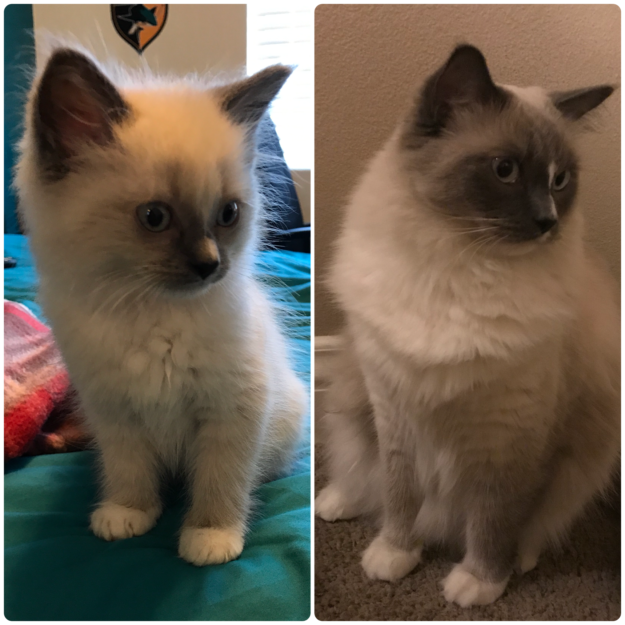
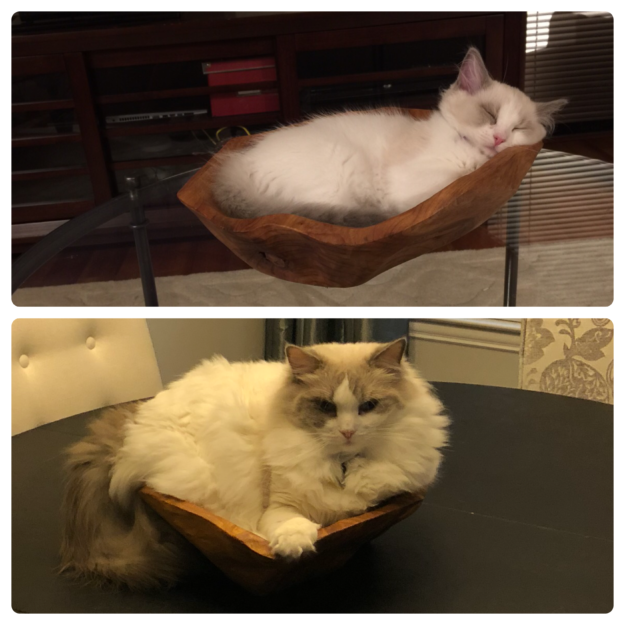
To give you a better idea of just how much color-pointed cats can change fur color as they reach adulthood, here are some pictures where you can observe the differences between kittens and adults.
You will notice that the fur from both front and hind legs gets darker over time, as well as the fur on their heads. The areas around the nuzzle and the ears will get darker as the cats age. However, how much darker these get depends entirely on the individual. These pictures will show you the delightful variation of this color change among colorpoints. Enjoy!
Weeks ago, I posted this on Facebook – and then got several submissions to include in this post.
Body temperature varies greatly with age. Young cats have alert metabolisms, which keeps their temperature up. In fact, the areas in their extremities which are colder are rather small. With age, their metabolism slows down, which causes their body temperature to go down with it. This is when the first changes in color can be noticed in a color-pointed cat, as they will get darker.
Depending on the specific genetic background of the cat, this could mean that the darker areas in the extremities will get larger, that the lighter area will also get darker, or even both. When cats reach old age, their body temperature falls, both in their extremities and systemically. As a result, the darkening of the fur is more intense in senior cats.
To give you a better idea of just how much color-pointed cats can change fur color as they reach adulthood, here are some pictures where you can observe the differences between kittens and adults.
You will notice that the fur from both front and hind legs gets darker over time, as well as the fur on their heads. The areas around the nuzzle and the ears will get darker as the cats age. However, how much darker these get depends entirely on the individual. These pictures will show you the delightful variation of this color change among colorpoints. Enjoy!
Weeks ago, I posted this on Facebook – and then got several submissions to include in this post.
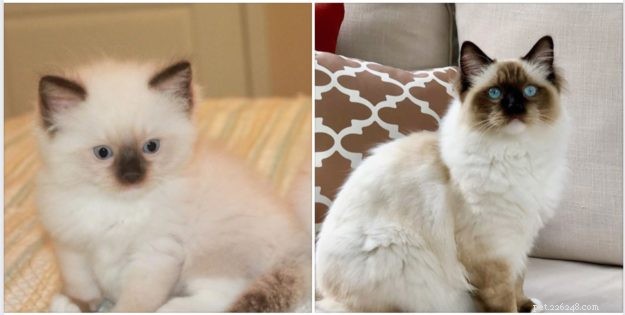
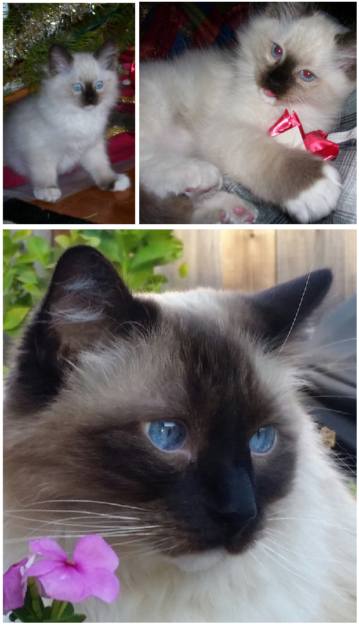







 While it is perfectly normal for colorpointed kittens to get darker points as they enter adulthood and as they get older, there are other reasons why adults might change their points throughout their lives. Here are a few of them:
Are you thinking of adopting a Ragdoll kitten? You might enjoy our book, A Ragdoll Kitten Care Guide.
How Colorpoint Cats Change the Color of their Fur Over Time
Throughout their lives, color-pointed cats change their coloration pattern quite a bit. The process of this change is extremely interesting and it is entirely based on genetics. In fact, it is a mutation that leads to their coloration to begin with. This mutation is temperature sensitive and it affects an enzyme in the metabolic pathway between tyrosine and the final pigment. As a result, pigment production becomes dependent on the cat’s body temperature. Higher temperatures will inhibit production, while lower ones will allow it. Color-pointed cats have darker extremities (with various patterns) because their body temperature is lower in these areas. They present lighter fur on the rest of their bodies because the local temperature is higher there. However, please note that temperature distribution over the cat’s body depends on a wide variety of factors. As such, it varies from one individual to another, but also throughout the cat’s life. This local temperature map is one of the reasons why there is a very large diversity of color-pointed cats.
Changes in Body Temperature Determine a Change in Color
Since color-pointed cats are genetically wired to change their color due to fluctuations in their body temperature, they are essentially a living heat map. Here a few of the factors that typically cause these fluctuations and what you can expect:Age
Body temperature varies greatly with age. Young cats have alert metabolisms, which keeps their temperature up. In fact, the areas in their extremities which are colder are rather small. With age, their metabolism slows down, which causes their body temperature to go down with it. This is when the first changes in color can be noticed in a color-pointed cat, as they will get darker.
Depending on the specific genetic background of the cat, this could mean that the darker areas in the extremities will get larger, that the lighter area will also get darker, or even both. When cats reach old age, their body temperature falls, both in their extremities and systemically. As a result, the darkening of the fur is more intense in senior cats.
To give you a better idea of just how much color-pointed cats can change fur color as they reach adulthood, here are some pictures where you can observe the differences between kittens and adults.
You will notice that the fur from both front and hind legs gets darker over time, as well as the fur on their heads. The areas around the nuzzle and the ears will get darker as the cats age. However, how much darker these get depends entirely on the individual. These pictures will show you the delightful variation of this color change among colorpoints. Enjoy!
Weeks ago, I posted this on Facebook – and then got several submissions to include in this post.
Seal Transitions
Blue Transitions
While it is perfectly normal for colorpointed kittens to get darker points as they enter adulthood and as they get older, there are other reasons why adults might change their points throughout their lives. Here are a few of them:
Local Injuries
When a cat suffers local injuries like scratches, bumps, and bruises, scar tissue is formed. In these areas, the body temperature will be slightly lower because the tissue will not be as efficient in conducting heat. As a result, color-pointed cats will get darker fur in the areas where they suffered these injuries.Diseases
Diseases cause dramatic temperature fluctuations in a cat’s body. A large number of acute diseases cause fever, while chronic diseases usually lead to a general decrease in the cat’s body temperature. These changes will be visible in color-pointed cats, at least to a certain degree. If the temperature change is maintained for a longer period of time, then the pigment changes will have the time to come up. Do you have a color-pointed cat? Have you noticed the color of its fur changing over time? Tell me about it in the comments section below and share your pictures with our readers.Are you thinking of adopting a Ragdoll kitten? You might enjoy our book, A Ragdoll Kitten Care Guide.
- Pet Behavior
- Pet Breeds
- Pet Names
- Pet Adoption
- Pet Training
- Cat Stories
- Pet Health
- Adorable Pets
- Cats
- Showcase: Ragdoll Cats Paws‑Crossed Gallery – Submit Yours!
- Ragdoll Cats in Relaxed, Floppy Poses: Delightful Photographs
- How Ragdoll Cats' Colors Evolve: A Complete Guide to Their Life‑Long Color Changes
- Adorable Ragdoll Cats Showing Their Tongues: Cute Photo Collection
- Blue Ragdoll Cats & Kittens: Classic Colorpoint Elegance
- Understanding Color Changes in Ragdoll Cats: Causes and Care Tips
- Ragdoll Cats: The Ultimate Guide to Their Loving, Lax Personality