

Hypoallergenic Cats: Real Stories & Science Behind Allergy-Friendly Breeds
Originally published December 3, 2015
Hypoallergenic Cats
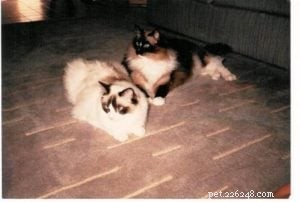 As many of you know, my Aunt Nicky was the first person in our family to have a Ragdoll cat. As my interest in Ragdolls grew, my questions to my Aunt increased. I wanted to know if her friends had Ragdolls, etc. She told me that one of her friends, Missy, had been allergic to cats her entire life, but that now she was able to have 7 Ragdolls! I was amazed – I couldn’t believe having that many Ragdoll cats. I knew a little about allergies given my age (I was 8 years old and no one in my family had allergies towards cats), and didn’t understand how Ragdolls were different than other cats. My Aunt told me that Ragdolls were more or less hypoallergenic.
And that’s what the Internet can report as well. However, it’s not true. The deal is that people are allergic to two things when it comes to being allergic to cats:
- Their dried saliva
- Their undercoat
The majority of people are allergic to cat saliva – and therefore can be allergic to almost any cat, even hairless ones because a hairless cat still licks their entire body. And, of course, cats with hair can be even worse for people who are allergic to cats because cat hair has dried saliva on it. And cat hair can be on a cat’s body and also on all the furniture, beds and more.
Ragdolls do not have undercoats, so people that are allergic to a cat’s undercoat tend not to be allergic to Ragdolls. I think Missy, my Aunt’s friend, must have been allergic to undercoats and therefore, Ragdolls were not an issue for her.
My parents moved recently, and during the move, their cats were locked in the master bedroom until the majority of the house had been packed in the moving trucks.
When the movers were ready to tackle the last room in the house (the master bedroom), I went into the room with them and said, “I just need to grab my parents’ cats who will be under this bed.” And one of the movers said, “WOW! Your parents have cats? I have moved nearly this entire house and have not sneezed once. I am really allergic to cats. What kind of cats are they?”
My parents have two Ragdoll cats, Caymus and Murphy. My parents are also incredibly clean people, so that might be it too – cat hair doesn’t last long in their house, unless it’s on the cat.
What Makes Cats Hypoallergenic
A large percentage of the population is allergic to a protein called FEL d 1 that is typically found in cat saliva. This allergen can be spread through a lick, a scratch, or even just flakes of skin that come off when a cat grooms itself and can be found around a cat owner’s home.
Unfortunately, the idea of a 100% hypoallergenic cat is a myth, since people can be allergic to dander, saliva and even urine—and it is impossible to find a cat without any of these! However, depending on a person’s allergy, they might be able to find hypoallergenic cats that work for them.
For example, some cats have less dander, produce less of the FEL d 1 protein, or secrete less saliva, so depending on what exactly a person is allergic to it might be possible to find a compatible breed.
Other factors can affect the level of allergens a cat produces as well: male cats, dark-coated cats, and non-neutered males tend to be higher producers of allergens, and kittens produce less allergens than adults—so not having a reaction to a new kitten is not necessarily a guarantee that you’ve avoided the allergies completely.
Ragdolls Are Not Hypoallergenic
Are ragdolls hypoallergenic? Ragdoll cats can trigger an allergic reaction just like any other cat. The misconception that Ragdoll cats are hypoallergenic originated from the fact that Ragdolls do not have an undercoat, so it is possible that people who are only allergic to pet dander might not have a reaction to them, saliva also triggers the most common allergies, so Ragdolls are definitely not hypoallergenic for everyone.
For cat lovers with an allergy only to cat dander, they might be a great option, but the only way to tell you won’t have a reaction is to first get tested with an allergist and then to spend some time with a friend or a breeder’s Ragdoll cat before adopting one of your own.
Hypoallergenic Cats
If you have a cat allergy and you are working with an allergist to find out what exactly you are allergic to so that you can adopt a kitty, there are some guidelines for finding a cat breed compatible with your allergies. Below is a list of hypoallergenic cats to look into if you are considering hypoallergenic cats for adoption:
- Siberian – While these cats have long coats, they have lower levels of the FEL d 1 protein in their saliva.
- Balinese – These cats also have long hair, but have been tested and shown to produce lower levels of the allergy causing protein.
- Javanese – This is another medium to long haired member of the oriental cat line. Javanese have a coat that doesn’t mat, and because they don’t have an undercoat they produce less dander allergens.
- Oriental Shorthair – Yet another member of the oriental line, they also produce less dandruff, but still need regular grooming to keep allergens to a minimum.
- Sphynx – This cat is well known for being a hypoallergenic option because it is hairless. However, it still needs regular grooming to keep the skin free of dander and prevent oil build-up in its large ears.
- Devon and Cornish Rex – Both of these Rex cats produce less dandruff, but the Devon Rex has less and shorter fur. While it does still need to be regularly groomed to reduce oil build-up, the Cornish Rex needs to be bathed more frequently to reduce the allergens on their skin and fur.
These are some of the most common “hypoallergenic” cat breeds. If you are wondering about other options—for example, are Siamese cats hypoallergenic—there are more extensive lists of hypoallergenic cat breeds available, but the bottom line is that these cats might be only hypoallergenic for some people as allergies differ.
Always visit an allergist to determine exactly what is causing your allergic reactions before attempting to adopt any hypoallergenic cats.
If you or a family member are having an allergic reaction to a cat that you already own, there are some natural solutions to mitigate allergies before resorting to rehoming your cat, including Nambudripad’s Allergy Elimination Techniques (NAET), substituting Vitamin C for antihistamines or other forms of homeopathy.
Pet owners have also successfully overcome allergies by working with an allergist to receive immunotherapy treatments, and more and more treatments are becoming available these days for pet allergies. You can also reduce the amount of allergens floating around your home by having your cat regularly bathed and groomed, as well as washing toys and bedding on a weekly basis.
What stories do you have about experiences with hypoallergenic cats? Any recommendations for treating cat allergies? How do you keep allergens in your home to a minimum?
- Pet Behavior
- Pet Breeds
- Pet Names
- Pet Adoption
- Pet Training
- Cat Stories
- Pet Health
- Adorable Pets
- Cats
- Tiger Cat: Characteristics, Care, and Adoption Guide
- Are Hairless Cats Truly Hypoallergenic? A Clear Guide
- Understanding and Treating Cat Abscesses
- Siamese Cats and Allergy Relief: Are They Truly Hypoallergenic?
- From Egyptian Deities to Global Legends: The Rich History of Cats
- Ragdoll Cats: Are They Truly Hypoallergenic?
- 8 Hypoallergenic Cat Breeds That Won’t Trigger Your Allergies