

How to Safely Remove Poop and Diarrhea from Your Cat’s Fur
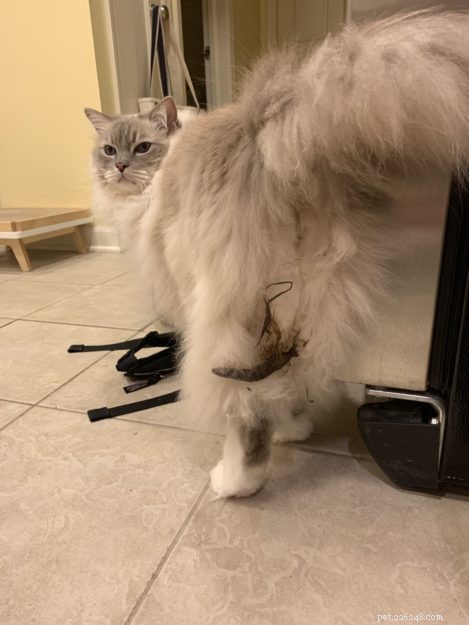
Cat poop stuck in fur is not a natural problem for cats. Cats’ systems are actually designed to poop properly without getting any cat dingleberries stuck in their fur.
However, it is not a rare sight in household cats, especially if they have long fur. Naturally, it is much easier for a cat with long fur to get poop stuck in its fur than it is for a short-haired cat. If this happens on a single occasion, then all you need to do is take out the poop from the cat’s fur. We are going to tell you how to do that in this article.
However, you should keep an eye out because if it happens again, then the poop stuck in your cat’s hair or poop stuck in their butt could indicate a bigger issue. Let’s get to the bottom of this!
So what’s the problem? The number one culprit is diet. Think about it: what we eat as humans affects the consistency of our poop, and it’s the same way with cats. If we eat too much fat, we will have sticky poop (an ex-boyfriend’s father once told me – “If you have to wipe more than once when you poop, then you have too much fat in your diet.”).
For cats, too much fat in their diet is not a likely issue. The problem is usually dry food, which can make their poop quite hard with rough margins that get stuck in the fur like thistles. If this is the case, then switching your cat to wet food might actually be the simplest solution to the “my cat keeps getting poop stuck in their fur” situation.
You can alternate the wet food with the dry to get a balanced diet that produces non-sticky poop. If you aren’t feeding your cat dry food, but still encounter this issue, then you should find out what in their diet makes their poop sticky.
You might also start keeping a food diary to document what your cat is eating and how it affects their poop. This could take a while, but you are sure to identify the culprit sooner rather than later. Since cats have a personal body response to various types of food, then observing the exact reactions in your cat is the best possible solution.
Other possible issues besides dry food could be that there are allergies. Food allergies can modify the consistency of the cat’s poop and make it sticky. If this is the case, then you have to treat the allergy to make the poop normal.
The veterinarian will help identify the allergen and then provide you with options to remove it from the cat’s diet. Aside from these, there can be mechanical issues causing the poop to get stuck in your cat’s fur.
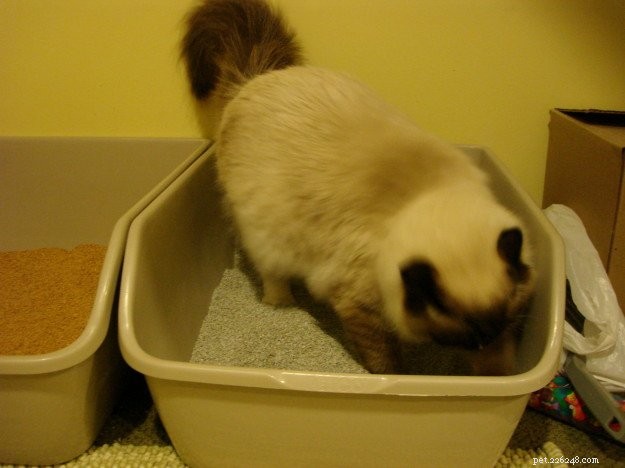
For instance, if your cat uses a litter box that is too high, then it might get too close to the edges and the poop would get stuck in its fur. Try to observe your cat when it is pooping to find out if this is the problem. Adopting a cat is not for the squeamish!
Normal Poop vs. Sticky Poop
Normal cat poop is quite dry, but not dry enough to be edgy and get stuck in the cat’s fur. This is why getting poop in their fur is not a normal issue for cats. Things get problematic when the poop doesn’t have its normal consistency anymore. If the poop is too dry, it becomes thistle-like and gets tangled up in the fur.
On the other hand, the looser the stool is, the sticker it is. Semi-solid stools are very easy to stick to the fur and quite difficult to get out. Anything looser than that and all the way to diarrhea adheres closely to the fur, which makes it very difficult to clean off.
You will have to be extremely thorough to get out loose poop from the cat’s fur, but it is absolutely crucial that you do it because it can damage the skin.
The Most Common Situations
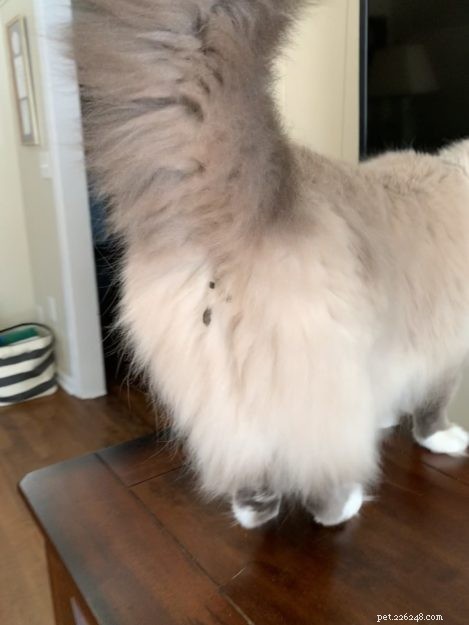
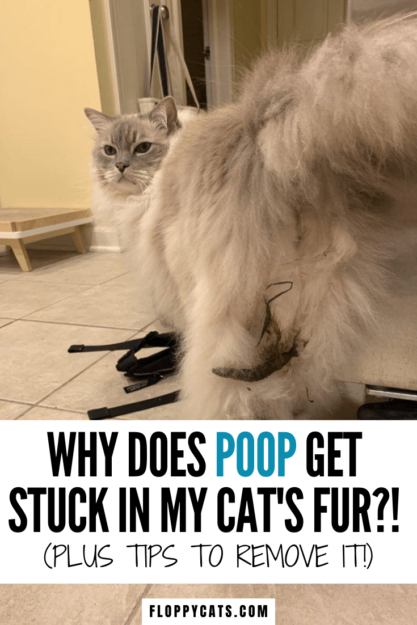
Large pieces of poop caught onto the cat’s fur – These are easy to see and also easy to smell. As you can see in the first picture, cats can get quite large pieces of poop stuck in their fur. Long-haired cats are more prone to this and you will need to trim it out of there as soon as possible.
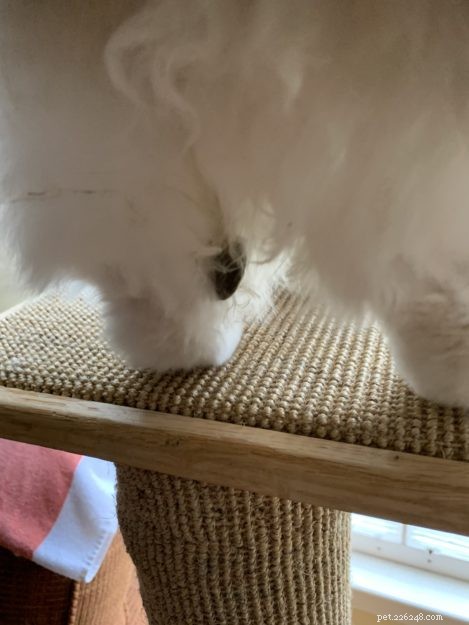
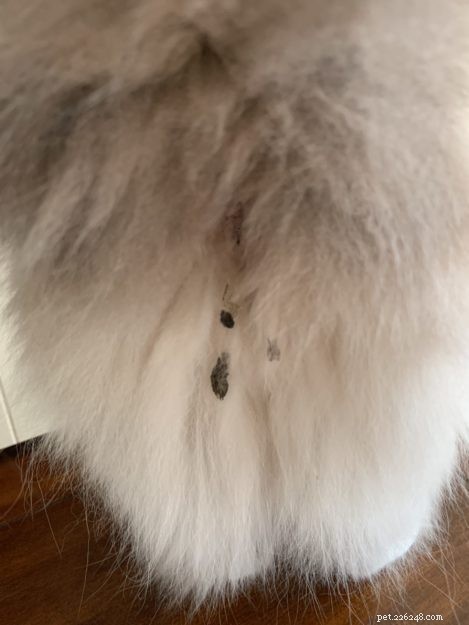
Small pieces of poop caught onto the cat’s fur – These are not so easy to spot, especially in long-haired cats because the poop often gets masked by the fur. This is a problematic situation because the poop in the fur can start a mat. In this case, you will need scissors and a trimmer to get it out.
Diarrhea in the cat’s fur – This is very different from the other two situations described because it usually means that a large part of the cat’s fur is covered in diarrhea. It is very important to clean this entire area thoroughly every single time because diarrhea can cause skin issues.
Very small pieces of poop caught onto the fur around the anus – This is probably the most common poop-in-fur issue. Sometimes, when cats poop, there are small bits that get stuck in the fur around the anus. They usually clean these out themselves, but some cats are less likely than others to be thorough in the anal region.
Cats with mobility issues may not be able to reach their anal region, which makes this an important problem for them because the poop in their fur affects the skin around their anus as well as their perianal glands. Other Articles for reading:
3 DIY Homemade Cat Food Recipes That Are Healthy Too!
Chase & Sprinter – Ragdolls of the Week
Why Should You Get the Poop Out of Your Cat’s Fur?
If the smell and stains on your floors and carpets are not enough to get you to trim out the poop from your cat’s fur, then here is more about the complications that could occur if you leave it there.
A larger piece of poop in your cat’s hair is quite impossible to ignore, so it’s a given you will get that out as soon as possible. You can also brush and trim out dried poop clumps at home. Try putting a little powder on clumps if need be to dry them out before brushing or trimming.Some pet owners recommend wipes that are made to be more pet-friendly:
- GNC hypoallergenic wipes
- Burt’s Bees Cat Wipes
- Earthbath All Natural Cat Wipes
It’s the smaller bits or diarrhea that is problematic because, if you have a cat with long hair, then you might not even notice it right away. Little pieces of poop in the cat’s hair could lead to the formation of mats, large, bad-smelling mats in your cat’s fur.
As you may know, mats should always be taken out because they prevent the skin from breathing properly and could lead to dermatological issues. Moreover, if the mat has poop at its center, this makes it even more dangerous because the poop will ferment and it will lead to the formation of bacteria. Having this bacteria close to the sensitive skin under the mat can be problematic and it can lead to the development of dermatitis.
Diarrhea is far more acid than regular poop, which makes it corrosive to the skin. If your cat gets diarrhea and you don’t clean up the area properly, then you may notice that it will get a local inflammation. All you have to do clean its fur and skin with warm water and cat shampoo.
However, if the skin is already affected, you may have to apply local treatment to the damaged skin as well. As for the small pieces of poop that get caught in the fur around your cat’s anus, you should get them out as soon as possible to prevent irritation and local inflammation. As mentioned above, poop ferments and it generates bacteria, which could lead to inflammation and even skin infections in the anal region.
This is something you should avoid because it will affect your cat’s defecation which could cause digestive issues as well. If small mats get formed around the anus, then every time the cat poops, other small layers are added to it. These mats could also block the cat’s anal glands or they can even prevent the cat from defecating correctly. You may notice the cat straining to poop in the litter box. All you have to do is remove the cat mats and clean up the area to get things back to normal.
How to get dried poop off a cat
Depending on the type of poop that your cat has stuck in its fur, you have to use a different method to remove it.
Here is what you can do with each type of poop: For large pieces of poop – Use a tissue to pull off the dried poop nugget.
Then remember to check the fur for small pieces of poop that might be stuck in there.
Pay special attention to the tips of the fur that might still have poop stuck onto them. Trim the entire area to remove other deposits and to make sure that everything has been removed.
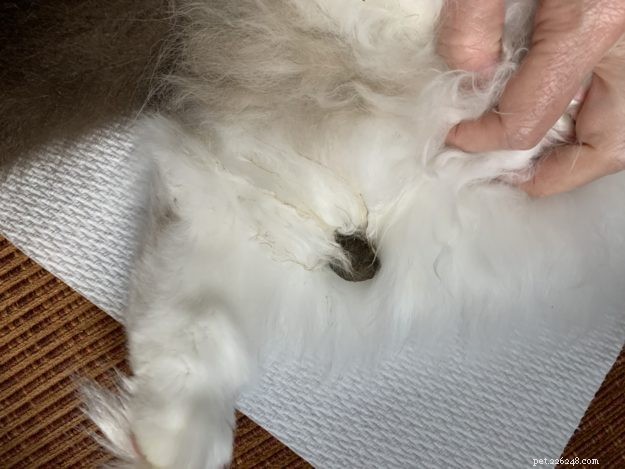
For small pieces of poop – You may need to use a trimmer, a comb, and a pair of scissors. The smaller pieces typically get stuck all the way up to the skin.
Put on a pair of rubber gloves and use the comb to delimitate the poop from the fur around it. Then press on it with your fingers to break it into smaller pieces. Use a trimmer to separate it from the fur and if this doesn’t work, use scissors to cut around the piece of poop.
Then use the trimmer on the area to get out the smaller pieces of poop as well.
For diarrhea – Washing or using a wet wipe – When it comes to diarrhea, there is bound to be a big mess. If there is only a little diarrhea in the cat’s fur, then a wet wipe might be enough to get the cat clean.
Please note that these should be baby wipes, which are alcohol-free. However, if there is diarrhea on a larger part of the fur, then the wipe won’t be enough.
The ideal solution is to give your cat a bath to wash away everything properly. It is enough if you only wash the soiled area.
However, we all know that giving your cat a bath can be quite complicated. A suitable alternative is to use a towel, warm water, and cat shampoo. First, use the towel soaked in warm water to get the area wet.
Then, add the shampoo to get it clean, and lastly, after you rinse the towel thoroughly, soak it in water to rinse the shampoo off the cat’s fur. Make sure you rinse a few times to get it all out.
For the small pieces of poop caught in the fur around the cat’s anus – You can try getting a sanitary shave for your cat from a groomer, especially if there are mats.
The mats in this area are particularly difficult to remove and you should rely on a professional to do this. If there are no mats yet, though, you can try using a trimmer, as well as a wet towel and shampoo.
Many readers like to use the Scaredy Cut to trim their cat’s pantaloons.

Two very important notes of caution about these suggestions: One, be very careful with using cat scissors because this can cut skin and possibly lead to sutures from the vet or worse. Even when owners try to protect their kitty by keeping their fingers between the skin and the scissors, people still report accidentally nicking a cat or mistaking skin for fur.
Two, don’t use any shampoo or wipe that leaves a residue a cat would have to lick off—yuck!
Overall, remember that cats should not naturally have an issue with “poopy butt,” so if it’s happening, it is worth consulting a vet and reevaluating their diet.
In the meantime, make sure you clean their bottom in a healthy and safe way! Here are a few other suggestions for how to get dried poop off a cat:
- Using a tissue to pull off the dried poop nugget
- Washing or using a wet wipe
- Getting a sanitary shave for your cat from a groomer
- Trimming using blunt scissors, scissors with guards, or a bikini or beard trimmer
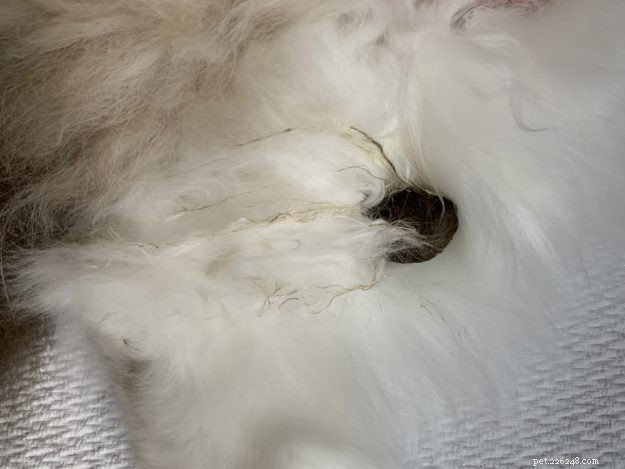
How do you get rid of cat diarrhea stuck to fur? What other tips do you have for how to clean a cat’s bottom in a safe way? Share here!
Pin it here!
- Pet Behavior
- Pet Breeds
- Pet Names
- Pet Adoption
- Pet Training
- Cat Stories
- Pet Health
- Adorable Pets
- Cats
- Removing Poop from Your Cat’s Fur: A Simple Guide for Long- and Short-Haired Cats
- Understanding Your Cat’s Litter: A Guide to Healthy Feces and Better Care
- Understanding and Managing Cat Diarrhea: Causes, Symptoms, and Treatment
- Cat Diarrhea Explained: Key Causes & How to Protect Your Pet
- Safe & Simple Guide to Removing Stool from Your Cat’s Fur
- What Causes Diarrhea in Cats? Symptoms, Risks, and Treatment
- What to Do When You Find Worms in Your Cat’s Poop: A Trusted Guide