

Essential Guide: Inspecting Boxed Cat Food Cans for Quality and Safety
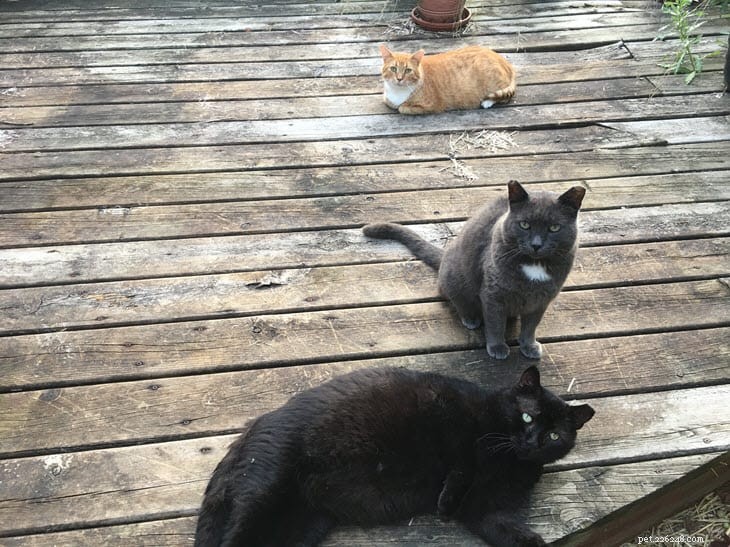
Saturday morning Ted fed the three outdoor cats dry food plus 2 cans of wet food. We left for breakfast — a usual Caturday morning.
When we returned, the empty cat food cans (in the garage) that had not been rinsed out yet were covered with gnats. Not just a few gnats but lots. This seemed unusual as I didn’t know where they had come from so quickly.
So, I shrugged it off to the warm weather making for the right conditions for gnats in the garage. I rinsed the cans out with the hose and placed them in the recycle bin.
That evening, I reached into the box of cat food cans for the evening feeding, and my fingers got wet. There was slime on top of the can. That was gross!!!
I pulled out another can, and there were two maggots on it! The side of the can was bulging with cat food pushing through a dent.
Well, that explains why there were so many gnats in the garage! All remaining cans were tossed into the trash!
We purchased this box of cat food cans many weeks ago. My routine is to set the box on the table, open one end, and then take out cans as needed. I don’t know if the cans were dented when purchased or if we had dropped the box at home.
Checking for dented cat food cans
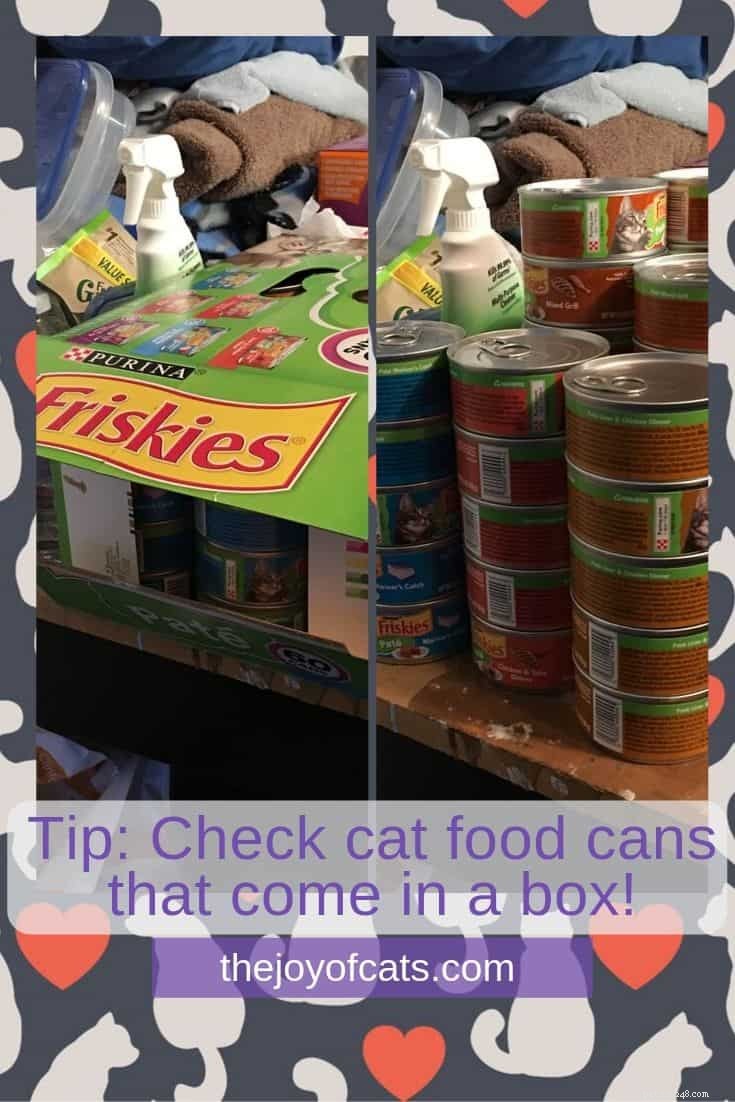
The story above was disgusting and could have been avoided. Going forward, I will be removing the cans from the box and stacking them on the table. This way any problem cans can be dealt with as soon as possible, and I recommend you do the same.
If I had checked for dented or broken cans sooner, I could have returned the cans and exchanged them for new cans or gotten a refund.
The problem with dented cans
The risk of dented cans is botulism. Cans dented on seams are at greater risk. Small dents are probably okay. Food bulging out of the can is never okay! When you encounter a dent, you’ll need to decide to toss the can or determine if the food is safe.
Botulism can be serious in cats. PetMD says it’s rare. However, avoiding the risk is best!
I worried that I might not have noticed dents in other cans from this same box. The cats are in the clear now as the three cats have no symptoms and it’s been a week.
Tip Summary:
To avoid attracting bugs and risking botulism, inspect all cat food cans when purchased for dents, bulging cans, or open cans. Cat food bought in boxes should be removed from the box for inspection.
Related Post:
- Cat Tongue Safety Tips
- Pet Behavior
- Pet Breeds
- Pet Names
- Pet Adoption
- Pet Training
- Cat Stories
- Pet Health
- Adorable Pets
- Cats
- End Cat Food Begging: 12 Proven Strategies to Restore Quiet Mealtimes
- Why Cats Are Obsessed With Cardboard Boxes: Insights From a Veterinary Nurse
- Managing Cat Food Allergies: Recognize Symptoms, Diagnose, and Restore Your Feline's Health
- Fix Litter Box Issues: Why Your Cat Avoids the Covered Box
- Cat Treats 101: Why Human Table Scraps Are Harmful – Safe Alternatives for Your Feline
- Choosing the Perfect Litter Box Location: Essential Tips for New Cat Owners
- Understanding Cat Kneading: Why Your Cat Does It