

The Ultimate Guide to Cat Primordial Pouches: Why They Matter
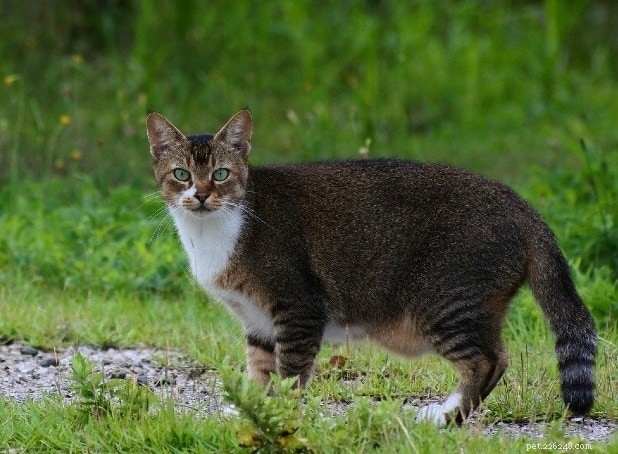
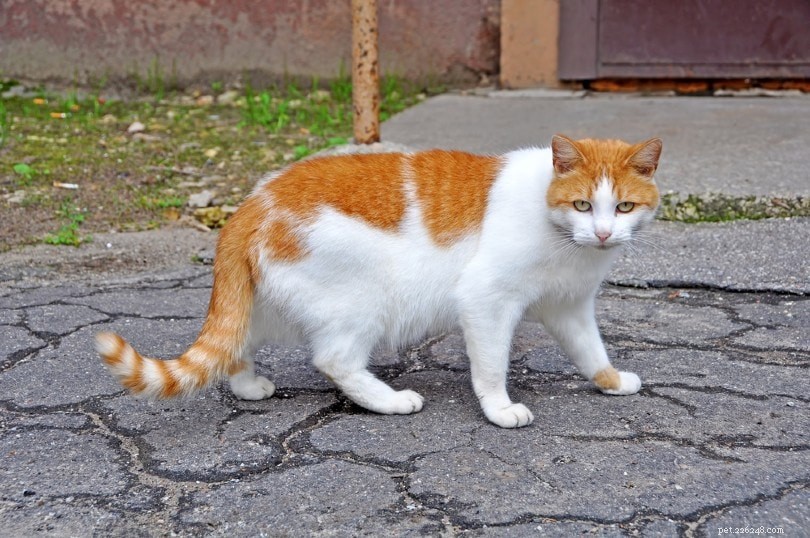
If your cat looks like her belly is swinging around underneath her, it’s not because she’s overweight; it’s because she has a primordial pouch. The primordial pouch is comprised of skin, fur, and fat and is positioned along the underside of a cat’s belly for protection. It’s normal for cats to have these pouches, but they can vary greatly in size. So, while one cat’s pouch is barely noticeable, another’s swings along the ground.
There are three primary theories as to why cats have primordial pouches. Let’s look at each of these theories in turn.

Theory 1: Protection
The first theory regarding the presence of the primordial pouch in cats is that its presence provides protection. The primordial pouch adds an extra layer of protection for internal organs from claws and teeth.
Theory 2: It allows cats to move faster
The second theory surrounding the presence of the primordial pouch is that it allows cats to move faster. The pouch stretches out when cats run, giving them added flexibility and the ability to reach farther with each step, great quality for cats trying to evade predators or catch prey.
Theory 3: It provides extra space for storing food
The third theory is that the primordial pouch provides extra space for cats to store food after a large meal. While we mostly think about domestic cats, wild cats don’t get two bowls of kibble each day. Sometimes they go for days without a meal, so they eat when they can and store fat in their pouch to provide them with sustenance for the days to come.
Facts about the primordial pouch
Primordial pouches aren’t unique to domestic cats; they are also found on many species of wild cats, including tigers and lions. The pouch develops around six months of age and is present in both males and females.
Whether or not a domestic cat has a large primordial pouch is based on their genetics. This trait has been passed down from wild cats through generations, so while it doesn’t have much of a purpose in domestic felines, they still carry the trait. Primordial pouches are more prevalent in purebred cat breeds, as their genes have less variety, making it less likely that physical characteristics are lost through breeding.
Distinguishing between a primordial pouch and extra weight
It’s important to distinguish whether your cat’s sagging belly is a primordial pouch or if they are overweight. Obesity is a common problem in house cats and can lead to heart problems, obesity, hypertension, and diabetes.
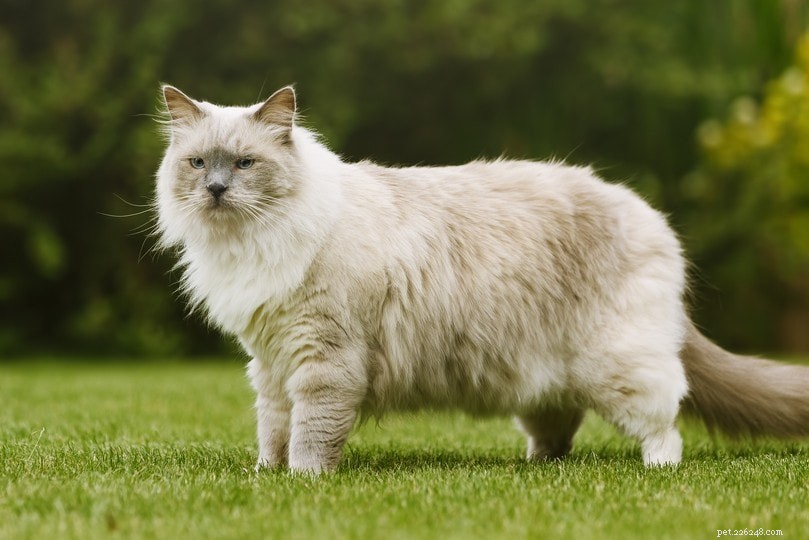
Looking at your cat’s shape is one way to distinguish between the two. Cats who are obese have an overall rounded body shape than cats at a healthy weight. You should be able to see an indentation at your cat’s hips. The belly of an overweight cat will start at the top of its underside and extend down, but primordial pouches start underneath and are located toward the back legs.
You can also check whether you can feel your cat’s ribs by pressing on their body. If you have to press really hard to feel their ribs, your cat is probably overweight.
Finally, primordial pouches swing when a cat runs or walks, whereas overweight bellies do not.

Summary
Primordial pouches are a normal physical feature in cats. Some cats have bigger ones than others, and it seems that the pouch may have provided some sort of protective measure for wild cats. While there are different theories on the function, it has been passed down through generations from wild ancestors. Distinguishing the primordial pouch from obesity is important to keep your cat healthy. If you feel that your cat is overweight, talk to your veterinarian about how to encourage weight loss for your cat’s longevity and overall health.
- Pet Behavior
- Pet Breeds
- Pet Names
- Pet Adoption
- Pet Training
- Cat Stories
- Pet Health
- Adorable Pets
- Cats
- Do Cats Have Belly Buttons? Discover Where the Navel Lies
- The Purpose of Cat Whiskers: How They Navigate and Protect
- Do Cats Have Belly Buttons? The Science Explained
- The Essential Role of Meat in a Cat’s Diet: Why They Need It
- Why Cats Have Whiskers: Understanding Their Vital Functions
- The Essential Role of Cats’ Leg Whiskers: Sensory Insight and Interaction
- Why Cats Have Ear Slits: Anatomy and Function Explained