

Veterinary‑Approved Cat Stool Chart: How to Interpret Your Cat’s Digestive Health
Why use a cat stool chart? Because your cat’s feces is one of the biggest indicators of their health.
Put simply, a healthy cat should have healthy stools. While there are many specific health issues that can cause signs from constipation to diarrhea, it’s a simple rule that normal faeces (or stools) are a good sign that your cat is thriving.
When you visit your DVM veterinarian, it’s likely that you will be asked to describe your cat’s stools, as part of the general gathering of information about your cat’s health, and in particular, information about the gastrointestinal tract.
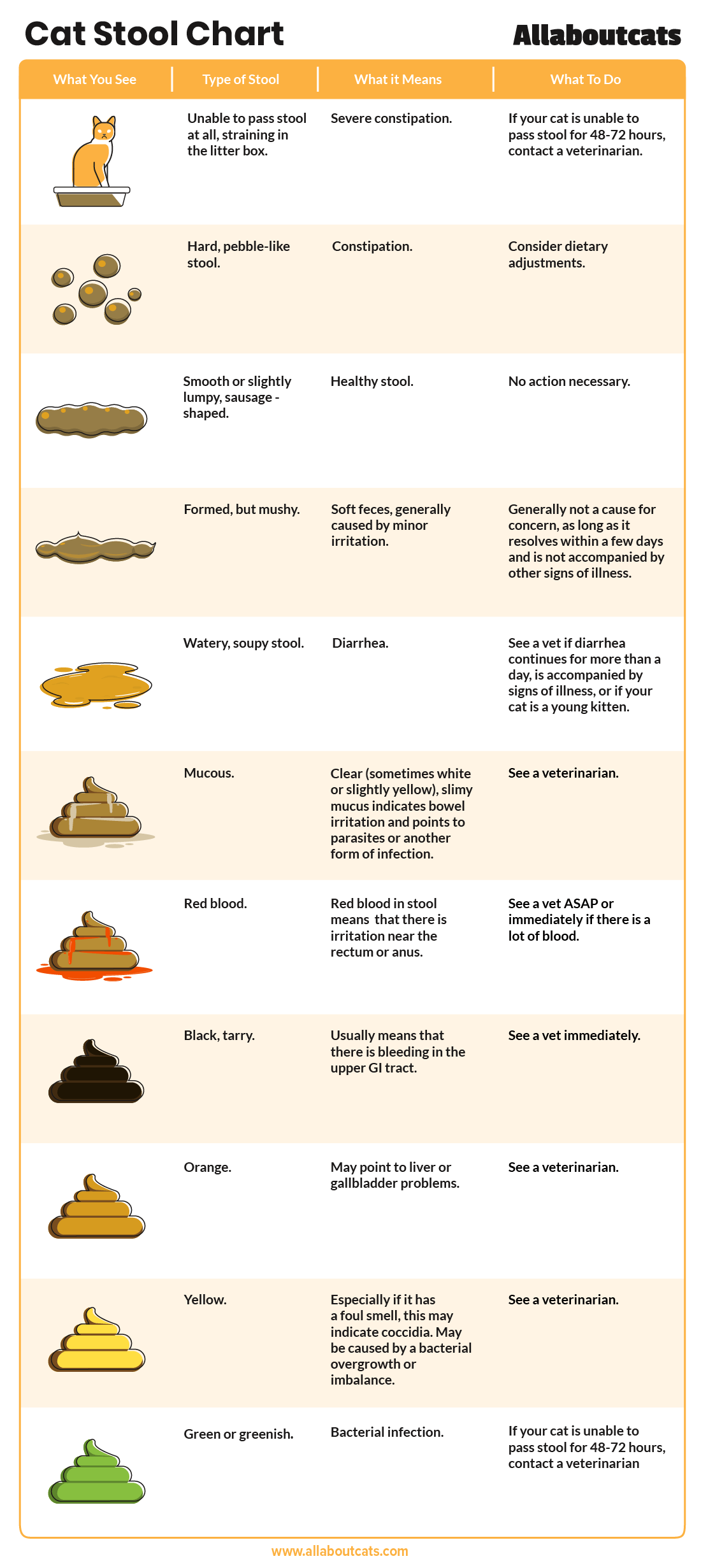
Breakdown Of Cat Stool Health Indicators Based On Color And Consistency
It can be difficult to observe your cat’s bowel movements if they are outdoor pets, but if they use a litter box, you should take advantage of the daily task of scooping their poop to observe it in detail.
A normal cat stool should be brown or dark brown in color, with a reasonably firm consistency. The idea is that it should be formed, but should not be too hard.
There should be no sign of mucus or blood. It is possible to carry out “fecal scoring” based on a cat’s poop look, but there may be no need to get into such a detailed, formal way of carrying out an assessment.
Fecal abnormalities may point to a wide variety of issues affecting the digestive tract and beyond.
Abnormalities That Should Be Noted Include:
- Extraneous matter, like hairballs.
Soft faeces (formed, but mushy) can be caused simply by a sudden change of diet (e.g. from Purina to a different brand). Other possible causes include mild or early cases of diseases listed below that can cause more significant diarrhea. - Loose faeces (diarrhoea) can be caused by a number of factors, including intestinal irritation (e.g. by intestinal parasites such as tapeworm), bacterial infections, liver disease, kidney disease, or inflammatory bowel disease (IBD), food allergy, and food intolerances. Some health problems, like hyperthyroidism, can cause this type of diarrhea as well as a range of other signs of illness.
Broadly, There Are Two Sub-types Of Cat Diarrhea
First, small intestinal diarrhea tends to be larger pools of loose feces, passed less frequently. If blood is present, it may be darker, sometimes described as “tarry” (because it has been digested as it has passed through the digestive tract).
Second, large intestinal diarrhea (e.g. associated with colitis) tends to be smaller amounts of loose feces, passed more frequently, often with a sense of urgency. Streaks of mucus and fresh blood may be seen.
Read More: Best Cat Food for Diarrhea
Hard stool is the opposite of diarrhea, and this can indicate a range of other possible problems, You should also note the process of defecation: if your cat is straining when pooping (so-called “fecal tenesmus”) this can indicate constipation (e.g. megacolon or a blockage of some kind) or alternatively, this can be caused by irritation of the lower bowel.
You may notice your cat over-grooming around the same time as passing feces: this can suggest discomfort or abdominal pain.
Frequently Asked Questions:
What does a normal cat poop look like?
As mentioned above, a healthy cat poop should be brown or deep brown in color (not yellow, not pale, not black), and it should be well formed, like an uncooked sausage. There should be no blood, and no streaks of mucus.
How can I tell if my cat's poop is healthy?
You should monitor your cat’s poops in the litter box every day, so that you are familiar with the normal appearance and consistency of your cat’s poo. The answer to “what’s the scoop about my cat’s poop” is a useful indicator of your cat’s overall health.
How much should a cat poop in one day?
There are no absolute rules about frequency and quantities of cat poops, but most cats in good general health pass stools once or twice daily, with lengths of four to six inches (10 -15cm) on each occasion.
- Pet Behavior
- Pet Breeds
- Pet Names
- Pet Adoption
- Pet Training
- Cat Stories
- Pet Health
- Adorable Pets
- Cats
- Do You Need to Clean Your Cat’s Paws? A Guide to Paw Hygiene
- Massaging Your Cat: Benefits, Techniques, and Tips
- Top 10 Must‑Know Facts for Your Vet to Provide Better Care
- Celebrate National Take Your Cat to the Vet Day – Ensure Your Feline’s Health Today
- Cat Stool Guide: How to Interpret Your Cat’s Poop for Early Health Insights
- Why Microchipping Your Cat Is a Smart Move: Sasha’s 1,300-Mile Reunion Story
- National Cat Health Day: Why a Vet Visit Is Essential for Your Feline