

Detecting Cat Pregnancy: Signs, Behaviors & Birth Timeline
If your cat is looking a little rounder than usual or starts displaying nesting behaviors, you may be in for a surprise.
Nothing is cuter than a litter of newborn kittens but, cute as they may be, caring for kittens can be a lot of work. The more you know about cat pregnancy, the better you can predict when your cat will give birth so you can be fully prepared for the big day.
Quick Navigation:
- How Long Are Cats Pregnant?
- Pregnancy Behaviors
- Pregnancy Stages
- Watch Out for These Signs
- Final Thoughts
If your cat is pregnant, you have some planning to do. Most pet parents do not intend for their cat to become pregnant, so planning may need to be done at a moment’s notice.
Your pregnant cat needs special attention including a healthy and balance diet, a proper place to give birth, and ongoing veterinary care to keep her and her litter safe.
A properly formulated cat food diet is extremely important for a pregnant cat. A pregnant cat needs proper nutrition to be able to sustain a healthy pregnancy and to provide nutrients for her kittens before and after birth. She’ll also need balanced nutrition to ensure she’s healthy enough for the act of giving birth.
Understanding The Heat Cycle
If a female cat is not spayed, she’ll go into heat several times a year. Cats are seasonally polyestrous animals which means they have multiple cycles during each breeding season.
In the Northern Hemisphere, the breeding season for cats generally lasts from January until the late fall, though it may vary according to environmental and geographic factors. Cats living indoors or in tropical areas may go into heat throughout the year.
The estrus cycle in cats typically lasts between one and six weeks with each cycle being about three weeks long. The period during which a female cat is in heat lasts an average of six days. If mating occurs when the female cat is in heat, she can become pregnant.
How Long Does a Cat Stay Pregnant?
So, how long will you have to wait to see your newly born, cute and fluffy kittens?
Feline pregnancy (known as the gestation period) is generally 63 to 65 days long – about nine weeks – but it is not unusual for kittens to be born after only 58 days or as late as 70 days of gestation.
Signs Of Pregnancy In Cats
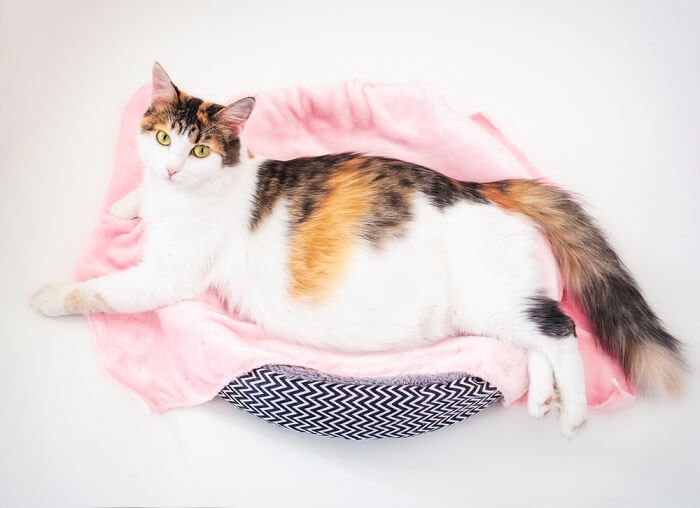
The most common sign of pregnancy in cats is a change in behavior. For example, your cat may become more loving and affectionate, or to the contrary – more aggressive.
In addition, she will begin to show signs of sudden excitement. This behavior is known as “quickening”, and it is a critical stage of a cat’s pregnancy in which the fetus begins to move.
Like pregnant women, pregnant cats can also experience morning sickness.
During the third to fourth week of pregnancy, your cat’s belly will begin to swell. The swelling will also be more apparent in her pink nipples. Your cat’s appetite will also begin to increase, so a high-quality growth formula may be necessary. Talk to your vet about formulas for pregnant and lactating females.
Your cat’s pregnancy will become obvious around the sixth week. The symptoms of a pregnant cat will now encompass many changes in her behavior.
A pregnant cat will begin moving around with great care. She will try to avoid twisting and stretching actions. If she usually ventures outdoors, she will tend to prefer remaining indoors. The cat’s appetite will also continue to increase throughout the sixth week.
In addition to these behaviors, she will stretch, roll, and begin to search for a safe place to give birth. Therefore, it is advised to keep your cat indoors to ensure that she does not make her nest outdoors.
Be aware that, as her belly grows, she will probably need smaller and more frequent meals; continue to feed her a diet that’s specially formulated for pregnant cats.
Pregnancy Stages
Cats go through five stages of pregnancy, each with specific symptoms that can guide you to tell when your cat’s labor is close.
1. Fertilization
Kittens usually reach maturity after a period of 6 months of growth, though some may take as long as 12 months. When your kitten reaches sexual maturity, she will start to go through heat cycles and is capable of becoming pregnant.
2. Early Stage
Following fertilization, a pregnant female cat will go through a 4-week period of early-stage pregnancy. During these early stages, you may notice changes in your cat’s body and behavior including weight loss, morning sickness, and lack of appetite due to nausea.
In the second week, cats develop pink nipples that are swollen and sensitive to the touch. By the third week, you may be able to feel lumps in your cat’s abdomen as the kittens develop. A veterinarian may be able to detect the kittens via ultrasound or abdominal palpitation between 3 and 4 weeks after fertilization.
3. Middle Stage
After your cat passes through the early stages of pregnancy, she’ll start obviously gaining weight. An abdominal x-ray will show a clear presence of kittens and how many there are.
4. Pre-Labor
Also called the nesting stage, this is when your cat will start looking for warm places to give birth. The pre-labor stage usually starts 1 week before delivery, and you may observe several signs including drops of milk in the nipple area, loss of appetite, and rectal temperature drop.
5. Labor
This is the final stage of cat pregnancy. It is characterized by the cat licking her abdomen and genitals, which will stimulate birth.
Watch Out For These Signs

Several tell-tale signs will help you know when your cat is close to giving birth:
- Her appetite has almost doubled in the past few weeks.
- Her kittens are moving around in her abdomen quite clearly.
- She will display ‘nesting’ behavior, such as looking for a warm, quiet safe place to give birth. For this reason, it’s recommended that you provide a suitable ‘nesting box’ for your pregnant cat.
- A drastic or complete loss of appetite when her labor pain is due to start.
- ‘Clingy’ behavior where your cat will feel the need to be with you, always looking for your affection and attention. As time brings her closer to the actual birth, she may start pacing around and seem particularly nervous or excited.
- Your cat may ‘call’ for you. Regardless if you have ever been around when your cat gave birth in the past, you will not be able to mistake this specific sound.
• She will start cleaning her rear as she feels her body change in preparation for the delivery of her kittens.
• She is uneasy and will start moving in and out of her nesting box.
As your cat progresses toward birth, make an effort to stay nearby but don’t interrupt your cat’s preparations. In many cases, cats will give birth overnight when they can be unobserved, so don’t feel like you have to have your eyes on your cat at all times.
Your cat should not need any assistance giving birth, though it doesn’t hurt to have an emergency vet’s phone number handy, just in case.
What To Expect During Birth?
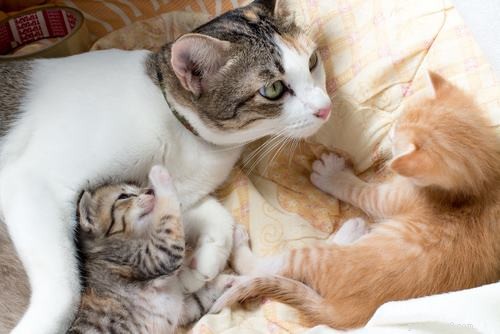
Your female cat may want to hide when giving birth, but you can help prevent this by providing her with a suitable nesting box. It can be as simple as a cardboard box or laundry basket lined with towels and blankets.
It doesn’t hurt if you put down some absorbent pads underneath in preparation – the birthing process can be a messy one.
As the pregnant queen prepares to give birth, she may start to pant, pace, and groom excessively. If you’re monitoring your cat’s body temperature, you’ll notice a drop to about 100 degrees Fahrenheit and you may see the cat’s teats getting larger, pinker, or darker. In the hours leading up to the birth, you may also see a vaginal discharge of blood or other fluid.
Once the birthing process begins, the first kitten should be born in anywhere from 5 to 30 minutes.
Kittens are born with their amniotic sacs, which the mother cat will remove, and she will stimulate the new kitten to start breathing on its own by licking it. The mother will also sever the umbilical cord herself and may eat the placenta to obtain its nutrients.
The number of kittens determines how long the birthing process will take.
There could be a pause of 30 to 60 minutes – sometimes more – between births but if you are sure there are kittens remaining and there is a delay of 2 hours or longer, call your veterinarian. Even with a smooth birth, you should have your cat and her litter of kittens seen by a vet within 24 hours.
Final Thoughts
The only surefire way to prevent your cat from getting pregnant is to have her spayed. Even if you keep your cat indoors, hormonal changes during heat can be a powerful motivating factor for even a normally docile cat to seek ways to escape the house so neutering and spaying is the best option.
If your cat becomes pregnant, it becomes your responsibility to care for her properly and for her growing kittens. Talk to your veterinarian about your cat’s changing dietary needs and make adjustments to her diet if needed to ensure she gets the calories and nutrients she needs.
Keep tabs on your cat’s process through the stages of labor and try to determine when she became pregnant, if you can, so you can estimate the due date.
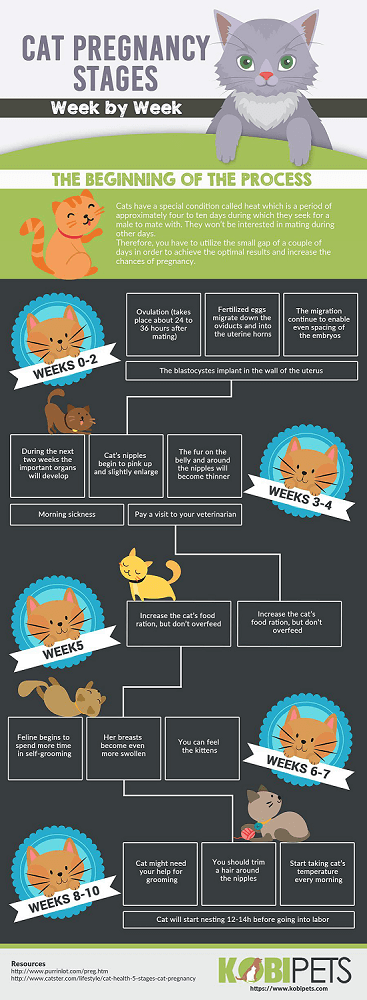
In anticipation of your cat’s pregnancy, proper preparation will ensure that the kittens’ birth will be worry-free. For additional info, check out this cute infographic from our friends at kobipets.com.
Frequently Asked Questions
How can I tell if my cat is pregnant?
You may not be able to tell immediately when a female cat is pregnant but you’ll notice increased appetite and weight gain after a few weeks (generally 2 to 4 pounds in total) along with swollen nipples, a distended abdomen, and nesting behaviors.
How many kittens does a cat have?
Litter size can vary from one breed to another from 1 to 12 kittens. The average litter size is about four kittens. Pedigree breeds like Siamese, Burmese, and Oriental cats are more likely to have large litters.
How often can a cat become pregnant?
The gestation period for cats is about 2 months (9 weeks), so it’s possible for a cat to have as many as 5 litters per year. A female cat can become pregnant again very quickly after giving birth – her next heat cycle may occur within a few weeks after the kittens are born.
- Pet Behavior
- Pet Breeds
- Pet Names
- Pet Adoption
- Pet Training
- Cat Stories
- Pet Health
- Adorable Pets
- Cats
- Identifying Pregnancy in Cats: Key Signs & How to Tell
- How to Recognize Pregnancy in Your Cat: Signs & Tips
- How to Identify a Pregnant Cat: Signs, Stages, and Care
- How to Identify a Pregnant Cat: Key Signs & Symptoms
- Identifying Pregnancy in Cats: Key Signs Every Owner Should Know
- How to Identify Cat Pregnancy: Key Signs and Early Detection Tips
- How to Determine if Your Cat Is Pregnant: Expert Signs & Tips