

Understanding Spotting in Your Cat’s Eyes: Causes, Risks, and Care
Have you ever noticed black or brown spots in the iris (colored portion) of an aging cat’s eye or eyes? These blotches are a type of tumor caused by the abnormal growth of pigmented cells called melanocytes.
The word “tumor” rightfully inspires fear in the hearts of pet parents, but in this case, it does not necessarily refer to cancer. By definition, a tumor is simply a cluster of abnormally growing cells. Iris melanocytomas can be completely benign, but should always inspire a trip to the vet.
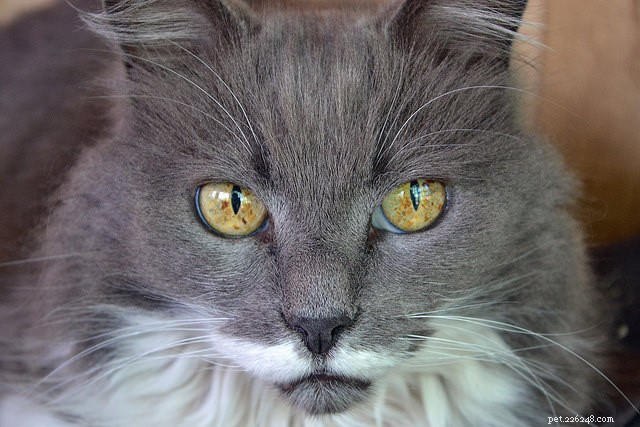
Although there are other reasons cats develop spots and splotches in their eyes – including trauma to the cornea and certain viruses – those tell-tale pigment changes in the iris often indicate melanosis. Veterinarians classify the flat, benign tumors as melanocytomas and the raised metastatic or diffuse spots as melanomas.
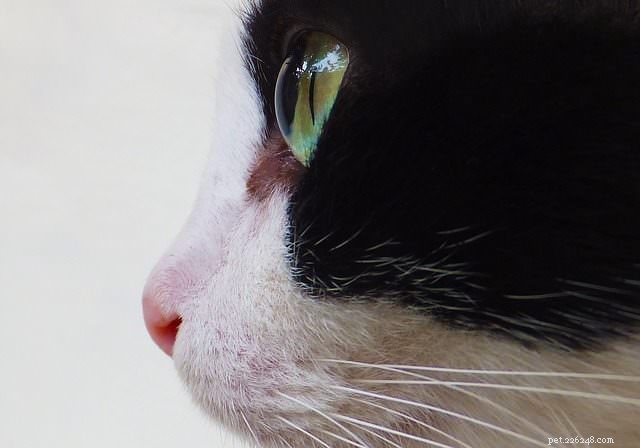
Iris melanomas are the most common type of eye tumors in cats and often start out benign or non-spreading, but become metastatic up to several years later. Because of their potential to spread through the eye and into other parts of the body, it is extremely important to have a veterinarian monitor any pigment changes in your cat’s eye(s) on a regular basis.

Your veterinarian may refer you to an ophthalmologist who specializes in diagnosing and treating eye conditions in cats. If Iris Melanoma is suspected, it is important that a full physical exam, ophthalmic exam, and laboratory tests are performed.

The doctor will check the pressure in your cat’s eyes since glaucoma can go along with malignant melanomas. A close examination of the eyes may also reveal whether or not the tumor has spread to the drainage angle and metastasized elsewhere. Blood chemistries help determine if the tumor is malignant, especially if there is an increase in the white blood cell count.

The most common treatment protocol for older cats with slow-growing lesions is to simply monitor their progression with periodic veterinary visits. However, enucleation (removal) of one or both eyes is often recommended for younger cats with aggressively spreading tumors.
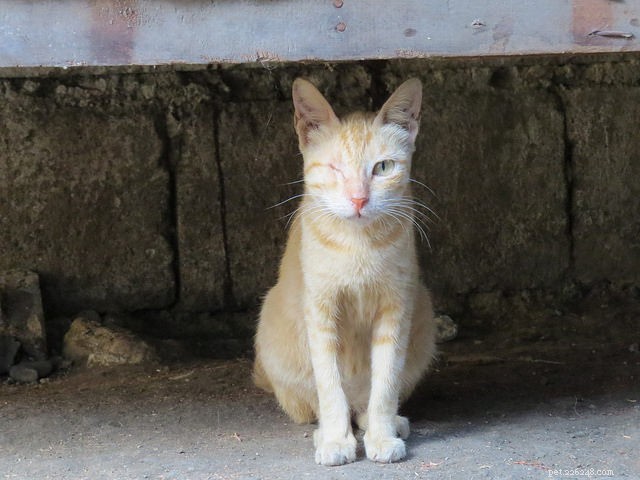
How much or how little your cat’s life is affected by this disease depends entirely on how much the melanoma has spread within the eye. According to PetMD:

Be an advocate for your cat by monitoring his eyes for changes in pigmentation, dilated pupils or enlarged/bulging eyeballs and keeping regularly scheduled veterinary appointments.
- Pet Behavior
- Pet Breeds
- Pet Names
- Pet Adoption
- Pet Training
- Cat Stories
- Pet Health
- Adorable Pets
- Cats
- Why Do Yorkshire Terriers Stick Out Their Tongue? Understanding the Reasons
- Why Cats Yowl: Understanding Their Loud Calls
- Why Do Cats Arch Their Back? Insights into Fear, Play, and Health
- Why Cats Sit on You: Understanding Their Comfort and Trust
- Swollen Cat Eye? Understanding Causes and When to Seek Veterinary Care
- Decoding Cat Purrs: What Your Feline Is Communicating
- Understanding Cloudy Eyes in Dogs: Causes, Symptoms, and Treatments