

Effective Ear Mite Treatment for Cats: Quick Relief & Prevention

If you see your dog or cat scratching at its ears and shaking its head, chances are good it may have ear mites. These parasites are common in outdoor cats and are highly contagious (although they don't usually affect humans).
They're not usually life-threatening but ear mites can make life miserable for your pet. Ear mites can cause infections of an animal's ear canal and sometimes can cause your pet to scratch so much that blood vessels in the ear rupture, which may require surgery.
What Are Ear Mites?
Ear mites are tiny parasites that live out their life cycles mostly inside the ear canal. They are quite common and can cause severe irritation and itchiness of the ears. The most common ear mite of cats is Otodectes cynotis, and therefore an infestation with ear mites is sometimes called "otodectic mange."
Ear mites primarily live in the ear canal, where they feed on ear wax and skin oils. Their presence causes inflammation, and can also lead to secondary ear infections. Eggs are laid in the ear, and it takes about three weeks for eggs to hatch and develop into adult mites that can reproduce.
While ear mites are generally found in the ears, they can also wander out onto the body, causing irritation and itchiness of the skin as well.
Signs of Ear Mites in Cats
It's not difficult to recognize ear mites, based on your pet's behavior and appearance. The mites themselves, however, are generally too small to see with the naked eye. The most common signs of ear mites among cats include:
Symptoms
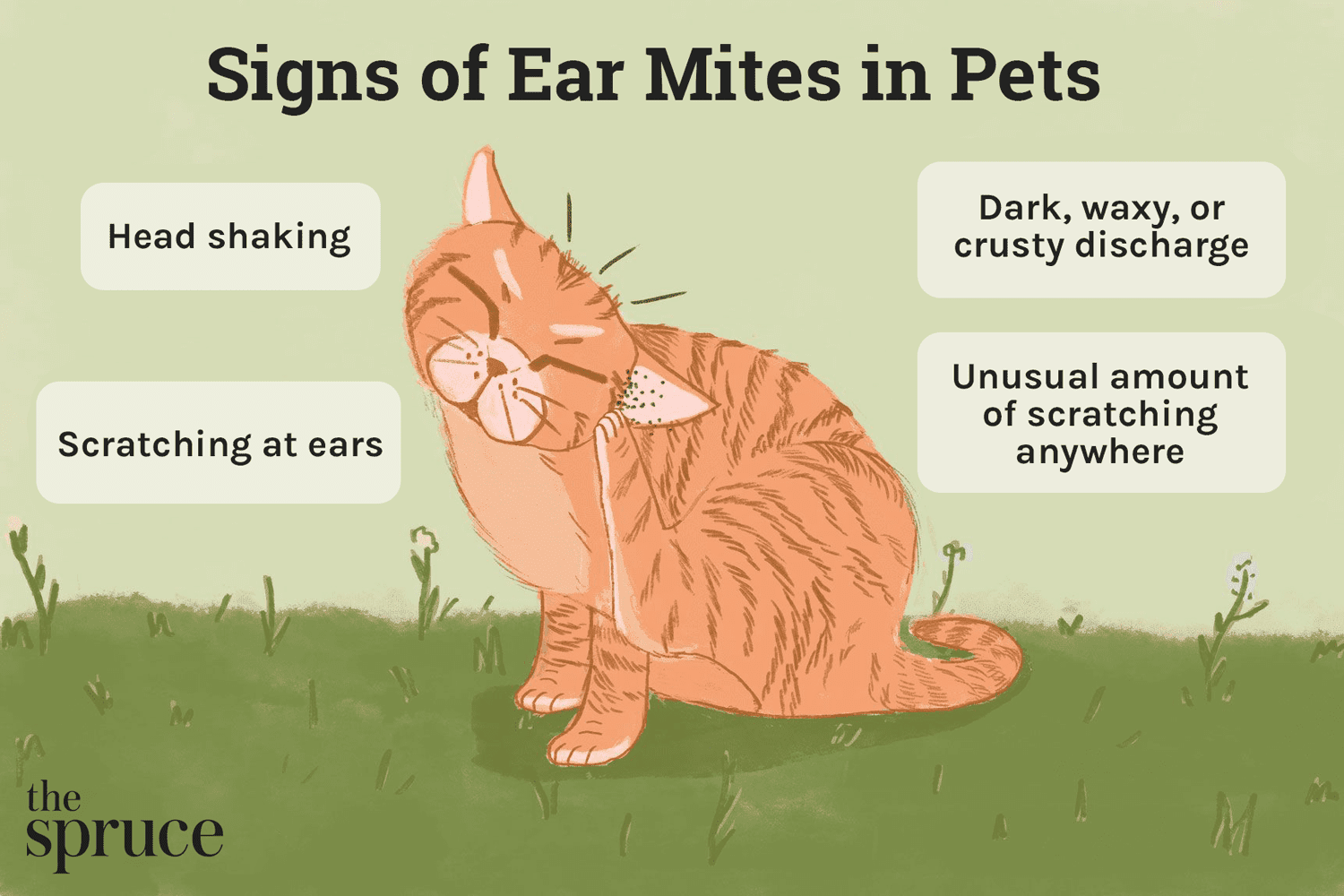
- Head shaking
- Scratching at ears
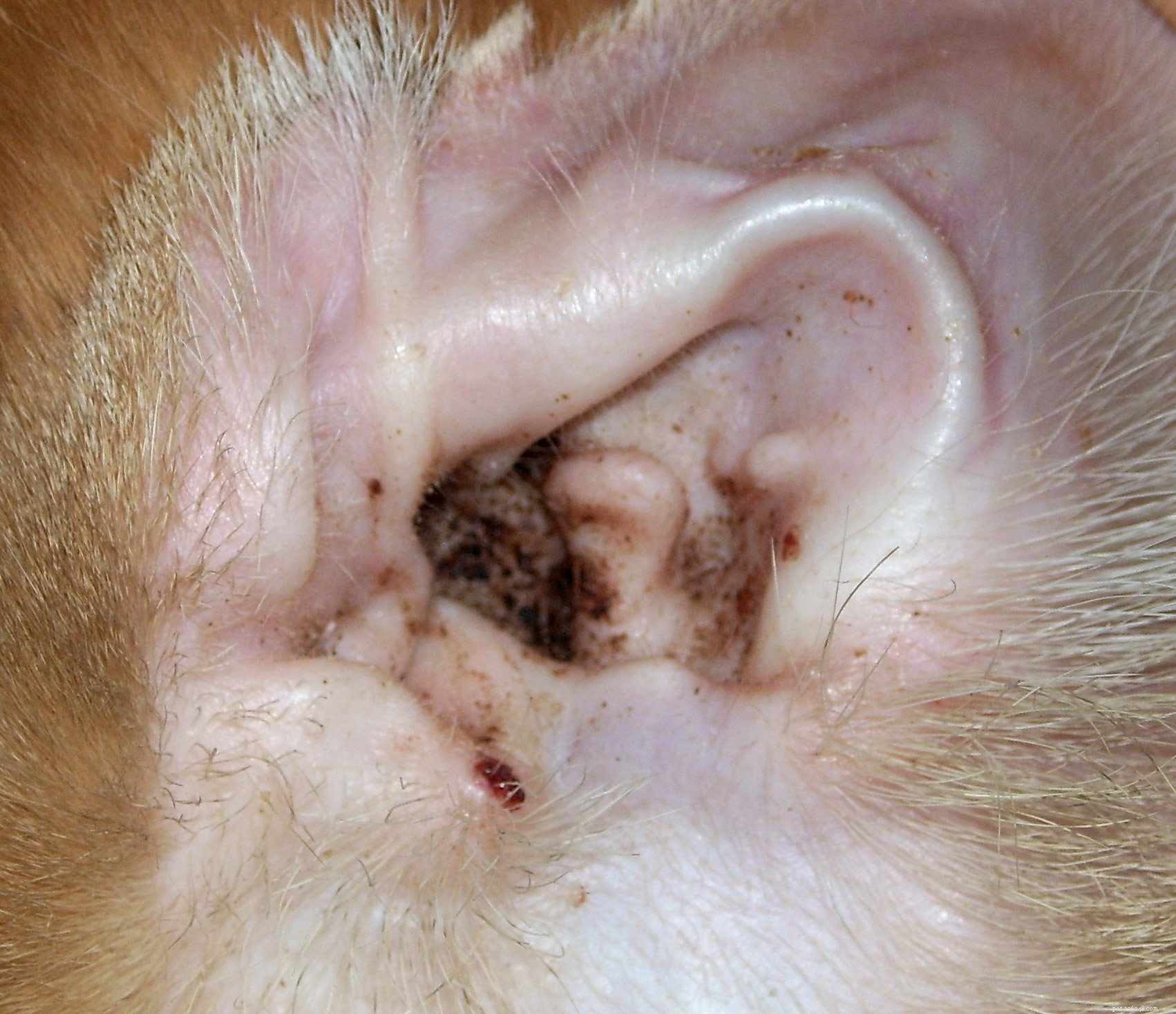
- Dark waxy or crusty discharge from the ears (looks a bit like coffee grounds)
- Irritation of other parts of the body resulting in an unusual amount of scratching
Transmission of Ear Mites
Cats are commonly affected by ear mites, which are spread mostly by direct contact with another animal. They are especially common in young animals.
Diagnosis of Ear Mites
The diagnosis of ear mites is confirmed when the mites are found in a sample of the ear discharge examined under a microscope. Sometimes the mites can even be seen as little white specks moving around in the ear (when using a magnifying scope, or otoscope, to examine the ear).
Confirming the presence of the mites is necessary to distinguish ear mites from other ear infections, so don't try to diagnose at home. Always consult a veterinarian before beginning any course of treatment.
Treatment and Prevention
There are several options for treating ear mites, and your veterinarian will recommend a treatment protocol for your pet. Over the counter medications are often less effective or require extended treatment times compared to medications prescribed by your vet. In fact, some newer medications require only a single application to be effective.
First, thorough cleaning of the ears can help clear the discharge, calm the irritation, and remove some of the mites. This can be followed up in one of several ways:
- One-time medication treatments applied to the ear can be successful.
- One-time treatments applied to the skin are typically used as monthly parasite control medications; a single dose usually takes care of an ear mite infection but you may consider using them monthly to prevent reinfection and control other pests.
- Repeated applications of medication to the ear might be required.
- Injectable ivermectin can also be used; this is an off-label use for ear mites.
It is important to strictly follow your vet's recommended dosage schedule for the successful treatment of ear mites . Though more time-consuming to apply, some medications can calm inflammation and treat secondary bacterial or yeast infections.
Even if they are not showing symptoms, all pets in the home should be treated at the same time.
Ear Mites and Humans
Ear mites do not survive for long periods on humans so they do not cause long-term infections in people. Very rarely, however, ear mites may transiently hang out on humans—on arms or extremities—and produce a transient rash.
FAQ-
How do I check for ear mites in cats?
You can tell your cat has ear mites if it's shaking its head a lot, rubbing its ears, has hair loss around the ears, or you see a dark and waxy substance inside its ears.
-
What do ear mites look like in cats?
Ear mites are so tiny they're hard to see with the naked eye. A dark and crusty substance in your cat's ears is the hallmark of ear mites.
-
What causes ear mites in cats?
Cats can catch ear mites from other, affected cats, or from the environment. They are not breed-specific.
- Pet Behavior
- Pet Breeds
- Pet Names
- Pet Adoption
- Pet Training
- Cat Stories
- Pet Health
- Adorable Pets
- Cats
- How to Control Ear Mites in Cats: Expert Prevention & Treatment Guide
- Effective Ear Mite Treatment for Cats: A Complete Guide
- Comprehensive Guide to Removing Ear Mites in Cats
- Ear Mites in Cats: Symptoms, Causes, and Effective Treatments
- Why Your Cat's Ear Smells Bad – Causes & Treatment Guide
- Comprehensive Guide to Cat Ear Mites: Identification, Treatment, and Prevention
- Ear Mites in Cats: Symptoms, Causes, and Quick Diagnosis