

Is It Safe to Keep a Cat in a Cage All Day? Expert Guidance & Alternatives
There’s quite a wide variety of situations you could be in with a cat that might lead you to feel caging a cat for prolonged periods of time is a potentially viable solution to your problem.
Off the top of my head, I can quite honestly think of many very different reasons you might think to place a cat in a cage all day, all night, or for long stretches of time throughout the day and/or night.
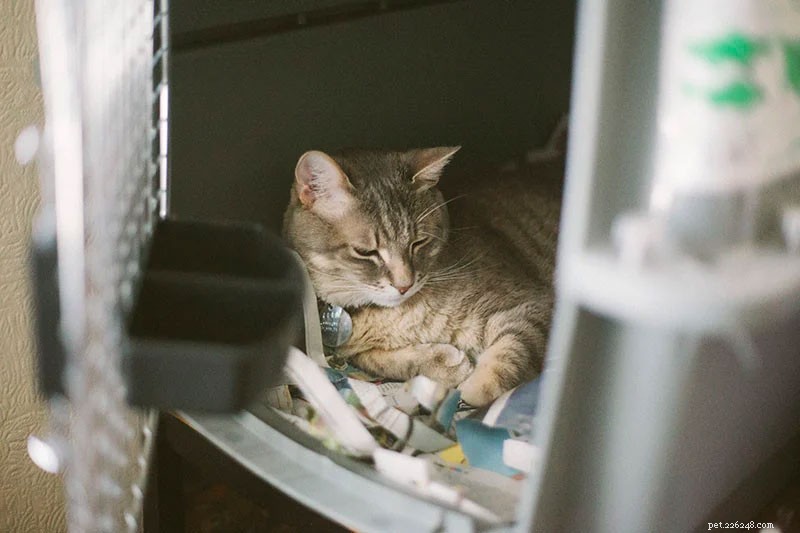
You could have a cat with broken bones whom your vet has prescribed months of cage rest, and are worried about what this will do to your pet’s psyche if you stick to it.
You could have an aggressive cat in your household, who you’re concerned may attack another cat in your home while you’re away at work for prolonged periods of time.
You could have the ever so exhausting problem of a cat who wakes you up very early every morning, or meows and cries at night – or both! – leading you to sleep deprivation and to be at your wit’s end with the situation.
You may have a cat that scratches up furniture very aggressively in your home, have replaced furniture at a rapid rate, and worry about needing to continue to waste hard-earned money and about the environmental impact of cycling through furniture way too quickly if you leave your cat to his or her devices over the span of months and years.
No matter what your situation is that caused you to look up whether caging a cat for prolonged periods of time is okay – whether it’s one similar to those I’ve listed, or something completely different – know that you’ll find empathy here from me.
I don’t think you’d be looking for an answer to this question if you didn’t feel incredibly frustrated over your situation and simultaneously concerned for your pet’s well being.

If you didn’t really care for the animal you’re looking after, I don’t think you’d be searching for an answer to the question “Is it okay to keep cats in cages?”.
Instead, you’d likely just cage the animal without taking the cat’s needs and psychological well-being into consideration at all, rather than double-checking to see if caging is a reasonable solution before you actually try it.
That being said, I’m afraid the answer may not be what you’d like to hear, as – unless the circumstances are incredibly special, such as a cat being prescribed cage rest by a vet – you really should not be caging a cat for long at all if you can avoid it in any way, shape, or form.
I’ll go over why, and what being caged can do to cats, but I won’t leave you hanging if you’re having problems you felt inclined to solve by caging a cat.
I’ll go over a plethora of different options you have – even if you live in a small space, have a limited budget, whatever the case may be – that should help you sort out your problem so much better than caging your cat, and will absolutely positively be better for your feline than being trapped in a cage all day.
If you have a moment after you’re done reading through this article to leave a comment, I’d love to know what the problem you’re dealing with is and why you felt you might be able to solve it by caging the cat.
If you have any special circumstances, like a second cat or an infant child to protect from an aggressive cat, please mention them as well! Whatever the case may be.
If you stumble across this article and have any advice for people in this type of situation – please, please, please do take a moment to leave a comment with your thoughts, tips, tricks, & past experiences with this issue as well. Or to respond to the comments from stressed pet parents left below with advice.
It bears repeating that the comments you leave on this post and others on my blog really help so many pet parents out.
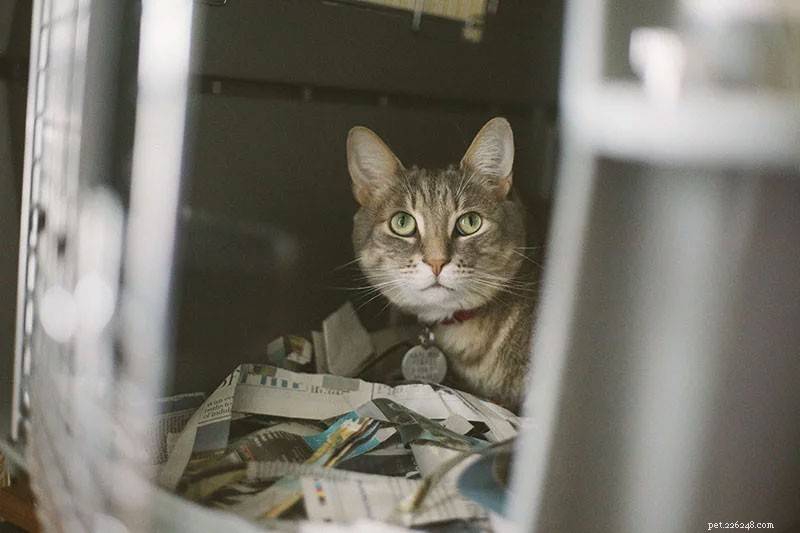
Why Caging a Cat for Long Periods of Time Is Bad for the Cat
There seem to be a lot of cautionary tales out there of cats who spent time kept in cages for prolonged periods of time coming out different – and pretty substantially changed psychologically for the worse – from regular cats who are allowed to have the space they obviously need in their regular lives.
Many of these tales come from individuals who adopted pets where the previous owners, breeders, or other sorts of caregivers kept these pets in cages.
Upon entering a new home without being kept in an enclosure for large parts of the day, these cats exhibited a lot of fear, anxiety, stress, and seemed to even have more health issues than most cats. They also took considerably long periods of time before they even began to relax and recover from what seems to me to have been quite a traumatic experience for them.
Want a picture of what this type of change can look like? Here are a few personal experiences, shared on this Quora thread, this first one Gwyn Kemp-Philp:
This second one is a story about a cat adopted from a very unethical breeder who kept Egyptian Maos in very small cages; written by Warren Taylor on the same Quora thread I mentioned before:
In short – don’t take the risks. Cats really do seem to be traumatized by long periods of time spent in cages. They don’t seem to be anything like the other most popular pet on the planet earth when it comes to cages…
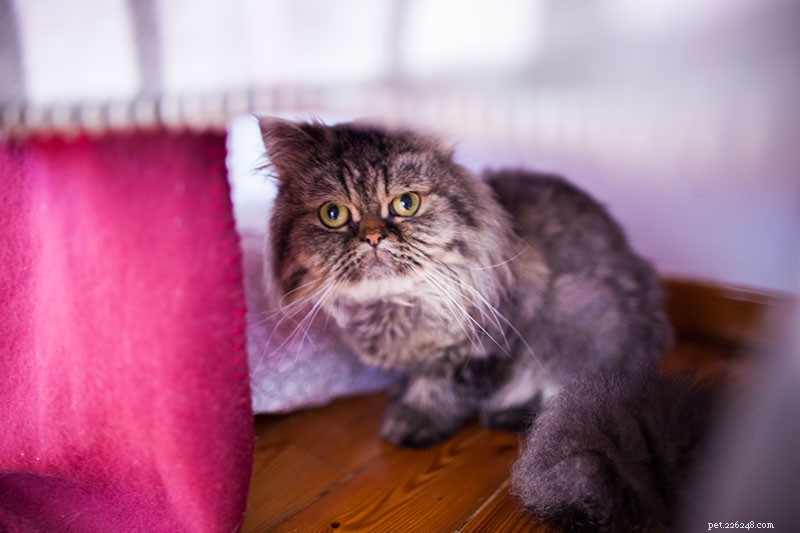
The Differences Between Dogs & Cats Being Crated for Hours
Only having had cats ever in my life, I nearly forgot that dogs are actually fine being crated for hours at night, and that many pet parents use crating as a form of training for dogs with great success and little to no anxiety (to my knowledge at least!) from the dog.
I didn’t actually think about this at all, and that maybe some of the individuals searching for whether caging cats is okay may have had experience with dogs, or knew this was fine to do with dogs, and thus were wondering if the same was true for cats?
Unfortunately, when it comes to crating and caging, cats aren’t like dogs, and Stacie Taylor Cornett points out in this Quora thread quite an excellent explanation as to why:
So essentially, dogs’ natural instinct is to have a den – which is why cages and crates ultimately feel safe to them.
Cats absolutely don’t have dens. Thus when they’re kept in cages, they feel trapped since their natural instinct is to have escape routes and run/flee by jumping to get away when they feel they are in danger.
Cats definitely do seem to develop emotional problems if they’re kept in cages for long periods of time, so I definitely would avoid this, even if you thought it might be a viable solution because dogs are typically good with crating. Definitely not the same here.
Alternatives to Caging Cats: What to Do Instead of Keeping a Cat in a Cage
Here are the solutions I could think up with regards to alternatives to caging a cat. Again – if you have any problems that can’t be fixed with one of these, or have any other solutions to offer up – please do take a moment to leave a comment below!
1. Section off a Room for the Cat
Giving your cat a dedicated room for him or her instead of keeping your cat in a cage is the most direct alternative to caging a cat.
Sectioning off a room entails making sure the cat has absolutely everything he she could ever want or need in that room.
This includes things like: water, scratch posts, pads, or cat trees, food, a window to look outside, toys, beds and sleep spots, as well as anything and everything else your find your cat enjoys.
Keeping your cat in a single room won’t make your cat anxious, so long as your cat has absolutely everything he or she needs in that room.
Actually, if you play your cards right, and deck out the room with quite a lot of things your cat loves, your cat’s anxiety might actually go down instead of staying the same during his or her time in the “safe” room.
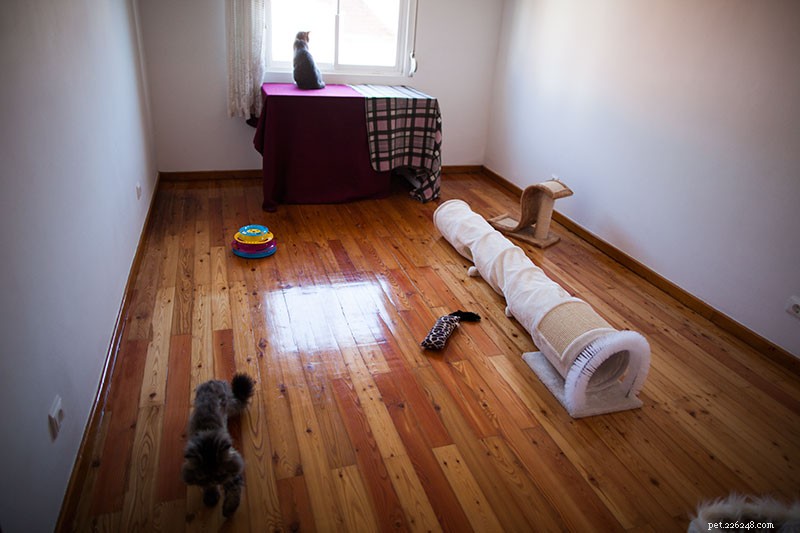
It’s like a stress-free spa day if you play your cards right, and this can help considerably reduce stress for cats in situations as diverse as fighting between cats in your home to moving anxiety and not liking the new home after a move.
Have a small room you could do this in? Worried your cat will hate spending time in it?
In order to optimize even small rooms to make cats incredibly happy to spend time in them, try using the tip I mentioned in this article on how to keep indoor cats happy in small apartments.
Essentially, using furniture, arrange the room in ways that allow your cat to jump up to high spaces. You can do this, by, say – placing a chair next to a side table, which is next to a taller dresser, which is by a bookshelf.
The underside of the chair can even be turned into a little hideaway quite easily by placing a blanket on the chair, then a cardboard box can be placed beneath the chair, making an incredibly comfy nap spot for kitty to sleep and spend time in.
You can add a blanket or cat bed on top of a dresser, tonnes of things you can do even within a small space, so long as you get a little creative with jam packing full all the things you know your cat loves and arrange furniture in ways that make vertical space much more highly optimized.
Unlike humans, cats can take advantage of vertical space as much as they can take advantage of horizontal space.
We can’t jump up on furniture the way they can, and so we aren’t able to use the tops of dressers and bookshelves for hanging out in. Thankfully, cats can, so it’s easy to use small spaces to keep them in, all the while making sure they remain happy, by increasing the nooks and crannies they have to spend at different heights.
Using this technique you can make any space, even if it’s particularly small, feel much larger to the cat.
Don’t have enough furniture to make this happen easily? The fastest and easiest way – and typically also the most space-conserving way as well – to create multiple levels is to buy a cat tree.
There are some cat trees that are pretty darn affordable, and for those really tight on space, there are narrow options available.
I can attest to being the type of person who thought they may be overrated before I bought my first one. But the cats in my household (I currently have 5) really do love them, all preferring them to scratch posts and most other furniture in the house.
The best spots to create for kitties? Ones with window views from different angles. This way your cat can get a nap in and a view of the birds and other wildlife without moving an inch.

2. Resolve Negative Behavioural Issues with Quick Fixes
There are a lot of behavioural issues that can contribute to pet parents wanting to cage a pet.
Many of these are not easy to resolve at all if you’re not sure where to start, but once you have the general idea of what you should be doing to fix them – or even in some cases, what you can buy – the problems tend to quickly resolve themselves.
Some quick and easy fixes for specific problems you might be having include:
Cat keeps scratching up your house at all hours of the day? Sadly, there isn’t such thing as a perfectly cat-proof couch fabric (not even leather is completely safe!).
That being said, there is a really quick and easy fix, for furniture you already have. What’s that? Furniture scratch protector covers. These come in all sorts of shapes and sizes.
There are couch protector covers (super handy if you also have issues with liquid accidents in your household!), cat scratch guards, and if you have a lot of damage to your furniture already, but are willing to give covering up the damage a go, there’s also couch cat scratchers that turn the damaged bits into quite attractive (in my opinion) scratching posts.
To solve food theft: grab a microchip cat feeder so only approved cats can eat at the all-you-can-eat buffet left out.
To solve hunger issues throughout the day that result in your cat eating things he or she shouldn’t: try a timed feeder like the Petsafe Simply Feed (I’ve had one for ages and I love it, check out my review here).
To allow one cat to escape if a different cat gets aggressive: give your cat a room to him or herself, and throw on a microchip pet door to allow access in and out without letting the aggressor have access to that particular room.
Cat keep peeing on the bed? There are waterproof bed covers – these help so much with keeping things clean and making sure you don’t need to replace furniture you don’t want to.
I got some of these when my Bjorn was having issues vomiting up food. Hey, if they can work for kids who have accidents, they can definitely work for cats as well!
You can also try waterproof pet beds if they keep having accidents (vomiting or peeing) on their pet beds.

3. Solving Problems with Training
Training is a much more time consuming process – and obviously requires more effort as well – than the quick fixes in the previous section are to implement and reap the benefits of.
That being said, for certain things, they just need to be done. One example of a cat behaviour that (in my opinion) all pet parents should train their cats to do: keep off of counters.
Training your cats to keep off counters isn’t hard and it’s good for you (hygiene-wise) and for the cat as well (in case you accidentally leave out a knife or some chocolate on the kitchen counter and kitty could hurt him or herself by landing on it or eating it).
Other things you should train a cat to do work best in conjunction with quick fixes. Like teaching your cat to stop scratching on the couch.
This works best if you already have quick fixes like couch protector covers on, just in case your cat scratches in the meantime – so you can save your sofa in the long run with training, and in the short run with couch protector covers.
There are issues with behaviour that result from literally one trigger. For example, a cat who cries and begs for food all day, the single trigger is likely that you’re feeding him or her human food and if you stop that entirely, your cat is likely to stop the never-ending begging.
Or your cat waking you up (often earlier and earlier) each morning. This is often triggered by you feeding your cat immediately upon waking up. It can be resolved by delaying the first feeding until at least a few hours after you wake up. Or of course, grabbing a timed feeder like the PetSafe Food Dispenser for your cat.
Finally, there are the most complicated issues, but those that are still possible to train out of your cat with the right steps taken forward.
These are complicated because usually more than one need is not being met by the cat’s environment, and a combination of different things on your part (usually very easy, but still more than one) need to be done to resolve the negative behaviour.
An example? Cats who are ridiculously hyperactive all the time. You need to make their environment much more interesting. Which includes things like playing with your cat more often if you can, but also easy fixes like buying a variety of toys cats can play with by themselves like these, and implementing some of these passive techniques for preventing feline boredom.
Being hyperactive can contribute to issues like meowing and crying all night, which is an ever-so-frustrating problem I had, and one my cat I feel grew out of as he aged. Remember, kittens have a lot of energy, so you’re going to want to keep them occupied with high-energy cat toys like these.
Finally, a ridiculously frustrating problem to have if you’ve taken in a new cat is when two cats don’t get along – but you can train your cats to be used to each other. It takes a lot of time and effort if you have a cat anywhere near as aggressive and easily stressed out as my first cat, Avery, but it’s so worth it and is really possible if you give it a good go.
Need more ideas for what you can train your cats on? Check out my training section of this blog and let me know if there are topics you want me to cover that you couldn’t find spoken about here.
(Edit 2022/03/14: I’ve written up a second article on this topic here, titled: “Caging Cats at Night in a Way That’s Luxurious, Comfortable (& Humane!)”; definitely check that out in case you’re interested)

Your Thoughts on Caging Cats?
Have you personally ever felt frustrated enough with a cat behaviour that you felt like caging a cat might be a viable solution to solving your problem?
What is or was the problem you’re currently dealing/have dealt in the past with?
Did you realize cats were so different from dogs when it comes to crating? Did you think cats might have psychological issues from being crated over time, but didn’t realize they were actually severe?
Have you ever had any experience with regard to crated cats before?
Please share your experiences, stories, opinions, and basically anything you have to say on this topic in the comments down below! Would love to hear your thoughts on the topic and I’m sure you’d be helping quite a lot of other pet parents out.
- Pet Behavior
- Pet Breeds
- Pet Names
- Pet Adoption
- Pet Training
- Cat Stories
- Pet Health
- Adorable Pets
- Cats
- Understanding Cat Warts: Causes, Symptoms, and Treatment
- When Is Caging Your Cat Appropriate? Expert Tips
- 10 Proven Ways to Get Your Cat to Sleep Through the Night
- Managing Your Cat's Separation Anxiety: Practical Tips for Safe, Stress-Free Days
- Is Your Cat Sleeping All Day? What It Means and When to Seek Veterinary Care
- Understanding and Managing Cat Anxiety: Symptoms, Causes, and Solutions
- Understanding and Treating Cat Constipation: Causes, Symptoms, and Care