

How Quickly Chickens Grow: What New Owners Must Know
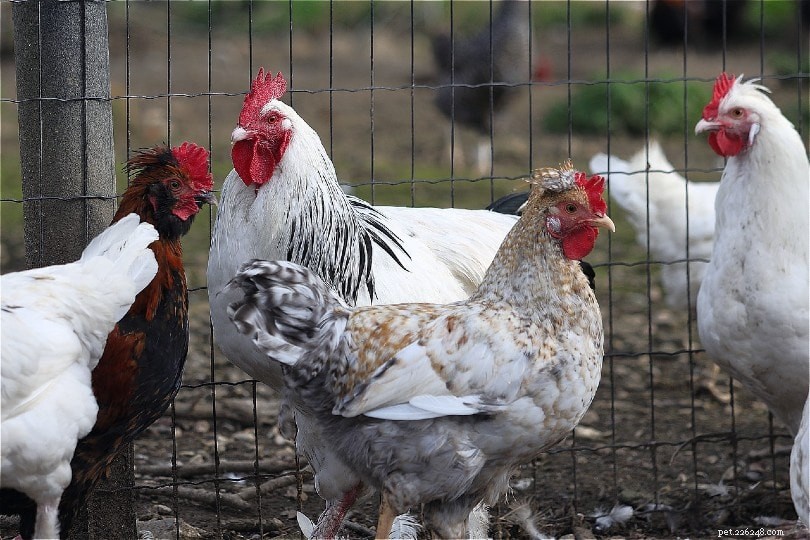
If you’re a first-time flock owner, it can be a little nerve-racking trying to learn all you can about chickens. After all, you want to make sure you’re caring for them properly so you can raise a successful flock of ladies that stay healthy and produce quality eggs.
So, how fast do chickens grow? Honestly, that depends on the specific breed, but let’s go over both averages and extremes on how quickly you can expect your flock to develop.
Faster vs. Slower Growing Hens: What Does That Mean?
Some chicken species grow more rapidly than others based on the genetics of the breed. For instance, many meat chickens grow quickly, while egg layers might be slower to develop. Ultimately, it depends on the hen—but the average length of time for growth is between 90 and 100 days.
Faster Growing Chickens
The fastest-growing hens are broiler chickens, also known as meat chickens. These birds develop thick, heavy structures in roughly 48 weeks. They are genetically geared toward growing to market weight in less time.
Slower Growing Chickens
Most layers grow at a moderate pace, but some take much longer. For example, the Brahma is a large chicken sometimes used for meat, but it’s also a prize-winning layer. In some cases, it can take a Brahma up to 2 years to fully develop.
Taking Care of Baby Chicks
When baby chicks are tiny, they rely on an outside heat source to keep their body temperature up. Your chicks will need a heating lamp for the first 4-10 weeks of their life, depending on the growth rate. Once they get their first layer of feathers, they can start retaining heat on their own.
You should have your chicks in a brooder where they always have direct access to 95-degree Fahrenheit (F) direct light. But they also need a cool area of cage space so they can go to and from to regulate their body temperature.
When to Introduce Chickens to the Outdoors
Depending on weather conditions where you live, baby chicks can enter the great outdoors by four weeks with most breeds. However, it can be up to ten. So, make sure they have their first layer of feathers before sending them off to the coop full-time.
It needs to be at least 70 degrees F continually outside before they are fully feathered. So, if your region drops below that, they might need a little help staying warm on colder nights. You can offer a heat source, like straw and a heating lamp, for them to maintain their heat overnight.
When Egg Laying Begins
What’s fascinating about chickens is that they all start laying at different times. Certain breeds tend to start producing quicker than others. So, you might even have chickens of all the same breed, but they will come into sexual maturity on different days—sometimes even a few weeks apart.
On average, hens start to lay around 18 weeks of age.
Sexing Chickens
You can safely sex chickens before the age of dull maturity. Sometimes, it’s pretty easy to tell, while other times, it can be really complicated.
Feather Sexing
Many experienced chicken owners can sex them based on wing structure alone when chickens are a day old. Females tend to have varying feather lengths, while males are all exactly the same size. That alone is sometimes not enough to tell, though.
Vent Sexing
Vent sexing is not a recommended method, as it requires extreme precision, so no harm comes to the chick. However, some can squeeze a chicken to expose a “hump” from their vent. If there is no hump, the chick is a female.
Crowing
Roosters start to test their skills between six to eight weeks. If you hear a squeaky or grumbly attempt at a crow, you might have a rooster on your hands. It might sound a little funny at first, as it’s a pretty big struggle to learn to use their voice.
Interestingly, if there is more than one rooster in the flock of chickens, whoever crows first is the alpha, which determines the pecking order.
Other Signs
While not totally accurate as a means of sexing, there are other ways you might be able to get a hint you have a rooster. Many will be dominant very early, always being the first one to the food bowl. They might be higher energy and not like being handled as much as other chicks.
Also, when they start to develop, you might notice bright red combs or waddles much earlier than your other chicks. They could be a bit bigger sooner, too. While these facts don’t necessarily mean it’s for sure you have a rooster, it’s a lot more likely.
Growth Rates Specific Breeds
There is a vast selection of chicken breeds out there. However, we rounded up a few common names you should recognize to explain the differences between how these breeds mature.
Here are the common ages of maturity in chickens when they can lay and reproduce.- Cornish — 16-20 weeks
- Orpington — 19-24 weeks
- Brahma — 18-24 months
- Golden Comet — 16-20 weeks
- Plymouth Rock — 18-20 weeks
- Marans — 22-26 weeks
- Silkie — 30-32 weeks
- Jersey Giant — 32-34 weeks
- Leghorn — 18-20 weeks
Conclusion
Even though hens continue to grow after sexual maturity, the bulk of their development is done by the time they start laying eggs. If you have broiler chickens, they usually mature even quicker, producing quality meats in a short window of time.
Even after hens start laying, they will continue to grow and fill out over their first year. By the time your chickens are two years old, all—despite breed—will be fully mature.
- You may also want to read: What Are Broiler Chickens & How Long Do They Live?
- How Fast Can Cows Run? Find Out Their Top Speed & Why It Matters
- Decoding Fox Communication: How These Clever Canids Convey Messages
- Understanding Salmonella in Chickens: Causes, Risks, and Prevention
- How Sheep Thrive in the Wild: Essential Facts You Should Know
- Turkey Speed Revealed: How Fast They Can Run
- How Long Can Chickens Survive Without Water? Key Facts You Must Know
- The Complete Guide to Chicken Egg Laying: What Every Backyard Keeper Should Know