

Top 7 Most Common Spiders in Utah: What to Know
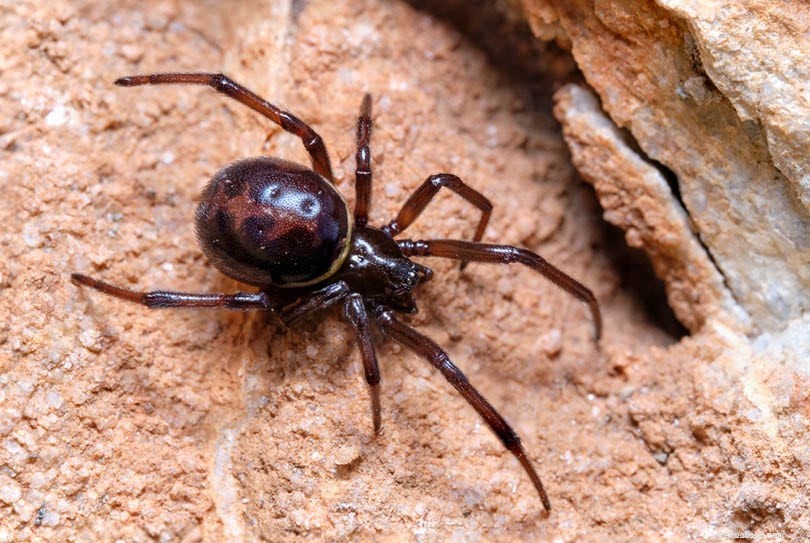
While most people despise even the mere sight of a spider, these creatures are actually extremely helpful at controlling local insect populations. In Utah, this is no exception. Spiders in Utah kill and feast on pesky bugs such as earwigs, crane flies, and millipedes.
While there are some dangerous poisonous spiders in Utah, most don’t pose any threat to humans. Although there are hundreds of species of spiders in Utah, here are the seven most common spiders you’re likely to see.
7 Spiders Found in Utah:
1. American Grass Spider
| Species: | Agelenopsis |
| Longevity: | 3 years |
| Good to own as a pet?: | No |
| Legal to own?: | Yes |
| Adult size: | 19 mm |
| Diet: | Carnivorous |
The American Grass Spider is found throughout the western United States, including Utah. It weaves a non-sticky, sheet web that has funnel shelters on one edge for the spider to hide in. While the web is inefficient for catching prey, the American Grass Spider more than makes up for that with its swift speed. American Grass Spiders are brown or tan and have black stripes running down their backs. They have long, slender legs and aren’t harmful to humans.
2. Western Black Widow Spider
| Species: | Latrodectus hesperus |
| Longevity: | 3 years |
| Good to own as a pet?: | No |
| Legal to own?: | No |
| Adult size: | 1 inch |
| Diet: | Carnivorous |
The Western Black Widow Spider is a venomous spider found throughout western North America. The female has a black body with a bright red, hourglass-shaped mark on the lower abdomen. This mark can be white or yellow. The male is tan-colored with light striping. The Black Widow gets its name from the female spider’s behavior of eating the male after the pair mate. If a Black Widow Spider bites you, get medical help right away.
3. Salt Lake County Brown Tarantula Spider
| Species: | Aphonopelma iodius |
| Longevity: | 5 years |
| Good to own as a pet?: | Yes |
| Legal to own?: | Yes |
| Adult size: | 4 – 5 inches |
| Diet: | Carnivorous |
The Salt Lake County Brown Tarantula is a big spider in Utah. It is found throughout dry desert landscapes and woodland habitats. This species can be easily identified by its huge, furry body and light brown coloration. The Salt Lake County Brown Tarantula is often kept as a pet and is also referred to as the Great Basin Blonde or Desert Tarantula. This arachnid isn’t for the squeamish!
4. White Banded Crab Spider
| Species: | Misumenoides formosipes |
| Longevity: | 2 years |
| Good to own as a pet?: | No |
| Legal to own?: | Yes |
| Adult size: | 5 mm |
| Diet: | Carnivorous |
A truly unique looking arachnid, the White Banded Crab Spider is known for its distinct white and yellow colorations. It gets its name from its crab-like appearance. A non-webbing spider, the White Banded Crab Spider hides in flowers to catch its prey. The males also consume nectar. Female White Banded Crab Spiders lay about 80 to 180 eggs that are wrapped in silk. The female will stand guard over her eggs until she dies.
5. Wolf Spider
| Species: | Hogna |
| Longevity: | 2 years |
| Good to own as a pet?: | No |
| Legal to own?: | Yes |
| Adult size: | 35 mm |
| Diet: | Carnivorous |
The Wolf Spider is found all over the globe. It is brown in coloration with black and yellow markings on its abdomen. The Wolf Spider lives in deep, underground tubes that can measure as much as eight inches in length.
6. False Black Widow Spider
| Species: | Steatoda grossa |
| Longevity: | 2 years |
| Good to own as a pet?: | No |
| Legal to own?: | No |
| Adult size: | 4 – 10 mm |
| Diet: | Carnivorous |
The False Black Widow Spider, also known as the Cupboard or Brown House Spider, is a poisonous spider found in Utah. It is often confused for the Black Widow Spider due to its body shape and deep coloration. However, the False Black Widow Spider lacks the trademark red hourglass marking of the traditional Black Widow. Though venomous, this spider isn’t aggressive toward humans. It will only bite if provoked. Symptoms of a False Black Widow bite include blistering at the bite site, pain, fever, and sweating. If this spider bites you, seek immediate medical attention.
7. Woodlouse Spider
| Species: | Dysdera crocata |
| Longevity: | 2 years |
| Good to own as a pet?: | No |
| Legal to own?: | Yes |
| Adult size: | 8 – 10 mm |
| Diet: | Carnivorous |
The Woodhouse Spider is a spider species that feeds primarily on woodlice. It is also known as the Pillbug Hunter and Slater Spider. This spider is tawny orange and has six eyes. It can sometimes appear extremely shiny. The Woodhouse Spider lives under bricks, rocks, logs, and potted plants. They are not dangerous to people.
Conclusion
As you can see, Utah is brimming with unusual spiders. From large, hairy tarantulas to poisonous midnight-black spiders, Utah is home to a large variety of arachnids. While most spiders in Utah aren’t dangerous, the Black Widow and False Black Widow spiders are harmful to humans. Never attempt to handle these two spider species.
- 7 Spider Species Native to Montana – What to Know About Their Bites
- Common Spiders in Maryland: What to Know About 9 Key Species
- Discover Kansas' 25 Spiders: Black Widow & Everyday Species
- 20 Native Spiders of Hawaii: A Comprehensive Guide
- Australia's 10 Most Noteworthy Spiders: Common, Dangerous, and Giant
- 24 Spiders Commonly Found in Iowa: Facts & Safety Insights
- 5 Oregon Spiders You Should Know About