

12 Native Wisconsin Frog Species – Identification, Habitats, and Photos
Frogs are a familiar sight and sound near any body of water throughout Wisconsin. Even those who live mostly on land wonʻt stray far from the water, thanks to the need for an aquatic environment to reproduce. No invasive frog species have found their way to the state but here are 12 frog species native to Wisconsin–large, small, and occasionally poisonous skin and all!
12 Frogs Found in Wisconsin
1. American Bullfrog
| Species: | L. catesbeianus |
| Longevity: | 7-9 years |
| Good to own as a pet?: | No |
| Legal to own?: | Yes in Wisconsin, varies by state |
| Adult size: | 5.5-7 inches (14 cm-18 cm) |
| Diet: | Carnivorous as adults, herbivores as tadpoles |
The largest frog species in Wisconsin, American Bullfrogs are primarily aquatic and may be found in ponds, lakes, rivers, and marshes. They are olive to pale green, with different colored spots. American bullfrogs ambush their prey, which may include insects, crayfish, other frogs, snakes, and even birds. Bullfrogs are vulnerable to predators such as fish, snakes, birds, and some mammals at every life stage, from egg to tadpole to adult. Bullfrogs are also legally hunted by humans in Wisconsin and other states.
2. Blanchardʻs Cricket Frog
| Species: | A. blanchardi |
| Longevity: | 1 year |
| Good to own as a pet?: | No |
| Legal to own?: | No |
| Adult size: | 0.5-1.5 inches (1.3-3.8 cm) |
| Diet: | Carnivorous as adults, herbivores as tadpoles |
Blanchardʻs Cricket Frogs are the smallest frog species in Wisconsin and are listed as endangered as well. Their color can change based on their environment but may be gray, brown, green, or reddish tan sometimes with a back stripe and dark triangle on the head. These small frogs live in freshwater environments, including wetlands, ponds, lakes, or streams. Cricket frogs eat a variety of insects (including crickets) and other invertebrates. Birds, fish, and larger frogs are their most common predators. Cricket frogs are threatened by habitat loss as well as their sensitivity to pollution.
3. Pickerel Frog
| Species: | L. palustris |
| Longevity: | 5-8 years |
| Good to own as a pet?: | Yes |
| Legal to own?: | Not in Wisconsin, varies by state |
| Adult size: | 2-4 inches (4.5-7.5 cm) |
| Diet: | Carnivorous as adults, herbivores as tadpoles |
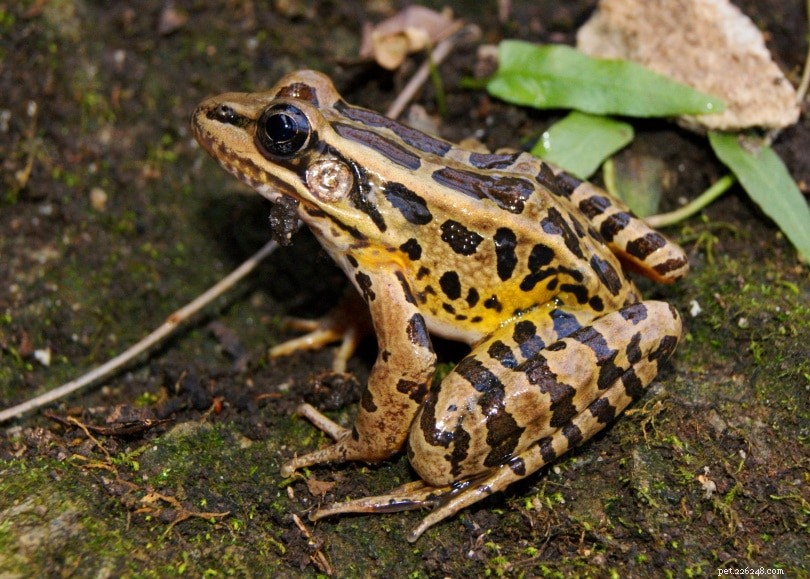
Pickerel frogs secrete a poisonous skin toxin as a defense mechanism against their predators, snakes, and larger frogs. In winter, these frogs live in cold streams and spring holes but move to warmer ponds in spring and summer to breed. Pickerel frogs are greenish-brown in color, with two rows of dark, square spots down their backs. Their bellies are light, with bright yellow underneath their hind legs. Tadpoles dine on algae and other plants, while adult Pickerels enjoy spiders and insects. In Wisconsin, Pickerel frogs are a species of Special Concern, meaning they are close to becoming threatened or endangered.
4. American Toad
| Species: | A. americanus |
| Longevity: | 1-2 years in the wild, longer in captivity |
| Good to own as a pet?: | Yes |
| Legal to own?: | Yes |
| Adult size: | 2-3.5 inches (5-9 cm) |
| Diet: | Carnivorous as adults, herbivores as tadpoles |
American toads are widespread throughout Wisconsin, living in a variety of habitats including woods, wetlands, prairies, and backyards. American toads can be brown, red, olive, or gray with dark spots and warts on their backs. Their skin color can change based on environmental conditions. Insects and other invertebrates are the main food source for toads. One toad can eat as many as 1,000 insects in a day! Itʻs not true that you can catch warts from touching a toad but their skin is covered in a poisonous toxin to protect from their main predators, snakes, which can irritate human skin when touched.
- Also See: 5 Frogs Found in Alaska (with Pictures)
5. Boreal Chorus Frog
| Species: | P. maculata |
| Longevity: | 3 years |
| Good to own as a pet?: | Yes |
| Legal to own?: | Yes |
| Adult size: | 0.7-1.2 inches (1.8-3.0 cm) |
| Diet: | Carnivorous as adults, herbivores as tadpoles |
Boreal chorus frogs are a small species, found in marshes, wetlands, and other damp environments throughout the state. They are light green or tan frogs with three brown stripes down their backs. Boreal chorus frogs eat insects and other invertebrates as adults and algae during the tadpole phase. Their main predators are snakes, birds, and small mammals like raccoons.
6. Wood Frog
| Species: | L. sylvaticus |
| Longevity: | 3-5 years |
| Good to own as a pet?: | Yes |
| Legal to own?: | Yes |
| Adult size: | 1.5-2.5 inches (3.75-6.25 cm) |
| Diet: | Carnivorous as adults, omnivores as tadpoles |
Wood frogs prefer to live in humid, moist forest environments where they eat a variety of invertebrates, such as insects and snails. Their coloring can be pinkish-tan to brown with a dark brown mask behind their eyes and a white upper lip. Wood frog tadpoles eat both algae and other plant matter and the eggs of other amphibians. In turn, the tadpoles and wood frog eggs are eaten by aquatic insects and amphibians. Predators such as snakes, raccoons, mink, and larger frogs eat adult wood frogs. Wood frogs generally rely on camouflage to escape predators. The call of a Wood frog sounds similar to a duck quacking.
7. Copeʻs Gray Treefrog
| Species: | H. chrysoscelis |
| Longevity: | 7-9 years |
| Good to own as a pet?: | Yes |
| Legal to own?: | Yes |
| Adult size: | 1.25-2.0 inches (3-5 cm) |
| Diet: | Carnivorous as adults, herbivores as tadpoles |
Copeʻs gray treefrogs are medium-sized, gray to light green frogs with bright yellow on the underside of their hind legs. They are slightly smaller than the closely related gray treefrog species. Copeʻs gray treefrogs live in forest habitats and spend much of their time up in trees. These frogs eat primarily small insects like crickets and beetles. Larger frogs, snakes, and water birds prey on Copeʻs gray treefrogs as adults and froglets, while the tadpoles are eaten by aquatic bugs and salamander larvae.
- Related: 17 Frogs Found in Alabama (with Pictures)
8. Gray Treefrog
| Species: | H. versicolor |
| Longevity: | 7-9 years |
| Good to own as a pet?: | Yes |
| Legal to own?: | Yes |
| Adult size: | 1.5-2.0 inches (3.75-5 cm) |
| Diet: | Carnivorous as adults, herbivores as tadpoles |
Closely related to the Copeʻs gray treefrog, gray treefrogs are slightly larger, with a different sounding call. These frogs can change color based on temperature or blend into their environment, going from green to gray with black markings. They also sport a white mark beneath each eye and yellow on the inside of their hind limbs. Gray treefrogs are nocturnal and eat mostly insects, occasionally snacking on smaller frogs for a bit of variety to their diet. Birds, snakes, other frogs, and small mammals eat adult gray treefrogs. Life is dangerous for tadpoles often preyed upon by aquatic insects.
9. Spring Peeper
| Species: | P. crucifer |
| Longevity: | 3-4 years |
| Good to own as a pet?: | Yes |
| Legal to own?: | Yes |
| Adult size: | 0.7-1.1 inches (1.75-2.8 cm) |
| Diet: | Carnivorous as adults, herbivores as tadpoles |
The first frog species to sound their call into the early spring evenings, Spring Peepers are small, light tan to brown frogs. They have an X-like mark on their backs and large toes to help them climb trees. Spring peepers make their home in damp forests, near wetlands which they use for breeding. They eat insects and spiders as adults, while the tadpoles feed on algae. Natural predators of adult spring peepers include birds of prey, snakes, and salamanders. Tadpoles often fall victim to water insects and salamander larvae.
10. Green Frog
| Species: | L. clamitans |
| Longevity: | wild unknown, up to 10 years in captivity |
| Good to own as a pet?: | Yes |
| Legal to own?: | Yes |
| Adult size: | 2.4-3.5 inches (6-8.75 cm) |
| Diet: | Carnivorous as adults, omnivores as tadpoles |
Green frogs are common inhabitants of freshwater environments like ponds, marshes, and slow-moving rivers. They are found in shades of green from light to dark olive green or brown, covered in spots. Adult males also show off bright yellow chins. Green frogs arenʻt hunters but will eat any invertebrate, small snake, or unlucky frog that wanders into their path. They are hunted legally by humans and also animal predators like snakes, turtles, and small mammals. Tadpoles serve as a food source for fish, aquatic insects, and herons.
11. Mink Frog
| Species: | L. septentrionalis |
| Longevity: | 6 years |
| Good to own as a pet?: | No |
| Legal to own?: | Yes |
| Adult size: | 2-3 inches (5-8 cm) |
| Diet: | Carnivorous as adults, herbivores as tadpoles |
Mink frogs produce a substance that makes them taste and smell terrible as a defense mechanism. Because of this, most birds and mammals avoid them, making snakes their main predators. Mink frogs are green, olive, or brown with dark markings. They are primarily aquatic, living in wetlands. Their main food sources are spiders, snails, dragonflies, and other insects. Mink frogs are often found in ponds full of water lilies, as they will use the aquatic plants to hide from predators who arenʻt scared off by their foul smell.
12. Northern Leopard Frog
| Species: | L. pipiens |
| Longevity: | 2-4 years |
| Good to own as a pet?: | Yes |
| Legal to own?: | Yes |
| Adult size: | 2-3.5 inches (5-8.75 cm) |
| Diet: | Carnivorous as adults, herbivores as tadpoles |
Northern leopard frogs are the most colorful of Wisconsinʻs native frogs. They are green or light brown, covered in large, yellow-rimmed brown spots. Their bellies are white. Northern leopard frogs are aquatic, inhabiting a variety of freshwater locations. Adults eat insects, worms, smaller frogs, and sometimes even birds or garter snakes. Algae is the main food source for tadpoles. Mammals, snakes, turtles, and birds prey on these frogs. Northern leopard frogs are popular as pets. In some places, their numbers are declining due to loss of habitat and other human impacts like pollution.
Conclusion
Whether serving as food or making a dent in the local insect population, all 12 frogs of Wisconsin play a key role in their local ecosystems. Unfortunately, with one species already endangered and several others of special concern, the future status of these frogs is uncertain. Humans are responsible for most of these threats and itʻs our responsibility to protect them as well.
You may also want to read:
- 12 Frog Species Found in Michigan (with Pictures)
- 10 Native Michigan Turtle Species – A Visual Guide
- Alaska’s Rare Frogs: 5 Species You’ll Find (with Photos)
- Alabama’s 17 Frog Species Revealed – Photos & Facts
- Ohio’s 10 Frog Species Revealed (With Photos)
- Explore Kentucky’s 19 Frog Species – Including the Toxic Pickerel Frog (Photos Included)
- Illinois Lizard Guide: 8 Species You’ll Find (With Photos)
- 10 Common Snakes in Wisconsin – Identification Guide with Photos