

Master Macaw Body Language: Decode Your Bird's Mood
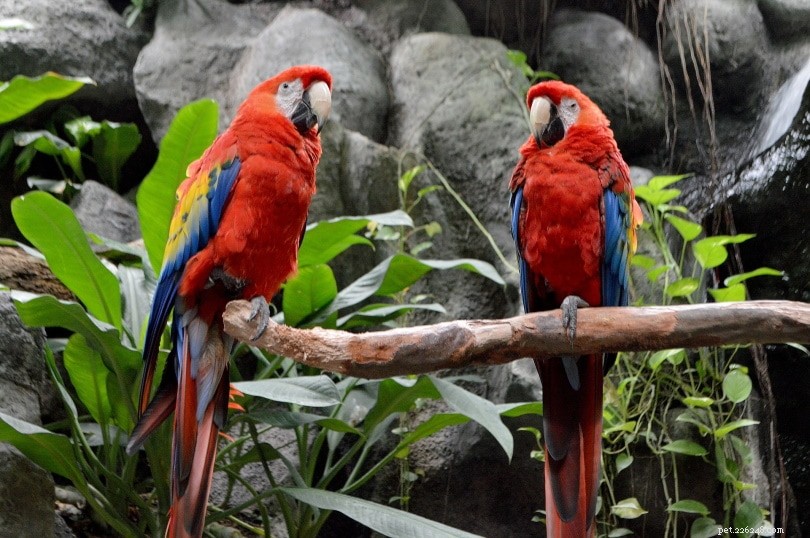
Macaws can be chatty, loud, and noisy at times, but one of the best ways to gauge your Macaw’s mood is by their body language. It can take a while to learn to read your parrot’s body language because it is sometimes subtle and highly contextual, but the longer that you spend with your Macaw, the better you’ll learn their moods.
Learning to read the body language of your Macaw is the fastest way to form a solid bond with your bird. You’ll also be able to quickly tell if they’re happy, annoyed, or ill, and it could help you avoid getting a nip on the finger! Here are a few guidelines, separated into each major body part, to help you better understand your Macaw’s body language.
1. Beak
In the wild, parrots use a variety of sounds to communicate with other birds, such as warning about predators, attracting mates, and protecting their territory. When they are in captivity, this is also the primary means by which they’ll attempt to communicate, alongside various forms of movement and body language.
Here are a few common uses of vocalizations:- Beak clicking and grinding. Most of the time, clicking and grinding is a sure sign of contentment in your Macaw, and they’ll often use it as a greeting when you come home, and they may even do it in their sleep. That said, when this clicking and grinding is accompanied by flapping wings, dilated pupils, or aggressive behavior, it’s a warning sign that your bird wants to be left alone.
- Open beak and tongue wagging. If you notice that your Macaw’s beak is wide open with their tongue out and their neck craned forward, this is usually a sign that they are ready to bite! However, some Macaws also open their beaks and wiggle their tongues as a sign of contentment, so check that the rest of their body is relaxed before approaching.
- Growling and vibrating. Rarely heard in content Macaws, growling with a vibrating beak is usually a sign that something is making your bird uncomfortable. They may growl when they feel threatened or if there’s another parrot in their cage, but it’s almost always a sign to stay away and to not handle them until they’re calm.
2. Eyes
Although it may come as a surprise to many, Macaws have expressive eyes. The biggest sign to look out for is eye pinning, in which your Macaw increases and decreases the size of their pupils rapidly. They will always do this when they feel threatened or are protecting their territory, but they are also known to do this when they are curious or excited too. Dilated pupils are usually a sign of a relaxed Macaw, as are partially closed eyes, but pinning may result in a bite!
3. Head
You’ve likely noticed your Macaw bobbing and swaying their heads from time to time, and this is usually a good sign. Baby Macaws will commonly sway their heads to get fed, and adults may do the same with their owners when they’re hungry. Most of the time, head bobbing and swaying are signs of contentment and playfulness, but if it’s accompanied by body language like an open beak, forward-craned neck, or open wings, your Macaw is likely warning you to stay away.
4. Feathers
Macaws will ruffle their feathers while preening themselves or when they are wet and are trying to dry their feathers. They may also ruffle their feathers when cleaning themselves and even while they are resting and relaxing. Raised feathers on the head and neck of your Macaw usually indicate that they are relaxed and want to be petted, but if this is accompanied by an aggressive stance, open beak, and/or clicking or grinding, they are likely feeling threatened and are attempting to appear larger and do not want to be handled.
Some Macaws may also quake or shake their feathers at times, and this can indicate that they are frightened, excited, or threatened, and you’ll need to assess the rest of their body language to work out exactly how they are feeling.
5. Legs and feet
You can tell much about your Macaw’s mood by their legs. Crouched legs are typically an indication that your Macaw is about to take off or pounce, either to attack or come in for some attention. Some Macaws may tap their feet or toes as a signal of dominance over their territory, but this is usually only when they feel threatened.
6. Tails and wings
The way that your Macaw moves their tail can tell you how they’re feeling. They often wag their tails similar to a dog to indicate that they are happy or excited, but this may also indicate that they are about to defecate, so watch out! When your Macaw has exercised, they may bob their tail because this helps them catch their breath, but tail bobbing without any exercise may be a sign of respiratory illness. Tail fanning may occur occasionally, but only as a sign of dominance when your Macaw feels threatened.
Wings are used for flying and as communication tools. Simple wing flapping or flying in place is usually a sign of happiness or contentment, but wing flipping can have various meanings depending on the other body language that you observe. Your Macaw may be angry, in pain, or just looking for attention or a treat!
Final thoughts
Learning to read the body language of your Macaw can have several benefits, including having faster training and better care, preventing aggression and biting, identifying illness, and of course, forming a stronger bond. Learning all the various ways that your Macaw uses their body to communicate is a vital part of making sure they are healthy and happy and forming a close bond and friendship with you that will last a lifetime!
You May Also Like:
- Military Macaw
- Is There a Purple Macaw Species?
- Do Macaws Make Great Pets?
- Mastering Rat Body Language: A Guide to Understanding Your Pet's Signals
- Red-Bellied Macaw: Vibrant Amazonian Parrot with Distinctive Red Stomach
- Decoding Lovebird Body Language: A Guide for Pet Owners
- Mastering Cockatoo Body Language: A Guide to Understanding Your Pet’s Signals
- Decode Your Conure’s Body Language: A Complete Guide
- Decode Your Cockatiel’s Body Language: A Visual Guide
- Decode Your Cat’s Body Language: Expert Guide to Spotting Comfort and Anxiety