

New Tank Syndrome Explained: Symptoms, Treatment, and Prevention Tips
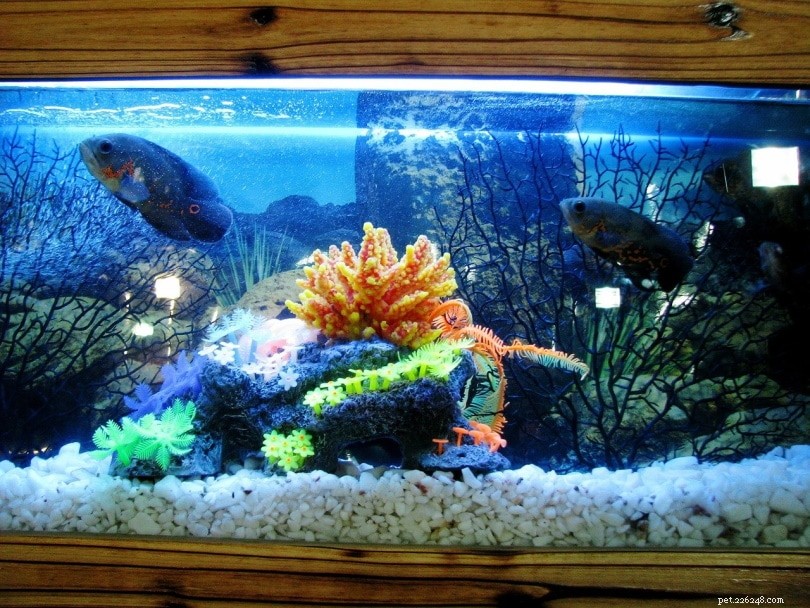
Beginners often learn what new tank syndrome is the hard way. They set up their tanks and fill them with fish, only to find the fish getting lethargic and eventually dying. Having an aquarium isn’t simply a matter of adding water and fish. It’s essential to remember that you’re recreating a micro-habitat that involves several non-visible elements.
Water Chemistry
Several vital chemical compounds exist in aquatic environments. Many fish have specific requirements for particular ones. Others affect all organisms to varying degrees. The critical ones in an aquarium include:
- Oxygen
- Ammonia
- Nitrites
- Nitrates
- Calcium
- Magnesium
- Carbonate
- Bicarbonate
If you have a brackish or saltwater tank, then sodium chloride is another vital consideration. The chemicals in your tank exist in a delicate balance. The elements and compounds are measured in parts per million (ppm). Fortunately, these are easy to monitor when you use test kits regularly. We recommend testing every 2 weeks unless you notice any sudden changes in the water’s appearance or smell.
The Nitrogen Cycle
The most critical sequence in a tank’s water chemistry is the nitrogen cycle. This is the process of waste products being converted to harmless compounds that other organisms can use and eliminate from the water. Beneficial nitrifying bacteria make it possible. The essential element is biological filtration.
Its purpose is to provide the space for the bacteria to develop and do their job. It can do it most efficiently when it has a large amount of surface area. Two types of bacteria work in the nitrogen cycle, Nitrosomonas and Nitrobacter. The former converts ammonia to nitrites. Both chemicals are equally deadly to your fish because they interfere with their oxygen uptake.
The latter oxidize nitrites into nitrates. While these aren’t as harmful to fish, they can lower the pH of the water, which in turn, can stress or even kill the fish in high concentrations. If you have live plants, these will use the nitrates for food and remedy the problem. However, that doesn’t always work if you have fish that are hard on plants, such as cichlids.
Each chemical in the nitrogen cycle provides the fodder for the next stage. It’s the same process that occurs in any body of water. The difference with your tank is that you’re starting from scratch.
Defining New Tank Syndrome
Scientists refer to the nitrogen cycle as biological filtration. The vital components are a substrate, i.e., gravel or sand, with sufficient amounts of oxygen and carbon to get things going. Depending on your setup and number of fish, it can take 6-8 weeks to complete one pass through the cycle. Balance is critical. You must have a large enough bacteria population to manage the process.
Often, beginners add too many fish too quickly, which ends up upsetting the balance and causing ammonia and nitrite levels to skyrocket. It can lead to a cascading string of dangerous conditions, including low dissolved oxygen concentrations, low pH, and harmful bacteria development. That typically happens 2-3 weeks after you’ve added the first fish.
The conditions can deteriorate rapidly. For example, one day, your Zebra Danios are zipping around the aquarium. The next day, they’re grasping for air at the top or lying still on the bottom. Unfortunately, this situation tends to create a vicious circle of poor water quality before the fish finally succumb to the effects of the unhealthy environment.
Preventing New Tank Syndrome
The fix for new tank syndrome involves water changes and treatment solutions that unfortunately, can cause even more stress for your fish and perhaps their early demise. Therefore, prevention is infinitely better than the cure. Fortunately, there are several things that you can do to prevent it from occurring.
Optimal Filtration
There are three types of filtration. Ideally, your tank will have at least two but preferably, all three. Biological filtration is the key element. Under-gravel filters (UGF) are old-school solutions for smaller tanks. They sit underneath your substrate and provide a means to cycle air through it using an air pump or powerhead.
UGFs are effective. However, balance is an issue with them too. The depth of the substrate must be adequate and large enough to allow for air movement. The power source also must push enough air through your sand or gravel. Then, there’s maintenance. Debris and uneaten food can get trapped in the substrate or under the plates. That can cause harmful bacteria to develop.
Another, similar option is to use a sponge filter. It serves the same purpose but is much easier to maintain. On the downside, they are visible and not the most attractive aquarium décor.
The second type of filtration is mechanical filtration. It is the process of physically moving floating waste and debris from the water. Power filters that hang on the outside of the tank do an excellent job of cleaning the water. They can also improve dissolved oxygen levels. However, they are pricey, especially with larger tanks. You must also change the cartridges regularly to keep the biological filtrating running.
The third type is chemical filtration. Activated charcoal is a popular part of these systems. They can clear cloudy water while removing odors and toxins. Often, filters will combine all three to create the optimal environment for your fish. Regular maintenance is vital.
Salting the Mine
One way to kickstart the nitrogen cycle is either to add nitrifying bacteria to your new tank or put a few feeder goldfish in your tank to start the process. Either method works well. You will need to monitor the ammonia and nitrite levels before you get any new fish for your tank. This will give the beneficial bacteria time to develop and populate their substrate.
Slow Going
As anxious as you are to fill your tank, the best thing that you can do is to take it slow. That applies to the number of fish that you initially add to the tank and to the acclimation period, when you are floating the bag in your tank to equalize the temperature. We suggest adding at least a few fish, depending on the size of your tank. Then, it’s time to wait and be patient before adding the next ones.
You should test the water frequently. Don’t be surprised if you see an uptick in ammonia and nitrites. It’ll take a while before the bacteria can catch up to the waste load. In the meantime, monitor the condition of your new fish. Transitioning to a new tank is a stressful process. Give them time to get used to their new digs before making another change in their living conditions.
Final Thoughts
New tank syndrome almost seems like a rite of passage when you first get into having an aquarium. However, with patience and consistent testing, you can establish an aquarium with a healthy environment for your aquatic pets. The other takeaway message is to minimize drastic change.
Remember that fish live in relatively stable conditions that don’t change much. That is the ultimate goal of setting up a tank. Nature often takes her time. Follow her lead with your new aquarium.
- Goldfish Dropsy: Recognize Symptoms, Effective Treatments & Prevention Tips
- Goldfish Ich: Recognizing Symptoms, Effective Treatments, and Prevention Tips
- The 6-Step Guide to Safely Quarantining New Fish – 2024 Edition
- Understanding Old Tank Syndrome: Causes, Symptoms, and Prevention
- How to Test Aquarium Water for Healthy Fish
- Fast, Effective Strategies to Lower Nitrate Levels in Your Fish Tank
- How to Safely Introduce New Fish to Your Aquarium: A Step‑by‑Step Guide