

Knabstrupper Horse: Exotic Beauty, Speed & Endurance
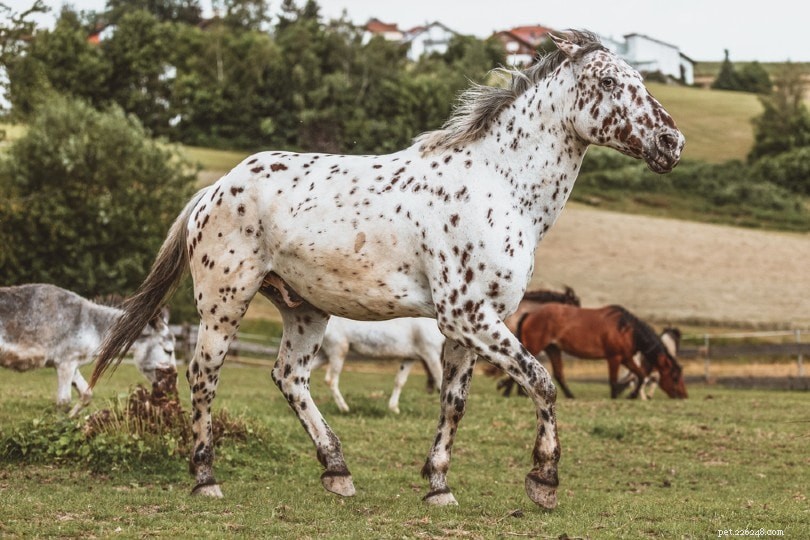
Exquisite and exotic, the Knabstrupper is a unique-looking horse breed with an intriguing appeal, and yes, a beautiful name to pronounce.
You may mistake a herd of Knabstruppers for a bunch of giant leopards if you look at them from a distance. But no, they are just a herd of gentle horses known for their endurance and speed and, of course, their striking spotty coat.
There are interesting facts you should know about the Knabstrupper horse, from its history to temperament. Keep reading and discover.
Quick Facts About the Knabstrupper Horse
| Species Name: | Equus ferus caballus |
| Family: | Equidae |
| Care Level: | Medium |
| Temperature: | 18-59 degrees Fahrenheit |
| Temperament: | Gentle, people-oriented, athletic, willing to work, friendly, multi-talented, trainable, intelligent, hardy, docile |
| Color Form: | Solid with a few leopard spots, near leopard, spotted blanket, snowflake, white blanket, frosted blanket, marble |
| Lifespan: | 27.5 years |
| Size: | 15.2-16 hands (height) ,1150 pounds (weight) |
| Diet: | Hay, pasture grass, limited oat and corn, occasional treats like carrots and candy, vegetables, concentrate mix, salt and mineral supplements, plenty of fresh and clean water |
| Enclosure Size: | 12 by 12 feet, 10 feet high |
| Compatibility: | Appaloosa |
Knabstrupper Horse Overview
Knabstrupper horses are a relatively new breed in the U.S, as it was not until 2002 that they arrived from Europe. However, their origins, thanks to cave paintings, trace back to the prehistoric spotted equines native to today’s Spain.
The modern Knabstrupper developed in Denmark in 1812 after breeding a chestnut mare with complex leopard markings known as Flaebehoppen to a solid-colored Frederiksborg stallion.
This union produced a dramatically spotted colt that was also bred to other numerous high-quality horses, producing another loudly colored offspring known as Knabstruppers.
This horse was among the most highly sought-after breed in Europe for decades, until the 1870s when this rare gene pool began facing issues related to inbreeding.
Inbreeding, plus an 1891 fire that broke out, killing 22 of the best Knabstruppers, doomed the rare Danish spotted horses.
However, a few dedicated horse-keepers fought for the breed’s survival. The Knabstruppers finally had a lifeline in 1971 in the form of trio Appaloosa stallions brought in from the U.S.
The Appaloosa stallion helped revive the Knabstrupper, thanks to a shared Spanish bloodline. However, this breed is still rare, with its members coming down to only 600 individuals worldwide.
Today, these horses attract lots of uses depending on the type, with the Sport horse participating in dressage, exhibitions, and show jumping. Other Classic type Knabstruppers are popular as circus horses, classic riding, and driving, while Pony Knabstruppers are children’s favorite.
How Much Do Knabstrupper Horses Cost?
You can use these European oldest horse breeds for sporting activities and carrying loads. They also come in varying patterns, so prospect owners can get all the flash they can think of in a Knabstrupper, which goes hand in hand with athleticism and well-mannered temperaments.
For this reason, younger Knabstruppers can be pretty costly, especially if they are of good lineage. Potential owners should expect to part with $5,000 up to $11,000.
Typical Behavior & Temperament
All Knabstruppers are elegant, athletic, lively yet collected, and enthusiastic yet docile regardless of the type of choice. These horses are also “easy keepers” and hardy, having been kept outdoors rather than in the stables most of the year ever since.
Knabstruppers are trainable, energetic, friendly, well-mannered, willing to work, and have great stamina. They are also gentle and eager to please-the reason the Pony Knabstruper is a children’s play horse.
Appearance & Varieties
A Knabstrupper’s distinguishing features are its spots and various coat patterns that range from solid (yes, not all Knabstruppers are spotty) with a few leopard spots to full leopard patterns.
However, the “leopard” patterned (solid white with spots) is the most common conformation, with the spots ranging from the bay, black, or chestnut coloration.
Being a “color” species, Knabstruppers come in various sizes and conformation depending on the individual equine’s bloodlines.
Most horses range between 15.2 to 16 hands high, although they can be taller. You can also find Knabstrupper Ponies, which are mostly less than 14.2 hands high.
This horse breed comes in three types: Sport horse, Classic Horse type, and Pony.- The Sport Knabstrupper has superior warmblood influence and is taller and leaner, standing 15.2 to 16 hands high. Sport Horse types thrive at dressage, eventing, and show jumping.
- Classical Horse types (also known as the Baroque type) are closer to the original breed, with a more classical build. They are shorter, stronger, and broader, used for driving carriages and in military duties.
- Pony Knabstruppers stand less than 14.2 hands high and are children’s favorite due to their intriguing colors and welcoming temperaments. Further breeding has produced shetland-sized ponies with typical Knabstrupper’s colors.
Knabstruppers have balanced big-frame physiques with expressive heads, supporting small ears and clear eyes. They also have well-proportioned necks, sloping shoulders, sturdy backs, and well-defined limbs that end in well-defined hooves.
This physique gives them a relaxed attitude and overall elegant appearance. For instance, Knabstruppers have light, elegant, and graceful movements and usually weigh up to 1150 pounds.
How to Take Care of Knabstrupper Horse
Habitat
Enclosure
Knabstrupper horses can live both outsides and in the stable, although they are easy-keepers and prefer their enclosure to look as natural as possible.
You can design a run-in shelter for your horse to give it a place to get out, run, exercise, graze, hand out with others, and come and go as it pleases.
The shelter should be three-sided, at least 12 by 12 feet for one horse, and at least 10 feet high to allow the horse to jump, sleep and turn around without harming itself.
You can also keep your horse in stables or barns at night to shield them from elements like cold, excess sunlight, wind, and extreme temperatures. The stalls need to be high and large enough so the horse can lie down to sleep and rest comfortably.
Ensure the entrance is wide enough for them to enter and exit without hurting themselves.
Bedding
A Knabstrupper’s stall should have good quality and horse-friendly bedding. The bedding cushions and insulates the floor surface, so it should be clean and dry at all times.
Consider the bedding material’s palatability, as you don’t want the type that tempts your equine to eat. It should also be soft and highly absorbent to absorb urine and slow the development of ammonia fumes easily. You can use straw bedding, wood shavings, paper shreds, wood pellets, and peat moss for bedding.
Temperature
The temperature inside your horse’s stable should be cool, ranging between 18 degrees Fahrenheit and 59 degrees Fahrenheit. You can also provide blankets for your horse or heat the barn using infrared heaters or well-protected heat lamps when the temperatures get below zero degrees Fahrenheit to warm the barn.
Lighting
It’s best to provide your Knabstrupper with 16 hours of continuous light and 8 hours of darkness every day.
Do Knabstrupper Horses Get Along with Other Pets?
Knabstrupper horse breeds are friendly and easy-going and can coexist with pets of similar temperaments. However, horse companions are the best choice as long as they have enough space, pasture, and water access, so they don’t have to compete for the basics.
Besides other horses, you can pair your Knabstrupper with other herd animals like cows, sheep, goats, and pigs, but they will require thoughtful introduction and up-close supervision to ensure they are a good fit.
Similarly, Knabstrupper horses have no trouble sharing an outdoor space with birds like ducks, chickens, geese, and ducks, provided you take care of their individual needs.
Your horse should be able to coexist with your cat. However, as a general rule of thumb, you should avoid letting dogs and horses interact. Horses are naturally prey animals while dogs are predators, and there’s a high chance that there’ll be an adverse reaction from either the dog or the horse at first sight.
Ensure that you socialize them gradually and monitor their interaction. But if your horse appears skittish and afraid to spend time in the same pasture as your dog, it would be best to separate the two from each other.
What to Feed Your Knabstrupper Horse
Knabstrupper Horses are herbivores and eat a typical horse diet consisting of hay, pasture grass, grains, veggies, and tender plants.
These horses feel happier when they graze in the field, and their natural diet is pasture and tender plant, which consists of most of the horse’s nutritional requirements. However, since they are “easy keepers,” owners need to limit the amount of fresh grass the horses can access.
Ensure that you feed your equine animal many small meals rather than a few large meals since they spend most of their time eating. You don’t have to worry if you can’t afford to let your horse graze on pasture all year round, though. Hay is the best option and for stabled horses.
You can also provide grains like oats or corn, but in small amounts and occasionally, as too many grains can cause ulcers, dental problems, founder, and colic to your horse. Also, avoid offering wheat and processed grains to your animal.
Concentrates mixes provide horses with a quick source of energy and help make up for any shortfall in nutrition. Also, provide your horse supplements like salts and minerals and occasional treats like apples, carrots, and candy.
Water is an essential part of a horse’s diet, so ensure that you provide it a lot of fresh, clean water at all times.
Keeping Your Knabstrupper Horse Healthy
The good thing is that the Knabstrupper is a generally healthy breed with no specific health concerns to its name. However, your animal’s health state depends on your care plan; and it can live for up to 27.5 years if you provide the best horse management.
First off, Knabstrupper horses require a lot of exercise for their physical and mental well-being. They are animals that thrive on running, jumping, and herding in the field, so standing in a stall all day doesn’t cut it.
Allow it to graze, run, trail-ride, and play in the field for most of the day for a healthy gut, strong feet and bones, musculoskeletal health, and well-lubricated joints.
Similarly, create a safe environment for your animal by being alert to potential dangers. Get rid of any unsafe item the horse can ingest, like stray litter in the enclosure, hay strings, and poisonous plants.
Repair the fence to keep away predators and prevent your horse from wandering off. Also, groom your animal regularly by washing, combing, checking their coats for pests, trimming the wispy hairs around their eyes and nostrils, and picking their feet.
Breeding
Breeding your horse is a big move, one that demands careful considerations. The most important thing to consider is your mare’s health and age.
The mare should be at least 18 months old, although it’s best to wait until she reaches its full size at four years of age or older. It would also be best to look into the mare’s previous records, especially if she’s had successful birthing.
The stallion is equally important, as its previous pregnancy rates and fertility records matter. Choose a stallion that matches the type of horse you want to produce by considering factors like its temperament, size, and color.
Ensure the mare and stallion are well-suited as combinations of pleasant dispositions and good conformation increase the chance of siring a valuable foal.
Knabstrupper mares are seasonally polyestrous, just like other horse breeds, which means they go into heat periodically, with a new heat cycle mostly occurring every three weeks.
You can know if your mare has successfully conceived if it doesn’t exhibit the desire for a stallion and she’s no longer in heat. A veterinary officer can also conduct an ultrasound scan as early as 16 days into the pregnancy to confirm.
If she’s pregnant, you can expect a foal after the 11-12 months gestation period.
Are Knabstrupper Horses Suitable for You?
Anyone can have a Knabstrupper horse, including a home with children, thanks to the Pony Horse type that tends to do anything to please its young riders. You can also own this horse if you are a sportsperson as this equine can participate in various equestrian competitions like dressage, trail riding, jumping, and driving.
Be sure of the most trainable, kind, robust, intelligent, and hardy breed you’ll love to train and win trophies with. However, you must be ready to offer it enough exercise, activity, mental stimulation, and keep up with its energy.
Knabstruppers are a rare breed, and there aren’t that many of them anywhere. So, if you own one, you’ll be lucky to have the most people-loving and willing horse in your care.
- Westphalian Horses: Expert Guide to Buying Your Perfect Equine Companion
- American Cream Draft Horse: Elegant, Easy‑Going Giants for Work and Show
- Missouri Fox Trotter Horses: Gaited Elegance and Comfort
- Anhidrosis in Horses: Symptoms, Causes, and Prevention
- Hidden Threats: Managing Internal Parasites in Horses
- Managing Horse Diarrhea: Quick Action & Vet Guidance
- Horse Care 101: Essential Tips for Feeding, Housing, and Health