

Pit Bulls: Dispelling Myths and Rebuilding Their Legacy
 For many people the term “pit bull” typically brings several negative images immediately to mind. Images of a muscular dog on the end of a thick chain guarding a junkyard; a news report of a child being killed by a pack of ferocious dogs; the underbelly of the inner city where dog fighting rings play their disgusting games. “Pit Bulls” have earned a stigma as brutes, fighters, and even killers. I have to admit that if I were to come across the stereotypical “pit bull” in a dark alley, I would certainly be looking for the quickest way out of there. But, in my entire career in animal care, I have never come across a true pit bull, at least not the dog that fits that notorious label.
“Pit bull” is a nickname used to describe several breeds in a group of dogs known as molossers. Some well-known molosser breeds that fall under the label include the English Bulldog, Bullmastiff, Cane Corso, Dogo Argentino, American Bulldog, Bull Terrier, American Staffordshire Bull Terrier, Boxer, Rottweiler, and yes, the American Pit Bull Terrier which is the only breed of dog with the words “pit bull” in the name. While the term pit bull probably stems from the name American Pit Bull Terrier, any dog with a big, boxy head, stocky body, muscular build, and a generally tough guy appearance becomes grouped into the pit bull stereotype. Mixed breed dogs may be labeled in shelters or pet stores as pit bulls or pit bull mixes if the origin of the animal is unknown, but the body type suggests molosser heritage. Animals that are labeled as pit bulls may have no trace of American Pit Bull Terrier in them. An unfortunate mix of Poodle, Boxer, Bulldog, Labrador or some other breed, the mix of which happens to look like a pit mix 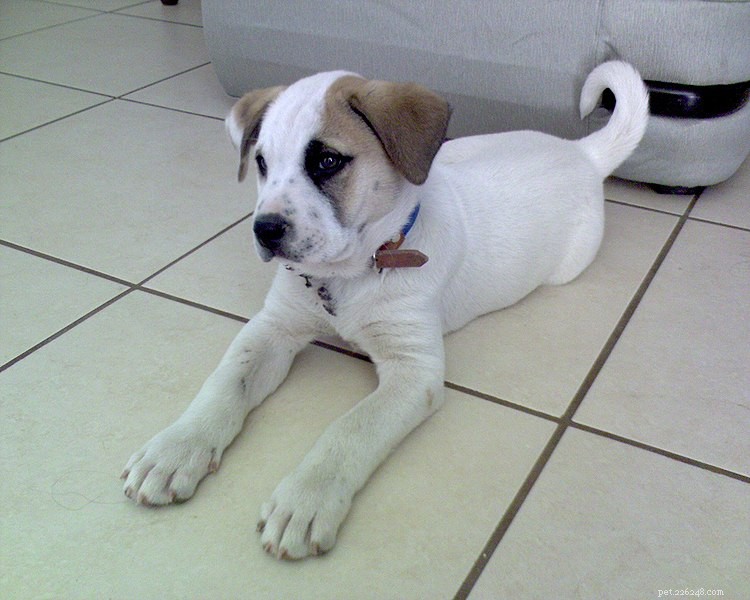 (Boxer-shaped head or Bulldog’s stocky body), it will probably be called a pit bull. We are all guilty of calling dogs with this body type pits or pit-mixes, because let’s face it, its easier than saying Boxabullabradorapoo. Unfortunately, generalization may cost a lot of dogs their lives. “Pit bulls” in shelters are often euthanzied, at a disadvantage simply because the name pit bull discourages their adoption.
The media is also guilty in the condemning this group. Whenever someone is bitten or killed by a dog, the term pit bull is often used to describe the dog because it’s an attention grabber. While the offending dog could be a Cane Corso/German Shepherd mix, it might still a pit bull to convey the same stereotypical ferocious dog image. Attacks by pit bulls are sensationalized as stories than attacks by most other breeds of dog don’t spark the same response. Some may make an argument that, statistically, pit bulls are involved in many attacks on humans. In my opinion, bite statistics are unreliable since many breeds and mixes are massed into one blanket “pit bull” group. Many bites go unrecorded if the victim has no serious injury. doesn’t press charges or report the bite. Who is going to report a bite by a small, unassuming breed like a Yorkshire Terrier or a Lhasa Apso? When someone is bitten by a pit bull, the incident is more likely to be reported, simply because many people percieve that all pit bulls are dangerous. For example, not many people associate the adorable spotted dalmation with aggression, but I’ve met several rather nasty Dalmatians in my day and even though Pongo the Dalmatian may look sweet and noble, he may be just as likely to bite. I have never been bitten or threatened by a pit bull-type dog, but I HAVE in fact, been bitten, lunged at, and growled at by Corgis, Chihuahuas, Rat Terriers, Dalmatians, Poodles, and many other “cute” breeds.
I’m not implying that any of these breeds are inherently bad, my point is that the potential for ANY type of dog to bite is there. If the dog was abused or not properly socialized, if he has trouble seeing or hearing, if he’s shy of strangers or overprotective of his owner, etc., he may bite!
Though saddled with a reputation for blood lust, most molosser breeds make excellent companion dogs that will also protect their human families with their lives. Many are known to be good with children, tolerating prodding and pulling with a nonchalant attitude. Dogs in the molosser group are high-energy and do well when charged with an activity or a task, such as Search and Rescue, or just romping though the park. They are workers, protectors, and best of all, friends to those who treat them with love and kindness. Give them a chance to prove it before you judge them on outside opinion alone.
- Pet Behavior
- Pet Breeds
- Pet Names
- Pet Adoption
- Pet Training
- Pet Information
- Pet Health
- Adorable Pets
- Dogs
- Brindle Pit Bulls: Facts, Genetics, and Care Tips
- Pit Bull vs. Staffordshire Bull Terrier: Key Differences Explained
- How to Spot Early Pregnancy Signs in Your Pit Bull
- Pit Bull Eye Health: Common Conditions and Preventative Care
- Pit Bull Pregnancy Guide: Signs, Care, and Health Tips
- American Pit Bull Terrier: Quick Facts & Physical Profile
- 23 Proven Pit Bull Facts: Why Adopting One Makes Sense