

How Dogs Communicate With One Another
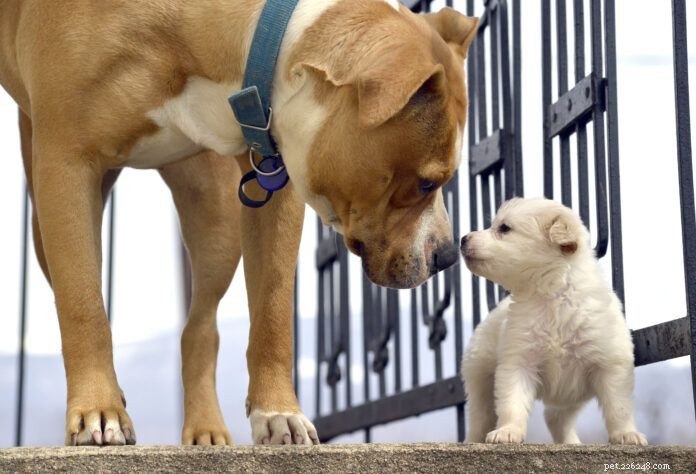 Just like humans, not every dog is a natural communicator. Early socialization helps puppies develop strong communication skills. Credit: redstallion | Getty Images
Why Understanding Dog Communication Matters
Watching two dogs at a park may look simple—a sniff, a wag, then they run off. In reality, they are exchanging complex signals through body language, facial expressions, vocalizations, and scent. Recognizing these cues lets you intervene when interactions go awry and advocate for your dog’s wellbeing.
Body Language: The Primary Channel
A dog’s posture, tail, ears, and movement convey a wealth of information. Experienced dogs read these signals instantly and adjust their behavior accordingly.
- Posture and movement – A confident dog moves fluidly with even weight distribution. An aroused or assertive dog may shift weight forward and stand tall to appear larger. An unsure dog lowers its body, shifts weight backward, or even rolls onto its side to signal non‑threat.
- The play bow – Front legs down, rear end up. This universal invitation to play also resets a game that’s getting too intense.
 Credit: Photos by R A Kearton | Getty Images
 - Tail position and movement – A high, rapid wag indicates arousal and confidence, but a wag does not always mean friendliness. A low or tucked tail signals fear or uncertainty. Research shows a loose, mid‑height wag is generally positive. Direction matters: right‑biased wags are linked to positive emotions, left‑biased wags to negative ones.
- Ear position – Ears forward signal alertness or interest; flattened ears indicate fear, appeasement, or submission; ears relaxed to the side suggest a calm dog. Morphology (floppy vs. pricked ears) influences the exact look.
Calming Signals
Norwegian trainer Turid Rugaas identified a set of intentional behaviors dogs use to diffuse tension. These include yawning, lip‑licking, turning the head or body away, slow blinking, sniffing the ground, and approaching in an arc rather than straight on. When another dog responds appropriately—softening its own posture—the interaction stays safe. Ignoring these signals can quickly lead to escalation.

Facial Expressions
 A tight, closed mouth with ears forward often means the dog is concentrating. Credit: EyeWolf | Getty Images
- Eyes – Soft, slightly squinted eyes show relaxation. A hard stare with visible whites (“whale eye”) is a clear warning sign.
- Mouth – A relaxed, slightly open mouth with a lolling tongue signals comfort. A tight, closed mouth indicates focus or assessment. The “submissive grin” (lips pulled back) is often misread as aggression but actually conveys appeasement.
Vocalizations
Dogs use a range of sounds, each with context‑dependent meaning:
- Barking – Can signal alarm (sharp, rapid) or a desire to play (intermittent, high‑pitched).
- Growling – A warning, not aggression. It tells the listener the dog is uncomfortable and needs space. Punishing a growl can bypass the warning and lead straight to a bite.
- Whining – Indicates distress, frustration, or a request for attention.
- Howling – Usually a response to external sounds (sirens, other howls) or a sign of separation anxiety.
Scent Communication
 Dogs experience the world primarily through smell, making olfactory signals a major communication channel.
- Urine marking – Conveys sex, reproductive status, health, and territorial information. When a dog sniffs trees or bushes, it’s reading a neighborhood bulletin board of chemical messages.
- Anal glands – During nose‑to‑rear greetings, dogs exchange detailed chemical data about identity, emotional state, and recent diet within seconds.
- Pheromones – Detected by the vomeronasal organ, these subconscious chemicals influence social behavior in ways we are still uncovering.
When Communication Breaks Down
Dogs that miss critical socialization windows often struggle to read or send signals accurately. Physical alterations like docked ears or tails can further obscure body language cues. Ignoring early warning signs—yawning, lip‑licking, turning away—can push a dog past its limit, resulting in louder warnings such as growls, snaps, or bites.
Helping Your Dog Communicate Effectively
The best thing owners can do is learn to recognize and respect their dog’s signals. If a dog repeatedly yawns, looks away, or tries to move off, intervene gently instead of forcing interaction. Provide space for dogs to communicate on their own terms, and step in only when safety is at risk.
Consistent difficulty in social interactions may warrant a consultation with a qualified behavior professional. Targeted guidance can prevent long‑term fear or anxiety.
Prioritize quality over quantity: a few well‑matched, positive encounters are far more beneficial than numerous chaotic ones at a crowded park.
Conclusion
Dogs are sophisticated communicators. The more fluent you become in reading their body language, facial expressions, vocalizations, and scent cues, the better you can support healthy interactions and strengthen your bond.
References
Mariti, C., Falaschi, C., Zilocchi, M., Carlone, B., & Gazzano, A. (2014). Analysis of calming signals in domestic dogs: Are they signals and are they calming? Journal of Veterinary Behavior: Clinical Applications and Research, 9(6), e1‑e2.
Siniscalchi, M., Lusito, R., Vallortigara, G., & Quaranta, A. (2013). Seeing left‑or‑right‑asymmetric tail wagging produces different emotional responses in dogs. Current Biology, 23(22), 2279‑2282.
Quaranta, A., d’Ingeo, S., Minunno, M., Straziota, V., Nolè, M., Ventriglia, G., … & Siniscalchi, M. (2025). Decoding dog communication through the physiology and behavior of urine marking. Scientific Reports.

- Pet Behavior
- Pet Breeds
- Pet Names
- Pet Adoption
- Pet Training
- Pet Information
- Pet Health
- Adorable Pets
- Dogs
- Choosing the Ideal Dog Food for Your Chihuahua: Health, Nutrition, and Longevity
- Pyometra in Dogs: Symptoms, Causes, and Effective Treatment
- Is Your Dog's Breath Unpleasant? Causes and Solutions
- 8 Unexpected Triggers That Cause Stress in Cats
- Expert Guide to Grooming a Goldendoodle’s Face: Keep Beards, Brows, and Ears Neat
- Stop Your Cat from Urine Marking: Expert Tips & Solutions
- Cat Dental Care Tip 41: Understanding Your Cat’s Tooth Development