

Prevent Food Aggression: Expert Strategies to Keep Dogs from Fighting at Mealtimes
When you have more than one dog in the household, dogs fighting for food can be a serious and dangerous problem. While the causes of food guarding and aggression aren't fully understood, there are steps that you can take to prevent the behavior and retrain your dogs to make mealtime safe for everyone.
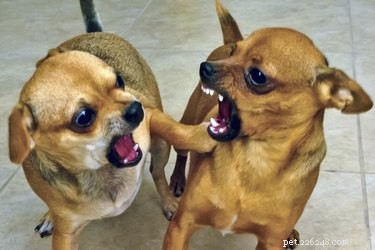
Early signs of food aggression
It is unlikely that your dog will suddenly start fighting over food without demonstrating some earlier signs of food guarding and aggression. Being aware of these signs can allow you to address them early before the problem gets out of hand.
Some signs you may notice that indicate food guarding appear when you or another dog walk by or approach your dog while he is eating. You may notice that he tenses his body, positions himself over his dish, pins his ears, stares at you as you walk by, and eats faster. He may also curl his lip to show his teeth.
As food aggression gets worse, he may growl, snap, and lunge. Eventually, this may lead to a bite or fight with another dog. While the behavior may already be present in adopted dogs, address the behavior before it gets to this point whenever possible.
Prevent fighting over food
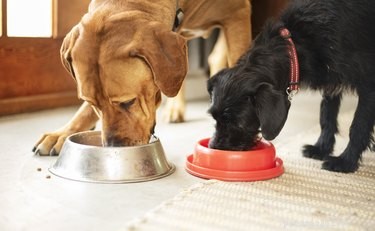
Avoid free-feeding dogs who fight or get aggressive over food and pick up the dish after mealtime. It is important that feeding time is calm and peaceful because dogs who are anxious or excited are more likely to become aggressive. If you have dogs who fight at feeding time, feed them in separate rooms and be sure to keep children away from the dogs at this time.
Teach your dog to sit and stay while you place a small portion of food. Then, allow him to eat in peace. When he is finished, give a command to move away from the dish, such as "leave it" or "drop it." Pick up the dish and add another small portion and repeat until he has finished his whole meal.
When you start training these commands, it is best to keep your dog on a leash in case he lunges or snaps. Train each dog separately, as working with them together can generate too much excitement.
Training tips for food guarding
Working with your dog at the first sign of food guarding can help to keep the behavior from worsening. Always focus on positive reinforcement. Don't yell or punish your dog for growling or at any time during the training process, as this can increase your dog's tension. If you have a young puppy, make sure to socialize her so that she understands how to appropriately interact with other dogs in a variety of environments.
However, if your dog is lunging, biting, or fighting with other dogs, it is best to consult a qualified dog trainer or veterinary behaviorist to help you safely retrain your dogs.
Break up a fight
If your preventative measures don't work and your dogs start fighting over food, take steps to safely break up the fight. Don't attempt to reach your arms in and pull them apart, as this puts you at a high risk of being bitten yourself. Try distracting the dogs with a loud noise, like banging a pot. Another option is to toss a jacket or towel on each dog's head to cut off their vision so they can't see each other.
If this doesn't work, try to insert an object between the two dogs, like a baby gate or the lid of a garbage can. If you have small dogs, placing a laundry basket on top of each dog is another way to physically separate them. If you know fighting is an issue and you can't feed them in separate rooms, it is a good idea to keep a leash on the dogs so that you can pull them apart in case of a fight.Once the dogs are separated, take them into different rooms and evaluate each dog for wounds and bleeding. A trip to the vet may be necessary to treat punctures and deep cuts.
- Pet Behavior
- Pet Breeds
- Pet Names
- Pet Adoption
- Pet Training
- Pet Information
- Pet Health
- Adorable Pets
- Dogs
- How to Keep Your Slippers Safe from Your Dog: Proven Tips
- Preventing Wood Chewing in Dogs: Safe Alternatives & Training Tips
- Stop Your Dog From Urinating on Plants – Proven Tips & Solutions
- Preventing and Resolving Dog Aggression in Your Home: A Guide
- Prevent Dog Bites: Proven Strategies for Owners and Caretakers
- Stop Dog Bouts: Quick & Safe Ways to End and Prevent Dog Fights
- Prevent Dog Fights at Home: Proven Strategies for a Harmonious Household