

How to Transition Your Puppy to Solid Food: A Step-by-Step Guide
Disclosure: At Cuteness, we are committed to being the go-to resource for pet owners and animal lovers. We only recommend products we think our audience will love. If you purchase something by clicking on one of these links, we may receive a small commission of the sale and the retailer might receive some data for accounting purposes.
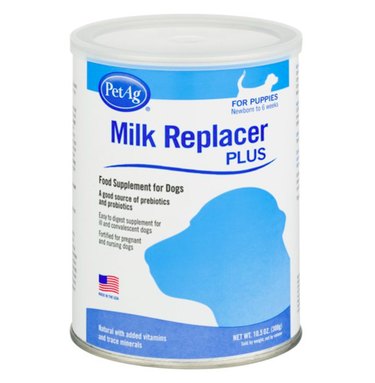
PetAg Milk Replacer Plus for Puppies
$10.48 at Walmart
This powdered milk replacer works to supplement nutrition for both puppies and the pregnant or nursing mother. It's fortified with vitamins, minerals, and amino acids to promote healthy growth and development and is a good source of probiotics and prebiotics. It can also be used to replace a mother's milk for orphaned or abandoned puppies up to six weeks old. The unopened 10.5-ounce container can be refrigerated for up to three months.
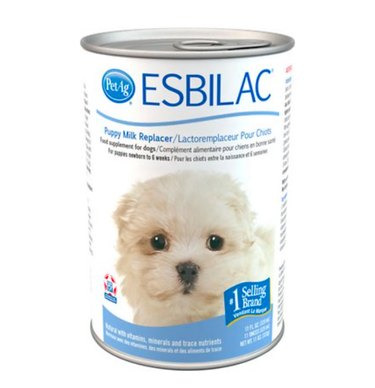
PetAg Esbilac Liquid Puppy Milk Replacer
$6.74 at Chewy
For an excellent liquid formula option, stick with PetAg. This liquid puppy milk replacer comes in individual 11-ounce cans and is formulated for newborn and growing puppies. However, it's also suitable for stressed or aging adult dogs to deliver highly digestible nutrients. Its ideal balance of protein, fat, and carbohydrates support optimal development and provides a complete food source for orphaned or abandoned puppies. There's no need to mix it with anything else; simply read the instructions for the proper dosage to serve, according to your puppy's age and breed.
Transitional cereals for a puppy
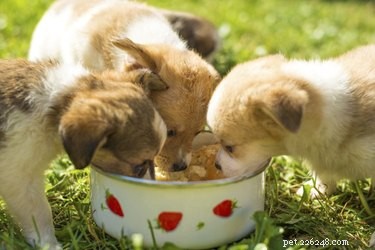
Continue feeding until the puppies are old enough to eat puppy food on their own. The next stage is a creamy transitional cereal. When feeding a puppy cereal like this, place it in a flat saucer and gently dip their nose in it two or three times a day until they lap it up on their own. It doesn't take long before they want more, especially if mom is less and less interested in nursing them. It can also be introduced by dipping your fingers in the puppy cereal and letting the puppy lick them.
Try the following transitional puppy food:
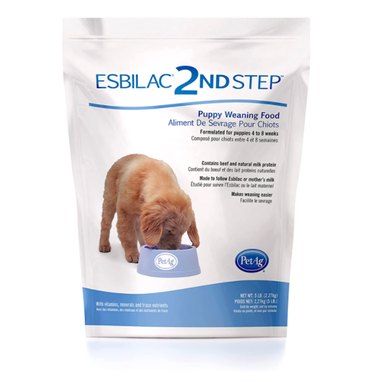
PetAg Esbilac 2nd Step Puppy Weaning Food
$14.24 - $65.24 at Amazon
This highly digestible cereal contains ingredients like coconut oil, canola oil, whey, and casein and is formulated with vitamins and nutrients like vitamin B12, taurine, riboflavin, and more. Simply mix it with water to create a creamy, oatmeal-like cereal that goes down easily. The ready-to-mix powder stays fresh without refrigeration. This cereal comes in 14-ounce or 5-pound sizes and suitable for puppies four to eight weeks old.
Feed a quality puppy food
Finally, feed growing puppies a solid food specially formulated to meet the nutritional needs of developing puppies. Adult food is formulated differently, and your puppy will miss out on important nutrients. When starting on a solid puppy food, pour over some water or milk replacer to make it soggy enough for them to eat it with their soft, small teeth. Gradually decrease the moisture until they are eating dry food on its own by 4 to 6 weeks of age.
Not all puppy kibble is equal. Some contain grains such as corn, which can irritate puppies' digestive tracts. Some contain meat byproducts such as beaks, feathers, ground bone and blood. Puppies' first food should be a puppy kibble that has 25 to 35 grams of protein in one serving. The first ingredient should be meat, not a meat byproduct. Protein, calcium and calories are important to meet the energy requirements and growing needs of rambunctious puppies. According to the Merck Veterinary Manual, healthy puppies one month to 14 weeks old need a minimum of 9.7 grams and 12.5 grams of high quality protein per kilogram (2.2 pounds) of body weight per day.
You can purchase supermarket brands or pet boutique pet foods, but you can also set up recurring deliveries of high-quality puppy foods from online retailers on Amazon. For instance, set up recurring deliveries of Blue Buffalo Puppy Food. Real de-boned chicken is the first ingredient.
Read More: When to Start Feeding Puppies Solid Food?

Watch your puppy's eating behavior
Food intolerances in dogs and puppies are not uncommon. Keep an eye on your puppy's eating behavior to be sure that they don't have a sensitivity or an allergy to common food ingredients. Food allergies in dogs aren't that common, but when they happen, they can cause itchy skin or ear and skin infections, or vomiting or diarrhea. The most common cause of itchy skin and ear or skin infections is allergies to fleas or environmental allergies such as dust mites, pollen, and grasses. But all of these allergies can have similar symptoms.
Sometimes, also, puppies become aggressive about their solid food and may growl when it's taken away. Those puppies need some one-on-one training sessions where the food is taken away when they growl and held back for a few minutes before returning it.
- Pet Behavior
- Pet Breeds
- Pet Names
- Pet Adoption
- Pet Training
- Pet Information
- Pet Health
- Adorable Pets
- Dogs
- Understanding and Managing Epilepsy in Puppies: Signs, Diagnosis, and Care
- When to Transition Your Puppy to Solid Food: A Comprehensive Guide
- Optimal Feeding Guidelines for Shorkie Puppies
- What 4-Week-Old Puppies Should Be Eating: A Complete Feeding Guide
- Why Puppies Must Transition to Puppy Food – Essential Nutrition Guide
- The Ultimate Guide to Proper Puppy Nutrition
- Choosing the Right Food for Your Puppy: A Simple Guide