

Choosing the Right Crate Size for Your Pit Bull: A Practical Guide
The ideal pit bull crate size is one that allows your dog to stand, sit, and lay down without needing to hunch or feel cramped. You can estimate crate size based on your dog's weight, but to make sure the crate you select works for your dog, measure her height and length to make sure she can fit in the crate comfortably.

Considerations when choosing a crate
There are many types of crates, so when selecting a dog cage for a pit bull, there are several factors to consider. Wire dog crates are a popular option, and many are easily collapsible, which is useful if you travel frequently. They are generally quite sturdy, and they give your dog a clear view of the room. For some dogs, if they are fearful or suffer separation anxiety, this is not ideal, as they will be able to see you leave.
Plastic dog crates are softer for your pet to lean against. Some have vents, but many have solid walls that create an enclosed space, which many dogs find comforting. They can be more difficult to clean and remove odor when compared to the wire crates.
When selecting a crate, make sure it is a suitable size for your dog when he is fully grown. If you adopt a full-grown pit bull, it is easy to select the proper size, but if you have a puppy, you will need to select a larger crate and use a divider to make it smaller for the small pup.
American bully cage size

You can estimate the proper crate size for your pit bull based on the breed's average weight and size. However, individual dogs may fall outside the norm, so make sure the crate you select is suitable for your dog. The United Kennel Club breed standard for the American pit bull terrier notes that dogs weigh between 30 and 60 pounds and grow 17 to 21 inches tall. Male dogs tend to be larger than females.
Based on this weight range, the estimated pit bull crate size may be 30 by 24 inches, 30 by 30 inches, or 30 by 36 inches. While this gives you a good starting point, if you are selecting a crate for an adult pit bull, it can be useful to be more precise.
Measure how tall your dog is when she is standing and sitting. Using the larger measurement, add about 4 to 5 inches to determine the ideal height for a crate. Then, measure how long she is from her nose to the hind end and again, add approximately 4 to 5 inches to determine the ideal length for her crate. In a crate that is the correct size, your dog should be comfortable standing, sitting, and lying down, and she should also be able to turn around easily.
Crate training tips and considerations
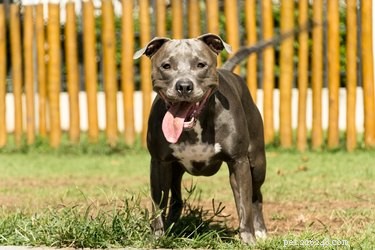
Crate training offers many benefits for you and your dog. It can help to facilitate house training and provides your dog with a den-like space to rest. Introduce the crate slowly, keeping the door closed for only a few minutes at first and gradually increasing the time you leave your pup in the crate. Place bedding in the crate so your pup is comfortable and offer plenty of positive reinforcement to develop a good association with the crate.
- Pet Behavior
- Pet Breeds
- Pet Names
- Pet Adoption
- Pet Training
- Pet Information
- Pet Health
- Adorable Pets
- Dogs
- Engaging Activities for Bullmastiffs: Enhance Health & Bonding
- The Sharpull Terrier: A Pit Bull and Shar-Pei Cross Explained
- Best Dog Companions for Border Collie Mixes: Energy, Exercise, and Compatibility
- California Pit Bull Ownership Rules & Regulations
- Understanding the Pit Bull: Facts, Misconceptions, and Responsible Ownership
- Choosing the Best Dog Food: Why Quality Matters
- Durable Toys for Pit Bulls: Top Picks for Powerful Jaws