

Meet the Bordoodle: Smart, Energetic Border Collie-Poodle Mix
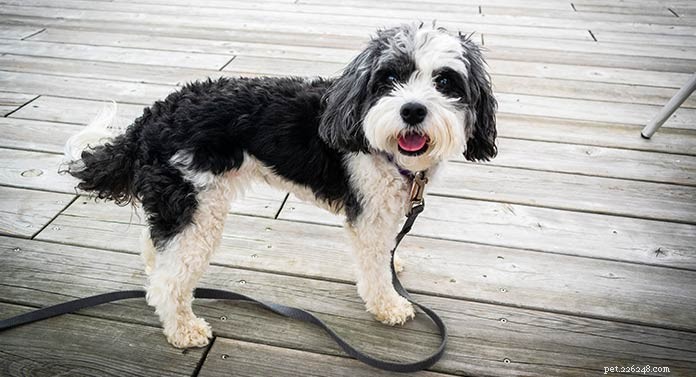
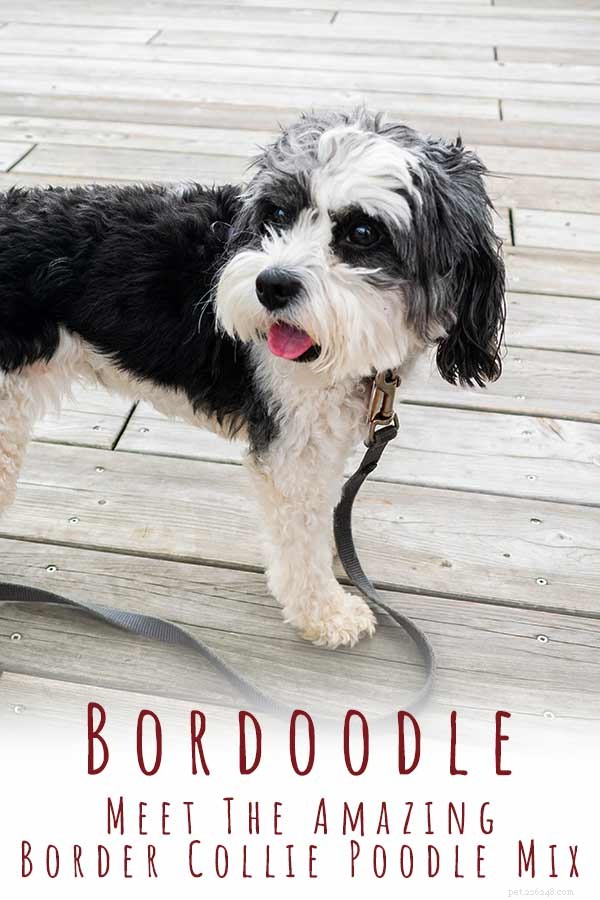
Bordoodle dogs are smart, athletic, energetic and affectionate. This Border Collie Poodle mix has long coats that have loose waves to tight curls, and tend to be high shedders that need a lot of grooming. These fun dogs need lots of training, exercise and attention from their families. Today we’re going to look at how well Bordoodle breed traits will fit in with your home, lifestyle and work patterns. We’ll look at where to adopt or buy a Bordoodle puppy, and at how to help them grow up into a friendly, healthy adult dog with a long lifespan.
- Where do Bordoodle dogs come from?
- What do Bordoodles look like?
- Bordoodle coats, colors and grooming
- Are Bordoodles hypoallergenic?
- Training and exercising
- Bordoodle health
- Adopting a Bordoodle
- Bordoodle puppies and breeders
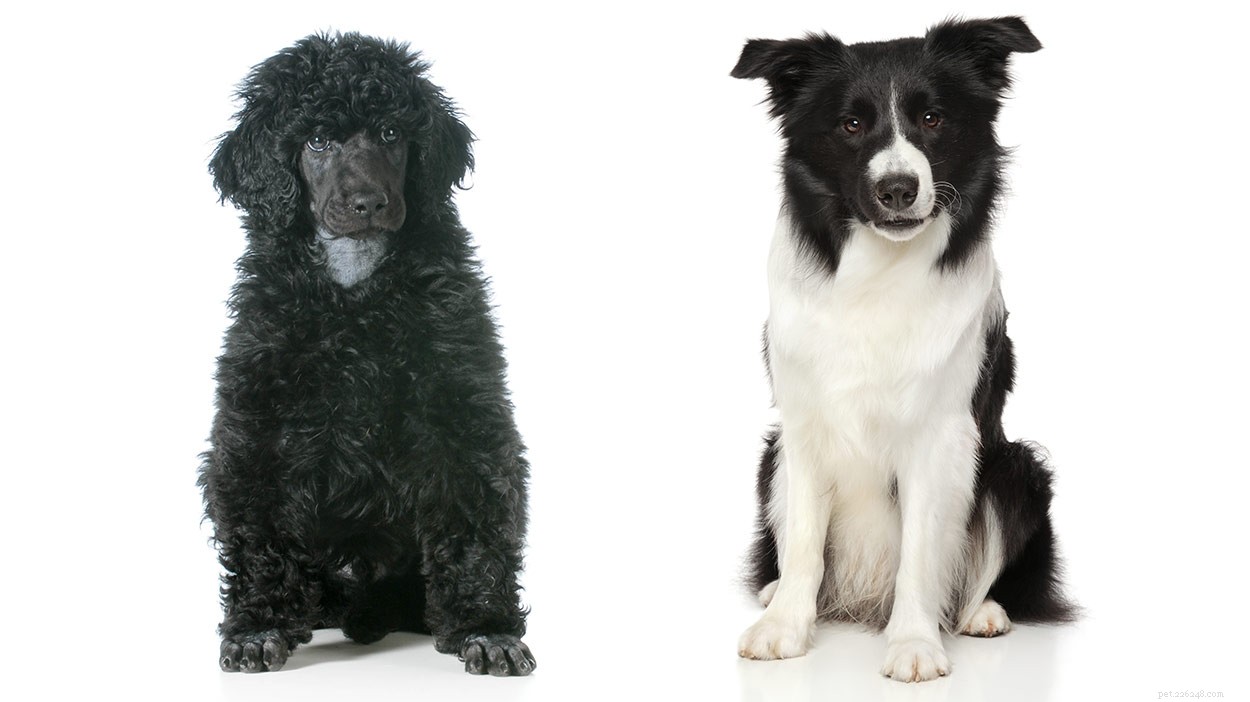
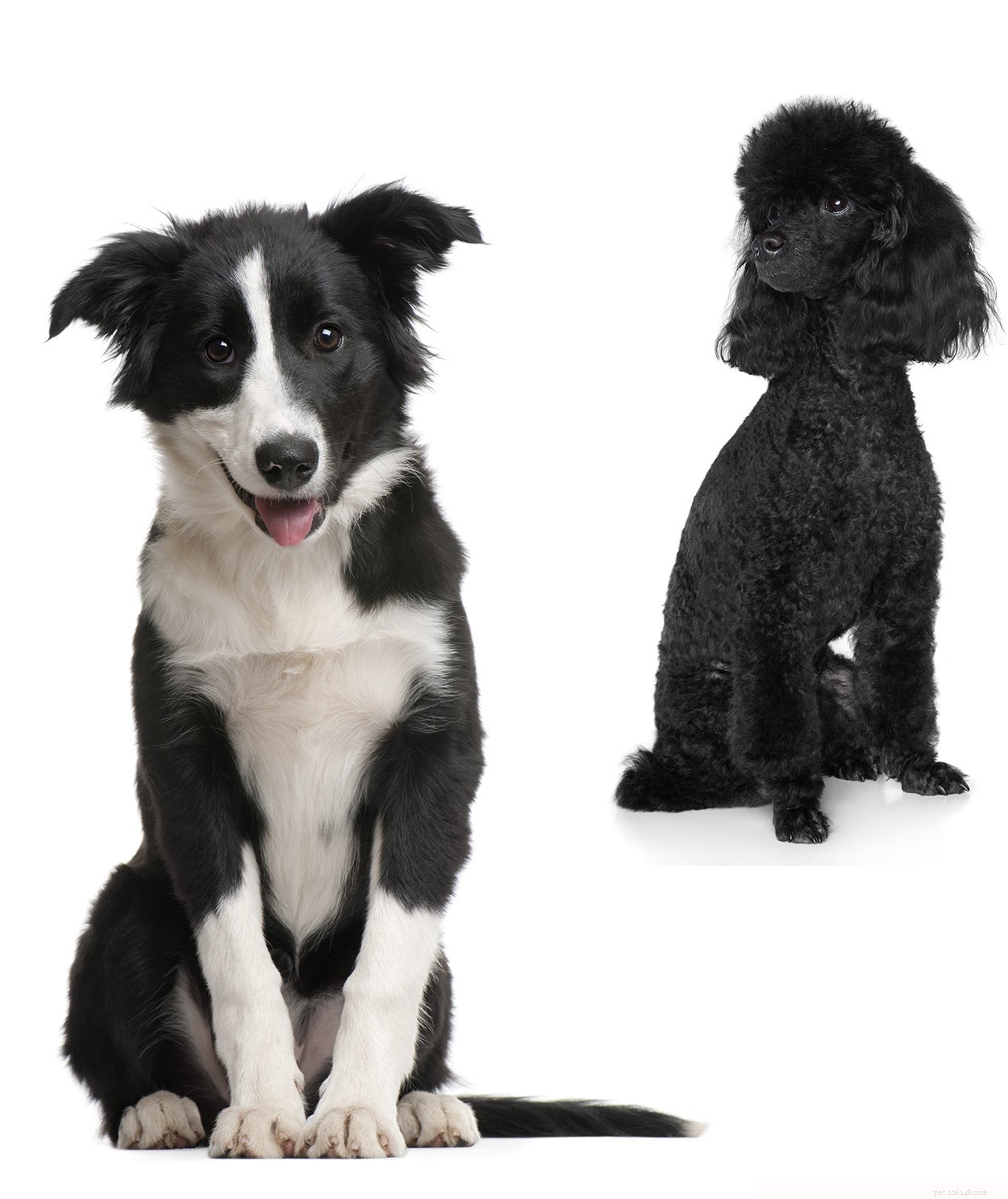
The Bordoodle combines the intelligent, cooperative, hard working Border Collie with the confident, reserved, calm Standard Poodle. These puppies can have a range of looks, personalities and other characteristics. However, there are lots of things we can do to predict how they will turn out as adult dogs.
What is a Bordoodle Dog?
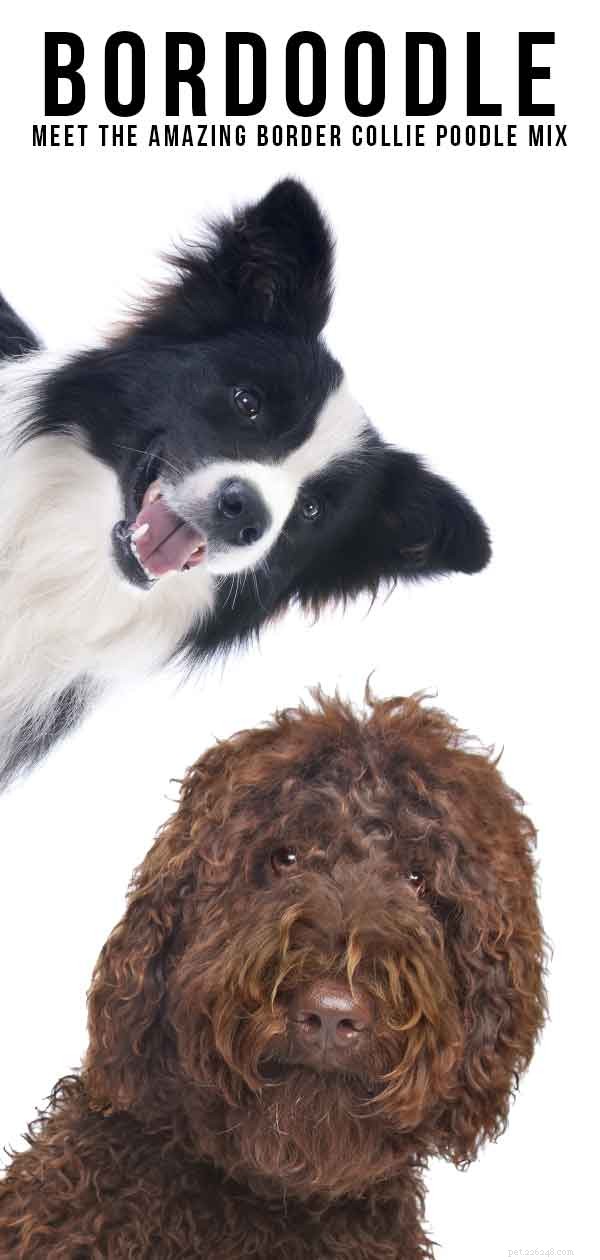
The Bordoodle dog is a cross between a purebred Border Collie and a purebred Poodle, also known as a Border Collie Poodle mix! Every single Bordoodle is unique because it is impossible to guarantee the traits you’ll get in a mixed breed. But, Border Doodles are often highly intelligent, friendly, and active.
- Popularity: Growing
- Purpose: Companion
- Weight: 30-60lbs
- Height: 15-22 inches
- Temperament: Intelligent, playful, energetic
- Coat: Wavy to curly
Common Bordoodle Questions
Are Bordoodles good family dogs?They are great for active families with plenty of time to dedicate to training.Are Bordoodles smart?Both parent breeds are very smart, so Bordoodles will be too!Are Bordoodles hypoallergenic?No breed is hypoallergenic, but Bordoodles with Poodle coats may shed less.Do Bordoodles Shed?Those with Border Collie-like coats will shed a lot more than those with Poodle-like fur.How big do Bordoodles Get?Bordoodles are medium sized dogs that can weigh from 30 to 60 pounds.Bordoodle History
The Bordoodle is quite a new mixed breed. They were bred as pet, or companion, dogs. Like many ‘designer dogs’ their exact origins are unclear. But we can learn a lot about these crosses from their parents’ histories.
Poodles were originally developed in Germany to work with hunters as retrieving water dogs. The curly Poodle coat served a practical purpose in those early days, protecting the dogs from cold water. In fact, the iconic Poodle haircut was first designed to protect certain areas of the body from the cold.
A member of the herding group, the Border Collie was developed in Britain as a livestock herding dog in the rugged border counties of England and Scotland. Border Collies are often referred to as one of the most intelligent dog breeds. They are keen and focused herders with a very strong work ethic!
In recent years breeders have begun crossing the Border Collie and Poodle. They hope to breed pups with the intelligence and distinctive coloration of the Border Collie, and the low shedding coat of the Poodle.
Fun Facts About Bordoodles
- Like most mixed breeds, the Bordoodle can have a huge variety of names. Some of the other popular names for this hybrid are the Borpoo, Borderdoodle, and Borderpoo!
- Because they are both clever and agile, Bordoodles are well suited to competitive sports like Agility and Flyball.
- The oldest Bordoodle ever may be alive right now! This mix has only been popular for around 10 years, so it’s likely that the longest lived Bordoodle is still with us.
Bordoodle Appearance
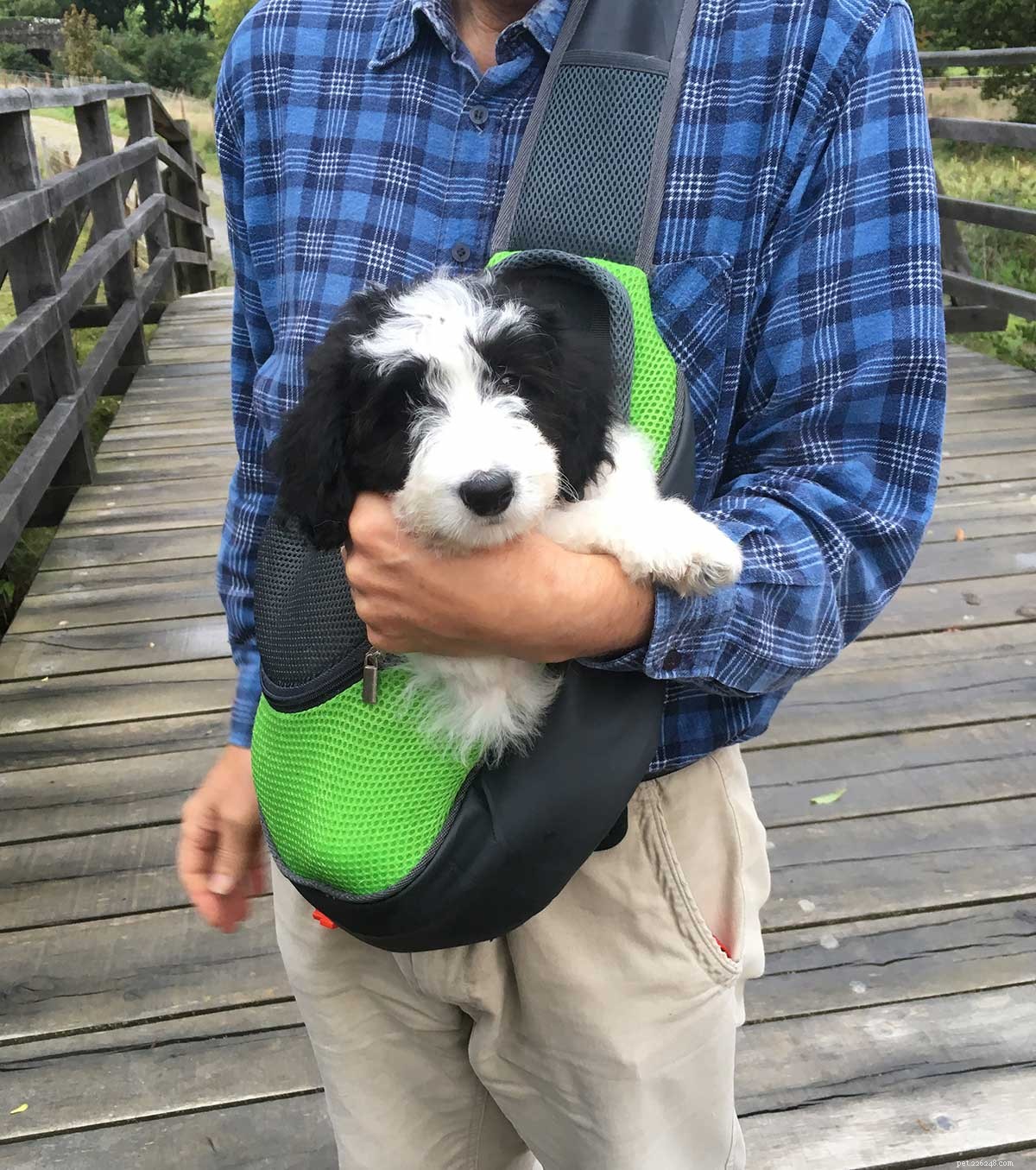
The appearance of a mix breed dog is always unpredictable. They could look like either of their parent breeds, or anything in between. It will vary from dog to dog, but you can be confident they will have long fur with at least a slight wave, be medium height and a relatively slim build.
How Big Are Bordoodle Dogs?
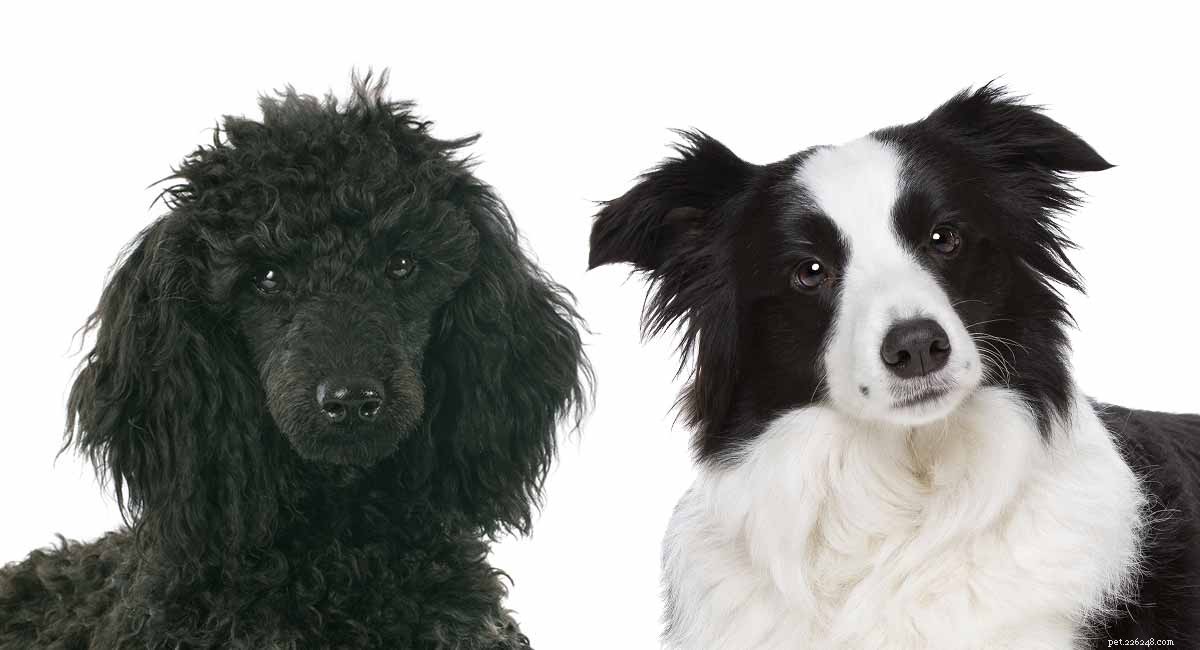
Today’s Poodle comes in three sizes: standard, miniature, and toy. Most Borderdoodles are a mix between the Border Collie and the larger, standard Poodle.
Of course, any size Poodle can be used. If your Bordoodle has a mini or toy Poodle parent they are likely to be much smaller.
Border ColliePoodle (Standard)BordoodleSizeMediumLargeMedium to largeHeight18 – 22 inches15+ inches15 – 22 inchesWeight30 – 55 lbs40 – 50 lbs (female)60 – 70 lbs (male)30 – 60 lbs
Bordoodle Coat and Eyes
Expect your Borderdoodle’s coat to be medium length with a curly or wavy texture. A Border Collie Poodle mix will usually have brown eyes. Their coat can come in any combination of colors and patterns, including the classic black and white Border Collie markings.
Many potential owners are interested in Poodle crosses like the Bordoodle because they are concerned about grooming, shedding, and allergy issues. Let’s look at the parent breeds now, to give us a better idea of what to expect.
Bordoodle Grooming
Border Collies can have a long or a short coat. Either way, they will have a soft dense undercoat that sheds heavily, seasonally. They also have a background level of daily shedding. Rough-coated dogs may have longer fur with feathering on the legs, chest, and underside, Whereas smooth-coated Collies have shorter hair with only a small amount of feathering.
Border Collies with either coat length require once or twice weekly brushing with a slicker brush. Daily brushing may be needed during shedding season.
A Poodle’s coat is curly and dense. It is relatively high maintenance when not clipped short. A Poodle wearing its full coat will require regular professional grooming, which is why many owners keep their coats trimmed. Poodles do not have an undercoat like the Border Collie, which means they don’t have a heavy period of seasonal shedding.
Coat Care
The exact amount of general care that your Border Doodle mix needs will depend on the traits they inherit from their parents. But, whether their coat is curly like the Poodle, or straight like the Border Collie, you’ll need to groom them regularly.
During grooming sessions, you can check their ears and teeth too. Make sure you trim their nails regularly to avoid any split or broken nails. And, if you exercise your Bordoodle outside a lot, especially in long grass, check them regularly for pests like ticks.
As we said a moment ago, coat care will differ from one Bordoodle to the next. Those with Border Collie coats will shed a lot. Grooming them a few times a week will help to control this. But you may need to groom them once a day during heavy shedding periods.
Shedding
Those with Poodle-like coats will shed less visibly. But this is because shedding fur is getting caught in their tight curls. This means tangles and knots will develop a lot more easily, which can be painful for your dog.
Regular grooming is vital if your dog has a Poodle-like coat. Many owners prefer taking their dog to a professional groomer regularly, and trimming their coat to make it more manageable. But it will entirely depend on the coat your dog inherits.
Are Bordoodles Hypoallergenic?
Although Poodles have a reputation for being hypoallergenic, there are no guarantees with a Border Collie Poodle mix. In fact, there is no such thing as a truly hypoallergenic dog. All dogs have allergens in their fur, skin dander, and saliva – even Poodles! Some dog breeds just shed less than others.
Poodles do not shed often. In addition, their tightly curled coat will trap any hair or dander as it’s shed, which is why Poodles need frequent grooming. However, as we know, the Border Collie sheds moderately all year round. And, their straight fur won’t catch shedding hair and dander. So, if you have allergies, be sure to spend some time with a Bordoodle before getting one.
Bordoodle Temperament
Like their appearance, your Bordoodle’s temperament can favor one parent breed over the other, or be a perfect mix. But, either way, your dog will be intelligent, like both parent breeds.
In general, Border Collie Poodle mix dogs are also loving, playful, and energetic. So, they usually do well in active families with children. Let’s take a closer look at the variety your puppy could inherit.
Bordoodle Personality
Poodles have been a favorite companion animal for many years. Even though they originally started as a hunting breed! Poodles are active, proud, and intelligent dogs. This is true no matter their size. Despite their smaller size, Miniature Poodles are just as energetic as Standard Poodles.
The Border Collie breed started life as a working dog. Many modern Border Collies are still working, herding dogs. They are extremely high energy. So, their intensity level may be more than an experienced owner can handle.
Natural Instincts
Working Poodles would hunt and retriever ducks. Working Border Collies would herd sheep alongside their owners. There are some important instincts that come with these original roles.
Hunting breeds, like the Poodle, often have a chase instinct when they see smaller animals. To minimise this, practice a strong recall. You can also walk your Bordoodle on a leash, and exercise him in enclosed areas when he’s outside off the leash.
Herding breeds, like Border Collies, may herd small animals or young kids that run around a lot. They may nip at heels, which can be uncomfortable for small animals and children. These instincts are something to consider before getting a Bordoodle.
Bordoodle Socialization
Socialization is extremely important for any dog. Particularly one with the chance of strong hunting or herding instincts like the Bordoodle.
When your puppy is young, expose it to as many different new things and places as possible. Make sure all of these experiences are positive. This will help your pup grow into a happy and friendly adult.
Training and Exercising your Bordoodle
Because they’re so smart, Bordoodles are also highly trainable. Training your pup is a great way to keep them entertained, since intelligent dogs can get bored more easily. And, positive reward training will increase the strong bond between you and your Border Doodle.
Both Border Collies and Poodles are athletic and intelligent. So, they need lots of exercise and activities to keep them happy. This pretty much guarantees that your Bordoodle will be the same.
If you don’t have sheep to herd, activities like agility trials are a must. This mix will love being outdoors with you. Whether it’s during an intense play session, or on a hike together!
Bordoodle Health and Care
Most purebred dogs have some inherited health conditions and the Border Collie and Poodle are no exception. Mixed breeds may be healthier, thanks to their larger gene pool. But, they can still be prone to the same issues as their parents. Bordoodle health risks to be aware of:
Brain:Epilepsy, seizuresEyes:Collie eye anomalyJoints:Hip dysplasia, elbow dysplasiaBrain: Early onset deafness, exercise induced collapse, Addison’s disease, sebaceous adenitis, bloat, von Willebrand’s diseaseEpilepsy and Seizures
Epilepsy is a neurological condition that causes seizures. Standard Poodles are among a group of dog breeds that are prone to inherited epilepsy.
Veterinarians use a variety of drugs to prevent seizures, but many have serious side effects.
Collie Eye Anomaly
Of special concern for Border Collie breeders and owners is a condition called Collie eye anomaly (CEA). This is an inherited eye disease that affects different types of Collies and Sheepdogs.
With CEA, blood vessels that lead to the retina are underdeveloped. This can lead to blindness.
Fortunately, there’s a genetic test for this disease. Responsible breeders will prevent carriers from passing on the gene to future generations.
Hip and Elbow Dysplasia
Hip and elbow dysplasia is a joint disease that is often seen in large dog breeds.
It occurs when a dog’s ball and socket joint is malformed. Over time, dogs with hip or elbow dysplasia may experience pain, difficulty moving, and even lameness.
Early Onset Deafness
Early onset deafness is a health issue often seen in the Border Collie parent.
In some cases, Border Collies can lose their hearing by age 3. But, for many it won’t happen until at least 5 years of age.
If you’re planning to herd with your Bordoodle, this health issue can be a large obstacle when issuing vocal commands, especially over long distances.
Exercise Induced Collapse
Bordoodles that suffer from Exercise Induced Collapse may experience temporary hindleg weakness and even paralysis when exercising.
Many dogs will be fine after some rest.
But, it’s important to avoid intense exercise if your dog suffers with this issue.
Addison’s Disease
Lack of diversity in the gene pool has led to several autoimmune conditions in the Poodle.
Addison’s disease occurs when the dog’s immune system attacks the adrenal glands and causes a steroidal hormone deficiency.
It can lead to a poor appetite, gastroenteritis, and depression. Among other symptoms.
Sadly, this condition is not curable. Affected dogs will need lifelong treatment.
Sebaceous Adenitis
Sebaceous adenitis (SA) is an inflammatory skin disease caused by the immune system’s attack on the skin’s sebaceous (oil) glands.
Symptoms include scaling and alopecia.
Your vet may suggest topical treatments or dietary changes.
Bloat
Bloat is an issue that is common in large breed dogs, but can occur in smaller ones.
This is a serious issue that can be fatal if owners don’t act fast. It happens when the stomach fills with gas and twists, cutting off blood supply.
Symptoms include distress, retching, and swollen, firm stomachs. It can occur if your dog eats too fast, or too soon after exercise.
Von Willebrand’s Disease
Von Willebrand’s disease is a bleeding disorder that is common in the Poodle parent.
Affected dogs may experience uncontrollable bleeding, which can pose problems when giving birth, or when injured.
General Health of Cross Breeds
You may have heard of the term ‘hybrid vigor’. This is the idea that mutts and mixed breeds are more robust than purebreds. And it can be true if inbreeding is prevalent in a purebred genetic line.
So, it’s also important to verify that your Bordoodle comes from a healthy Border Collie and Poodle breeding stock. Since most purebred dogs have some inherited health problems. Responsible breeders can minimize health problems by outcrossing with different lines and performing genetic health tests on their dogs (and only breeding healthy ones).
Pros And Cons of Getting A Bordoodle
Pros:Cons:ActiveNeeds lots of exerciseIntelligent and trainableProne to inherited health problemsFriendlyMay have strong chase instinctsMay be low sheddingMay try to herd small childrenWhat is the Bordoodle Life Expectancy?
The Bordoodle’s life expectancy will usually fall somewhere between its parent breeds.
According to a study into dog lifespans, Border Collies live an average of 12.25 years, and Standard Poodles live an average of 12 years.
So, you can expect the average Bordoodle to live around this long too.
One bred from healthy parents with great regular care may live even longer.
Do Bordoodles Make Good Family Pets?
The Border Collie Poodle mix is a highly energetic, intelligent dog.
This mix will suit a family that loves being out and about, walking and playing with their dog.
If you have plenty of time to spend with your new super smart pup, a Borderdoodle may be right for you.
But, there’s no way to predict the grooming requirements and shedding that your mix will do.

Plus, there is a risk of some natural instincts. So, this mix won’t always suit families with really young children or other small animals.
Rescuing a Bordoodle
If you’re willing to adopt an adult dog, Bordoodle rescue can be a great option. To find a Border Collie Poodle mix rescue dog, check with local breed-specific rescue groups for both the Border Collie and Poodle parents.
Many of these rescues will take in mixes, as long as they have one of those parent breeds. Rescue dogs are often cheaper than puppies, and may have some basic training. But, be aware that some older dogs may have behavioral issues.
Bordoodle Breed Rescues
Here are some great breed rescue centers that may be able to match you with a Bordoodle in need of a new home.
USAMountain Rose BordoodlesOregon BordoodlesUKDoodle Trust
Border ColloodlesCanadaMile High Bordoodles
Country Raised BordoodlesAustraliaBordoodles Australia
Finding a Bordoodle Puppy
Since both the Border Collie and Standard Poodle parent breeds can be prone to a lot of health issues, you should only consider reputable Bordoodle breeders. Look for local, small scale breeders who welcome potential clients into their homes and kennel facilities. They should be happy to let you see the living conditions of your puppy, meet the parents and littermates, and see all genetic health test results.
Look for Bordoodle puppies that are a healthy weight with no protruding belly. Their eyes, nose, and rear end should be free from discharge. A healthy coat and blemish-free skin is a must. As well as a good temperament. The mom’s temperament should also be friendly, with no signs of aggression.
A good breeder will show you proof of genetic health testing from organizations such as the Orthopedic Foundation for Animals and the Canine Eye Registry Foundation. They may also have test results from private and veterinary school DNA testing laboratories.
Where to Avoid
Since mixes are so popular, there are risks when searching for a Bordoodle puppy. Particularly if you see puppies advertised on the internet, or in retail pet shops.
There’s a chance these puppies may come from puppy mills. These are large breeding operations that only focus on profit, rather than the health and care of their puppies. Puppy mills generally will not invest in genetic health testing like responsible breeders. So, there can be a higher risk that puppies will inherit common health issues.
Bordoodle Price
As demand for Bordoodle puppies grows, it’s likely that puppies will be more expensive. Waiting lists for puppies may also be longer. Bordoodle puppies from reputable breeders will often cost somewhere between $900 to as much as $3500.
Price will depend on demand, the quality of the parents, certain desirable traits (like coat type and color), and location. Remember, puppies from puppy mills will often be cheaper upfront. So, search for reputable breeders that can guarantee the health of their puppies.
Bordoodle Puppy Care
Caring for a vulnerable Bordoodle puppy is a big responsibility. There are some great guides to help you with all aspects of puppy care and training. You’ll find them listed on our puppy care page.
Bordoodle Products and Accessories
Preparing for a new dog can be stressful! There are so many things to get, and so much to choose from. But we’ve got plenty of guides to help you find the best products. Here are some to get you started.
- Toys for Border Collies
- Shampoo for Poodles
- Brushes for Poodles
Similar Breeds
Bordoodles can be hard to find and won’t suit every home. But, if you aren’t sure this mix is for you, there are plenty of others to consider. Take a look at some of these similar breeds.
- Cadoodle
- Cockapoo
- Shollie
- Pointer Border Collie Mix
- Border Collie Jack Russell Mix
- Dalmatian Lab Mix
The Bordoodle
Bordoodle mix dogs are intelligent, energetic dogs that can suit an active family well. They are often happiest when they have a job to do. But, they need plenty of socialization and training from a young age.
Do you have a Border Collie Poodle mix at home?
References And Resources
- Gough, A. (et al) ‘Breed Predispositions to Disease In Dogs and Cats’, Wiley Blackwell (2018)
- O’Neill (et al) ‘Longevity and Mortality of Owned Dogs In England’, The Veterinary Journal (2013)
- Adams, V. (et al), ‘Results of a Survey of UK Purebred Dogs’, Journal of Small Animal Practice (2010)
- Duffy, D. (et al) ‘Breed Differences in Canine Aggression’, Applied Animal Behavior Science (2008)
- Farrell, L. (et al) ‘The Challenges of Pedigree Dog Health: Approaches to Combating Inherited Disease’, Canine Genetics and Epidemiology (2015)
- Oberbauer, A. (et al), ‘Ten Inherited Disorders in Purebred Dogs by Functional Breed Groupings’, Canine Genetics and Epidemiology (2015)
- Schalamon (et al), ‘Analysis of Dog Bites In Children Who Are Younger Than 17 Years’, Pediatrics (2006)
- Strain G. ‘Deafness Prevalence and Pigmentation and Gender Associations in Dog Breeds at Risk’, The Veterinary Journal (2004)
- Palanova, A. ‘Collie Eye Anomaly: A Review’, Veterinarni Medicina (2015)
- Pedersen, N. (et al) ‘The Effect of Genetic Bottlenecks and Inbreeding on the Incidence of Two Major Autoimmune Diseases in Standard Poodles, Sebaceous Adenitis and Addison’s Disease’, Canine Genetics and Epidemiology (2015)
- Schmutz, S. ‘An Analysis of the Inheritance Pattern of an Adult-Onset Hearing Loss in Border Collie Dogs’, Canine Genetics and Epidemiology (2014)
- McCullough, M. ‘Exercise Induced Collapse in Dogs’, Veterinary Practice (2020)
- Pet Behavior
- Pet Breeds
- Pet Names
- Pet Adoption
- Pet Training
- Pet Information
- Pet Health
- Adorable Pets
- Dogs
- Tanner the Border Collie Mix – Adopted and Thriving
- Shollie: The Ultimate Border Collie × German Shepherd Mix – Intelligent, Loyal, Athletic Family Guard
- Newfypoo: The Newfoundland‑Poodle Mix – Your Complete Breed Guide
- Weimardoodle Explained: Benefits, Traits, and Care for the Weimaraner-Poodle Mix
- Yorkipoo Dogs: The Ultimate Guide to the Poodle‑Yorkshire Terrier Hybrid
- Maltipoo: 10 Essential Facts About the Maltese-Poodle Mix
- Border Collie Breed Guide: Traits, Training, and Care Tips