

American Pitbull Terrier: Comprehensive Breed Guide & Temperament Profile
American Pitbull Terrier Infographic
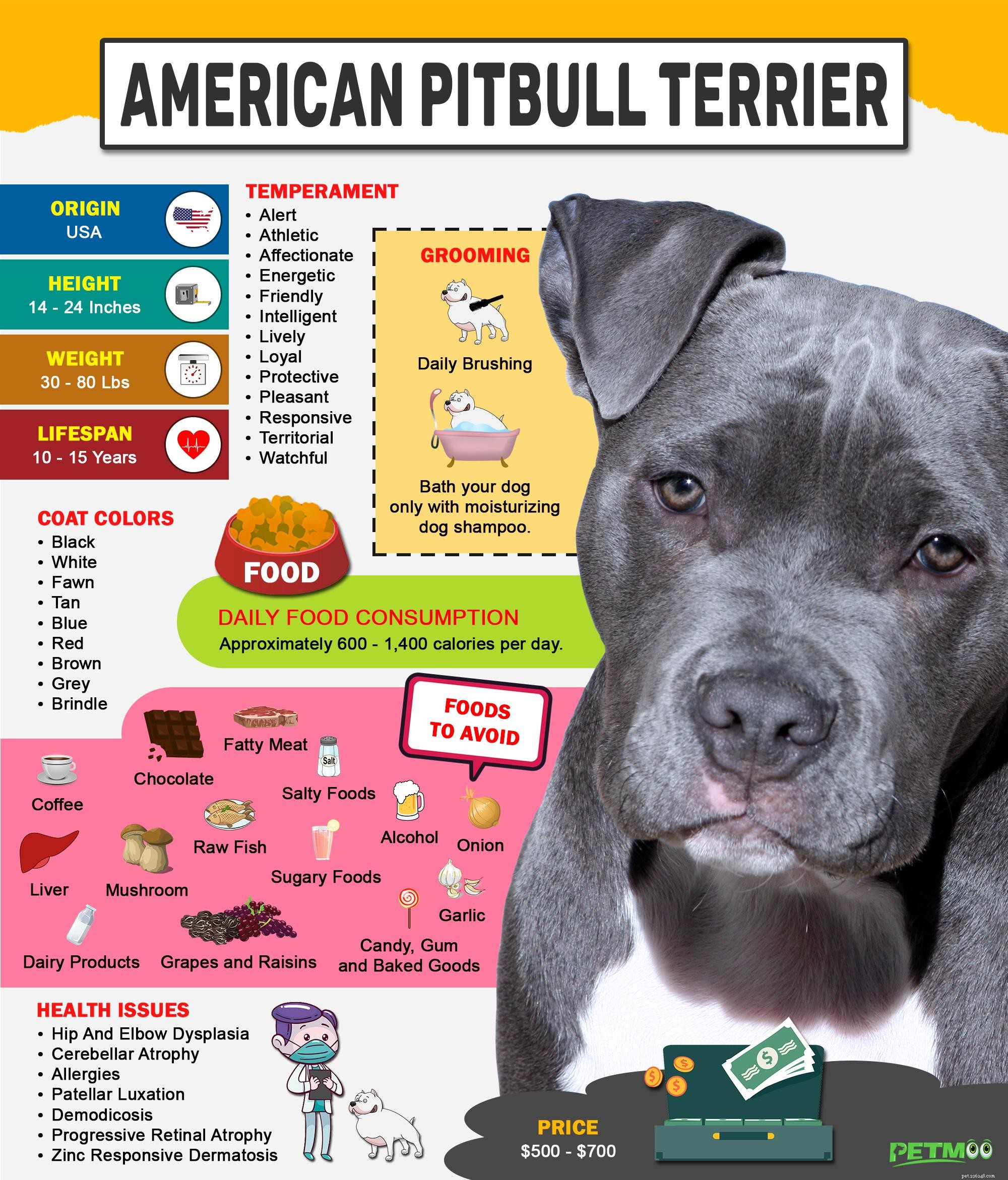
American Pitbull Terrier Breed Characteristics Sheet
- Origin: USA
- Size: Large
- Dog Breed Group: Terrier (UKC)
- Purebred: Yes
- Lifespan: 10-15 Years
- Height: 14 – 24 Inches (35 – 60 Cm)
- Weight: 30 – 80 Pounds (13 – 36 Kg)
- Coat Appearance: Sparse, Medium Straight Coat
- Coat Colors: Black, White, Fawn, Brindle, Tan, Blue, Red, Brown, Grey
- Temperament: Alert, Athletic, Affectionate, Energetic, Friendly, Intelligent, Lively, Loyal, Protective, Pleasant, Responsive, Territorial, Watchful
- Good With Children: Yes
- Intelligence Level: High
- Good With Pets: No
- Hypoallergenic: No
- Grooming: High
- Shedding: Average
- Barking: High
- Suitable For Apartments: No
- Need For Exercise: High
- Easy To Train: Yes
- Good For First Time Owners: Yes
- Health Issues: Hip And Elbow Dysplasia, Cerebellar Atrophy, Allergies, Patellar Luxation, Demodicosis, Progressive Retinal Atrophy, Zinc Responsive Dermatosis
- Average Price: $500-$700 USD
American Pitbull Terrier History
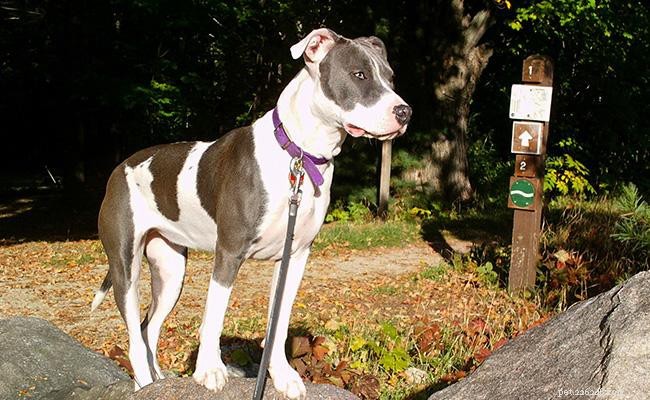
First, a little clarification and back-story for those who aren’t completely familiar with what “Pit Bulls” actually are.
The name ‘Pit Bulls’ is referred to not just one specific breed, but is often used as a catch-all to depict a wide array of dogs with common characteristics (American Pit Bull Terriers, Staffordshire Terriers, American Staffordshire Terriers, American Bullies, sometimes American Bulldogs and Bull Terriers).
The American Pit Bull Terrier is the most common breed referred to as the pit bull dog. It is actually a cross between terriers and Old English Bulldogs.
They gained popularity over the course of almost 300 years till the 19th century in an animal blood sport known as “bull baiting” in medieval.
These Pit Bull Terriers were first brought to the United States from Staffordshire in the late 1800s after the Blood-sports were outlawed in 1835 in the UK.
There was another strain of the pit bull dog developed after they were brought to the United States.
Bulldogs which were crossed with Terriers- is a more easy-going, even-tempered dog that was used to hunt, drive livestock (such as so “rat-baiting” and dog fighting- which were easier to hide from the law enforcement) and as family pets.
They were released into a “pit” to hunt and kill rats or fight one another, thus beginning the “Pit Bull” type of dog. The pit bull was, in fact, the sign of American strength and valor during World War I!
Dog Pregnancy Calculator And Timeline
American Pitbull Terrier Size And Lifespan
- Height – 14 – 24 inches (35 – 60 cm)
- Weight – 30 – 80 pounds (13 – 36 kg)
American Pitbull Terrier Lifespan
A healthy ABPT should expect to enjoy a life expectancy of between 10 – 15 years when properly cared for and fed a good quality diet to suit their ages.
Golden Retriever Husky Mix – 11 Facts About The Goberian
Have You Yet Had The Pleasure Of Meeting The Goberian Or Golden Huskies? Check Out The Size, Temperament, Price & More Of Golden Retriever Husky Mix.Read MoreAmerican Pitbull Terrier Coat Color And Appearance
Appearance
They are medium-sized, agile and athletic dogs with a stocky build, short and smooth coat with well-defined musculature (neither bulky, overdone nor lanky, fine-boned).
They look “square” when viewed from the side with the solid front end with a light and springy backend
Facial region
The bricklike, well-proportioned head is proportionate to the body and exhibits the appearance of strength, elegance, and character.
Head size is balanced, wedge-shaped when viewed from the top or side, round when viewed from the front and it is 2/3 the width of the shoulders.
Well, developed straight boxlike muzzle is parallel to the skull and head should be deep from the top of the head to the bottom of the jaw.
Ears are set high on the head and Oval to almond-shaped eyes are set far apart, low down in skull (triangular when viewed from the side and Elliptical when viewed from the front).
They have extremely powerful jaws with incisors meet in the front in a scissor bite.
Body
Long and wide shoulder blades with Deep, moderately wide chest. Deep, elliptical prosternum (or breastbone) which is well sprung at the top, taper to the bottom and extend back to the loin.
Loins are broad and long enough to square the dog with long, sloping hips of adequate width. Small and tight feet which are set high on patterns with thick, well built up pads.
Tail is low set, thick at the base tapering to a fine point and extending to the point of the hock.
Coat Color
- Black
- White
- Fawn
- Brindle
- Tan
- Blue
- Red
- Brown
- Grey
Short, shiny, and smooth to the touch. Long or curly or wavy coats are disqualifying faults.
American Pitbull Terrier Temperament
Positives
- The truth about ABPT and pit bulls, in general, is simple: They’re sweet, smart, amusing, devoted companions. And, we’re not alone; a lot of people think so.
- National Pit Bull Day has been established in their honor and Ken Foster’s book “I’m a Good Dog” which is a heartfelt tribute to the pit bulls continues to climb the charts.
- ABPT’s are tenacious: When they put their mind to something, they often achieve it. Hence, they make great sporting dogs.
- These dogs, of all that liveliness and resolve is that American pitties can be refractory, even recalcitrant. But remember, because of their people-pleasing nature, pibbles are extremely trainable.
- They make excellent candidates for a therapy dog. Obedience training is a great way to acquaint with your pibbles while laying the foundation for good manners.
- Let’s be straightforward: The pit bull mouth has garnered some bad rap. The most outrageous and insidious fallacy about pibbles is that they got “locking jaws”…
- They don’t: There is nothing anatomically distinctive about pibbles jaws and they have just the same doggy mouths as every other kind of dog and not even the strongest around.
- Their attitude toward other canines and animals are a different story altogether. Their dog-fighting ancestry dictates a determined, dogged, no-nonsense kind of dog who does display benevolence when being challenged by other dogs.
- They are actually quite playful and pleasant. The breed’s natural aggressive tendencies are directed towards other unfamiliar animals or pets. However, proper Training and socialization methods will make them non-aggressive adorable pets.
- They have a broad spectrum of humanoid emotions that make these dogs relatable to us.
- ABPT’s have some of the most expressive faces of all dogs. You will always know what’s in your dog’s mind. Some have inexhaustible energy, and others are stick-in-the-mud stragglers but, in general, they’re just glad to be doing whatever you’re doing.
- ABPT’s serve their homes fervently as they so effortlessly get attached to a family which in no time is evident with the protective behavior and affection they have towards them.
- Do you think this dog looks violent and vicious, maybe… but beneath that rough exterior is a different kind of dog! Do you believe that American pibbles are affectionate to kids?
- Yes…They do… also, these dogs have a high tolerance to pain as kids normally do and unknowingly harm the pets.
- American pibbles really love their family. We mean, they really, really love their family. They love to cuddle, snuggle, crawl in your lap, roll over for belly rubs and stay by your side as long as possible.
- American Pibbles are clingy “velcro dogs.” Thanks to their high spirits, exuberance, vim and vigor, love of life, and intense devotion to people, ABPT’s are some of the most entertaining dogs in the world.
How to be an American pit bull breed ambassador?
Know the ABPT history and their personality completely. We suggest that you get down to your local shelter, or search for one of these dogs online and give a family-friendly pibble a chance.
Every dog is different, even within a specific breed. so know your dog. Train your dog. The importance of training and socializing your dog cannot be exaggerated
Help him to show off his true, wonderful natures to the world…and to be a good “ambassador.” Being a pit bull keeper can be demanding, but the rewards are long-lasting, and you’re guaranteed a lifetime of love.
Adaptability
- Apartment Living – Low To Moderate
- Good For First-Time Owners – Yes
- Sensitivity Level – High
- Loneliness – Averagely Suited To Be Alone
- Cold Weather – Average
- Hot Weather – Average
Friendliness
- With Family – High
- Kids – High
- Other Dogs – Low
- With Cats – Low
- Other Pets – Low
- Strangers – Suspicious, Reserved
General Behavior
- Independence – Fairly Independent
- Dominance – High
- Combativeness – Aggressive
- Indoors – Active
- Outdoor – Highly Active
- Territorial – Yes
- Easy of transportation – Medium
American Pitbull Terrier Training
- Trainability – Quick Learners But May Be Stubborn
- Intelligence – High
- Memory – High
- Mouthiness – Low
- Prey Drive – High
- Wanderlust Potential – Average To High
Is an American pitbull terrier hard to train?
Pitbulls and pit mixes can be awfully impulsive, in large part due to the large variety of breeds that may be involved; but, this is less true of a well-bred pure APBT due to the spotlight on a more passive and acquiescent temperament by responsible breeders.
ABPT may look intimidating; however, anybody who’s ever owned an American pittie knows that they are usually little bundles of face-licking, nose nudging, tail-wagging, slobbery tongues of love.
When raised properly, in a loving environment, they are among the friendliest dogs you could want.
American pitties need firm, consistent, regular and considerate training and socialization from an early age. He is an intense and resolute dog; he needs a determined and consistent pawfect pack leader.
If he is not trained by the book, owners may find it quite hard to handle him as he gets older.

Teacup Pomeranian – 12 Facts On The The Stunningly Cute, Snow White Dog
Teacup Pomeranians Are Stunningly Cute Looking Pets. The Colors, Personality, And Size Of The Dog Captivate The Attention Of Dog Lovers. Check This Article.Read MoreAmerican Pitbull Terrier Care
So, what about the first-time owners?
ABPT’s are quite a good choice for First-time dog owners as long as you get them when they are in their puppyhood. They are really open to learning new things and love nothing more than to please their owners.
All they want is to see their owners pleased and happy with something they’ve done. Considering this, American pibbles make good pets for novice owners.
Proper socialization and Obedience training are vital components for this dominant breed so as to help prevent nervous tendencies, aggressive behaviors towards other dogs and precariously overzealous greetings.
- Exercise Needs – Fairly High
- Intensity – Medium
- Activity Level – High
- Exercise Requirements – >60 Minutes/Day
- Walk Mileage/Week – 12 Miles
- Playfulness – High
- Grooming Needs – Average
- Tendency To Drool – No
- To Snore – No
- Bark – High
- To Dig – Low
- Social/Attention Needs – High
American Pitbull Terrier Food
Tips for feeding American Pitbull Terrier
Daily Food Consumption – Approximately 600 – 1,400 calories per day (i.e., 20 calories/ 1 lb of body weight)
Dog’s weight
- 15 kg = 1000 calories (approximate daily calorie intake)
- 20 kg = 1250 calories
- 30 kg = 1500 calories
- Over 35 kg = 1700 calories
Rough Feeding guide for American Pitbull dog:
General Meal frequency
- First 1-3: three meals per day
- For the rest of life: two meals per day
- Pups between first 6 weeks- puppy milk replacement formula
- Up to the third month – a mix of 75-percent liquid to 25-percent wet or dry puppy food or 2 meals every 24 hour period (300-450g)
- Feed puppies 6 months to 1 year – 2 bowls of puppy-specific food daily (400- 450g)
- When your puppy hits his first birthday, two smaller bowls every 24 hours or get him a slow-feeding bowl is typically all that’s necessary.
When your puppy is 12 months old they can be fed adult dog food depending on their activity level and food preferences.
- Dogs 25 – 30 kg =400g
- 30- 35 kg = 400g to 500g
- Protein content should be anything from 14 – 25%
- Carb content should be 30 to 65%
- Fiber content should be less than 4%
- Fat content should be less than 10%
- Calcium content should be 0.5 – 0.8%
- Phosphorous content should be 0.4 – 0.7%
- Sodium content should be 0.2 – 0.4%
Top picks for American Pitbull Terrier
Taste of the Wild High Prairie PuppyPuppies AvoDerm Natural Senior Health+Old dogs Earthborn Holistic Great Plains FeastAdults Bully Max High Performance PremiumGain Weight/Muscle Wellness CORE Reduced Fat Grain FreeWeight Loss Wellness Simple Limited IngredientSensitive Stomach Blue Buffalo Limited IngredientSkin AllergiesFoods to avoid
- Chocolate
- Bacon and fatty meat
- Garlic and onions
- Salty foods (such as popcorn and pretzels)
- Milk, Ice Cream and other Dairy Products
- Candy, Gum, and Baked Goods
- Grapes and raisins
- Sugary foods
- Raw fish, liver, and mushrooms
- coffee, Alcohol
American Pitbull Terrier Grooming And Shedding
- Coat Density – Sparse
- Length – Medium
- Texture – Straight
- Brushing Frequency – Weekly Twice
- Trimming/Stripping – No
- Hypoallergenic – No
- Shedding – Average
Due to the ABPT’s short and flat hair, grooming it is easy. A daily brushing using a de-shedding fulminator slicker brush or a slicker brush is more than enough to straighten out the coat hair.
It is essential you brush your dog’s coat regularly, most importantly, during season shift periods. For sensitive American pitties, you can brush them with the pet grooming glove.
Brushing the dog’s fur makes it detangle, remove shed hair, keeps it healthy and maintains the natural sheen.
Bath your dog only when it is absolutely needed. Use a moisturizing dog shampoo that is natural with no pesticides or chemicals.
Make sure to rinse the dogs completely to remove all the shampoo and use a towel to dry off the dog.
American Pitbull Terrier Health Problems
Major concerns
- Hip dysplasia
- Cerebellar atrophy
- Allergies
Minor concerns
- Cataracts
- Patellar luxation
- Demodicosis
- Zinc-responsive dermatosis
- Progressive retinal atrophy
Occasional diagnosis
- Ichthyosis
- Hypothyroidism
- Heart diseases
American Pitbull Terrier Names
Male Female
AresAlly
BlazeBonnie
DexterDakota
FlexGinny
HulkHera
MackKandy
PeteyNyx
RobinTeal
NitroRoxy
TankVega

Havanese Puppies – Complete Breed Information & Health Problems
Havanese Dogs Belong To The Bichon Dog Breed. Check Out The Size, Lifespan, Price, Temperament, Health Issues & All Facts About Havanese Puppies.Read MoreAmerican Pitbull Terrier Price And Breeders
Price
You should expect to pay at least $500 – $700. Some can go up to $1000for your American Pits puppy depending on the pedigree, vaccination, and the breeder. Lineage and quality is a decisive factor in puppy pricing.
American Pitbull Terrier Breeders
Breeders, animal shelters and rescue groups
A good place to start is Pitbull rescue groups in your state and let them know what you are looking for in the event that they know of an eligible dog available for adoption.
Get started by searching for a good breeder on national kennel or breed clubs. Below mentioned are some rescue centers in where you can find American Pitbulls:
- Pit Bull Rescue Central
- Villalobos Rescue Center
- Bobbie’s Pit Bull Rescue & Sanctuary
- Finest Pitbulls Made
- Empire Bully
For adoption
Adopt a Pet
Rescue Me
Rocket Dog Rescue
Petfinder
- Pet Behavior
- Pet Breeds
- Pet Names
- Pet Adoption
- Pet Training
- Pet Information
- Pet Health
- Adorable Pets
- Dogs
- Dachshund Breed Guide: Temperament, Size, Origin & Care
- American Bulldog: Breed Overview, Temperament & Care
- Border Terrier Breed Profile: Size, Temperament, and Care
- Bulldog Breed Overview: History, Temperament & Care
- Japanese Terrier: Comprehensive Guide to Breed, Temperament, and Care
- Komondor Dog Breed: Characteristics, Temperament & Care Guide
- Kuvasz Dog: Breed Overview, Size, Temperament, and Care