

Discover the Majestic Borzoi: Elegance, Speed, and Cold-Climate Resilience
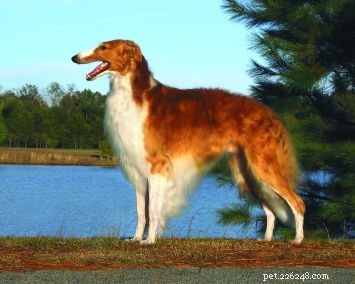
Form and Function
The Borzoi is a hound capable of running in a very cold climate, and has strong jaws. This breed retains the greyhound build necessary for running at great speed, but is larger and stronger than the greyhound. The long, silky coat, which can be either flat, wavy, or rather curly, provides protection against cold weather and snow. The Borzoi should possess elegance and grace, with flowing lines, whether standing or moving.
Ready to see what dogs fit you best? Take our short quiz to find out!
Breed Traits
Energy Level
2 out of 5Exercise Requirements
3 out of 5Playfulness
3 out of 5Affection Level
3 out of 5Friendliness To Dogs
3 out of 5Friendliness To Other Pets
2 out of 5Friendliness To Strangers
2 out of 5Watchfulness
3 out of 5Ease of Training
2 out of 5Grooming Requirements
3 out of 5Heat Sensitivity
4 out of 5Vocality
2 out of 5Breed Attributes
Type
Hound
Weight
60-105 lb
Height
28-30"
Family
Sighthound
Area of Origin
Russia
Date of Origin
Middle Ages
Other Names
Russian Wolfhound
History
The Borzoi (also known as the Russian Wolf-hound) was bred by the Russian aristocracy for hundreds of years. Coursing for sport was known in Russia as early as the thirteenth century. In the fifteenth and sixteenth centuries, crosses of coursing hounds with bearhounds and with tall Russian sheepdogs were made to increase size and coat, both necessary for hunting in the cold climate
The first standard was written in the 1600s in a book of Borzoi hunting rules. Perhaps no other breed has ever been the focus of hunting on such a grand scale. Hundreds of serfs worked in the upkeep of the hounds on huge estates; the hunts themselves were grand events. One account describes the hounds, horses, and hunters arriving in a train of over 40 cars, with another train bringing the Grand Duke and other nobility. Over 100 Borzoi might partake in a hunt.
By the 1800s, seven distinct subtypes of Borzoi existed in Russia. Most present Borzoi descend from the Perchino type kept by the Grand Duke Nicolai Nicolayevitch, and many of the early American imports came directly from the Perchino kennels. The Russian Czar would often present Borzoi as gifts to visiting royalty.
After the Russian Revolution, the days of the nobility were over, and the breed began to disappear. The fate of the breed was left in the hands of foreign royalty who had been given Borzoi and of a few remaining Borzoi kennels. In America, the Borzoi soon gained the reputation as the ultimate glamour dog, often seen at the sides of movie stars. Although only enjoying modest popularity as a pet, the breed remains popularity as a model.
Temperament
A breed of quiet elegance, the Borzoi exemplifies the well-mannered family member indoors. Outdoors, they race with wild abandon, and will chase any small animal that runs. They are independent but very sensitive. Although generally good with children, they may not be playful enough to satisfy some children. Some can be timid. They are reserved with strangers.
Upkeep
The Borzoi needs the chance for daily exertion. Although a long walk can satisfy most of their needs, it should be combined with a sprint in a large safe area. The coat, which is characteristically fuller on males, needs brushing or combing two or three times a week; at times it sheds a lot.
- Pet Behavior
- Pet Breeds
- Pet Names
- Pet Adoption
- Pet Training
- Pet Information
- Pet Health
- Adorable Pets
- Dogs
- Caring for Newborn Borzoi Puppies: A Complete Guide
- Understanding Borzoi Behavior: Temperament, Space Needs, and Care Tips
- Welsh Terrier: Characteristics, Care, and Exercise Guide
- Tosa: Japan’s Majestic Dog – From Battle Breeds to Loyal Watchdogs
- Papillon Dog Breed: Elegant, Energetic, and Friendly Companion
- Cavachon: The Low‑Shedding, Friendly Companion Dog
- Russian Blue Cats: Elegant, Intelligent Companions