

How Well Do Dogs See at Night? Exploring Canine Vision
Have you ever wondered why your dogs eyes glow in the dark? Or how how good your their night vision is? This article goes over how well dogs can see in the dark, why your dogs eyes glow at night, and the science behind their night vision.
Do Dogs Have Good Night Vision?
Do dogs have good night vision? As it turns out our canine companions can see pretty well in the dark, but not quite as well as our feline friends. When it comes to night vision dogs have a few anatomical advantages over humans, and it’s estimated that they can see things in light that’s five times dimmer than what we can see.
Your dog can see better in the dark than you can because of the way there eyes are structured. They have large pupils that let in more light, and they have more light and motion sensitive cells (rods) than we do. Those cells help them distinguish light from shadow, and they’re more apt at seeing in lower light levels than ours are.
The Science Behind How Dogs See in the Dark
Have you ever noticed your dogs eyes glowing in the dark? That glow is called eyeshine, and it’s part of what makes dogs able to see so well in the dark.
The tapetum lucidum is a layer of tissue in the eyes of many animals have, including dogs & cats. It lies between the animals’ retina and optic nerve and acts like a mirror. It greatly increases the amount of visible light available to the photoreceptors. The photoreceptors are specialized cells in our eyes that respond to light. When light shines into the eye of an animal with a tapetum the pupil appears to glow, and that’s what causes their eyes to glow in the dark.
That layer of tissue is why our dogs have good night vision. The tapetum allows animals to see things at night that they otherwise wouldn’t, it’s an evolutionary advantage for nocturnal animals that are active at night.
Why Do Dogs Eyes Glow in the Dark?
Have you noticed that your dogs eyes seem to glow in the dark? That eyeshine effect we see in animals, including our dogs, helps them to see better in the dark. It gives them the ability to easily identify other animals in the dark.
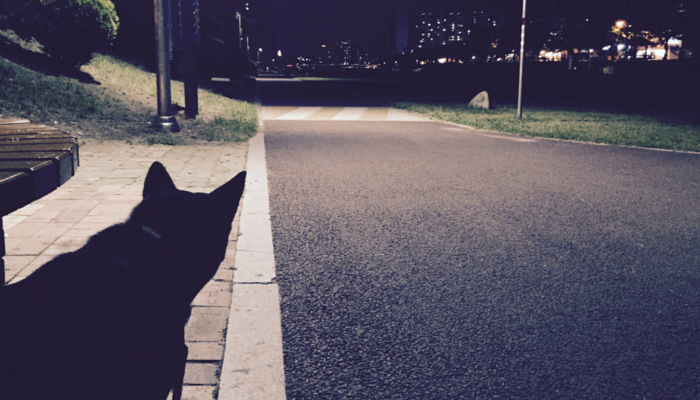
Eyeshine Glows in Many Different Colors
The color of your dogs eyes and his age influence the color his eyes will glow in the dark. Older dogs generally have denser lenses which causes less light to be reflected. The kind of light, and the angle at which it’s being shone also cause wide variations on the glow color.
Glowing Eyes in Photos is Also Due to the Tapetum
The tapetum is also what causes glowing eyes in photos, something many of us amateur photographers are quite familiar with. Dogs with pale colorings, such as Red Siberian Huskies and Siamese cats commonly have a ‘red eye’ effect in photographs, just like many people with blue eyes.
If your dogs eyes are darker in color they’re more likely to give off a blue or green glow in photos. Most puppies have a blue tapetal reflection until the structures in the back of the eyes mature around 6 months of age.
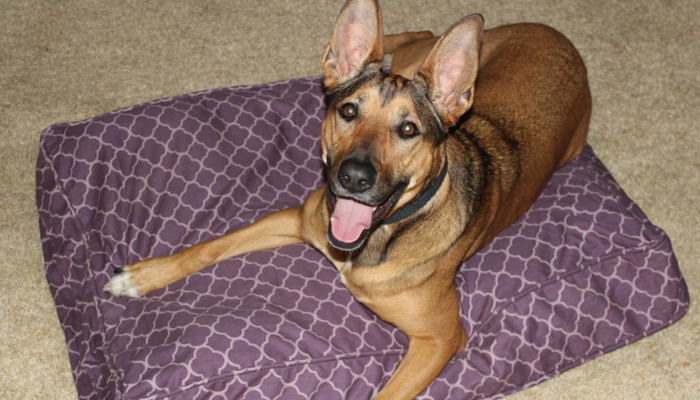
Does You Dog Have Good Night Vision?
Can your dog see in the dark? What color do your dogs eyes glow? What do you think; does your dog have good night vision?
- Pet Behavior
- Pet Breeds
- Pet Names
- Pet Adoption
- Pet Training
- Pet Information
- Pet Health
- Adorable Pets
- Dogs
- How Sharp Is a Dog's Vision? Understanding Canine Eyesight
- The Essential Role of Dog Whiskers: Why Every Canine Needs Them
- Do Dogs Truly Sense Time? Uncovering the Science Behind Their Daily Routines
- How Dogs Inspire Better Business Practices: Freshpet's Insight
- What Science Says About Dog Memory: Accuracy and Limits
- Night Vision in Rabbits: How Well Do They See in the Dark?
- Why Dogs Seem More Energetic After Dark: Understanding Their Nighttime Behavior