

5 Proven Strategies to Boost Your Dog's Confidence
Does your dog act shy or fearful around new people or situations? One way to help boost your dogs confidence is by learning how to shift their focus away from the scary thing and onto something positive.
My favorite method is to use some basic obedience skills. The basics like sit, stay & down are great for this. As simple as it seems these commands help take your dogs mind off of scary situations and put that focus back onto you.
If you want to help your dog conquer their fears around new people and situations there are a few basic methods that help. Here’s 5 ways to help boost your dog’s confidence.
Building Up Your Dogs Confidence Will Take Time
There’s no quick fix for helping a shy or fearful dog build up his confidence – it’s going to take time and patience on your part. But once you start working on obedience you will start to notice a difference in your dogs focus. Rather than fixating on all the scary things they’ll start to look to you for their next cue.
How Training Will Boost Your Dogs Confidence
When faced with something scary our dogs have a tendency to focus on that scary thing and ignore everything else. I’m the same way. If a big scary scorpion lands on my desk I’m getting up. I’m not going to finish watching that funny cat video, not until that thing is gone.
Our dogs do the same thing. The scary thing becomes their focus, and until you can shift their attention that big scary thing is going to be the only thing they’re focused on. It’s our job to help show them that the scary thing isn’t so scary after all, and one of the best ways to do that is by redirecting their attention.
When you give your dog something to focus on rather than the scary thing (in this case some basic obedience work), it gives them something else to concentrate on, rather than just being afraid. And the more they see that nothing bad happens around that scary thing, the more confident they’ll be around it.
Desensitization to scary things take time, and success won’t happen overnight. Fear is an emotional response, and that can be challenging to overcome.
If you’re afraid of heights you know that all the yummy treats in the world isn’t enough to alleviate that fear. It takes time and gradual exposure, and in the best case scenario a good friend to help shift your focus away from ‘OMG heights’ onto something else. You can be that person for your dog. Take their attention away from all the scary things, and shift it onto something positive like training.
It takes time, but you can increase your dog’s confidence through training. It’s teaching your dog new skills, and those skills help shift their focus onto something positive.
How I Taught My Dog to be Brave Around Strangers
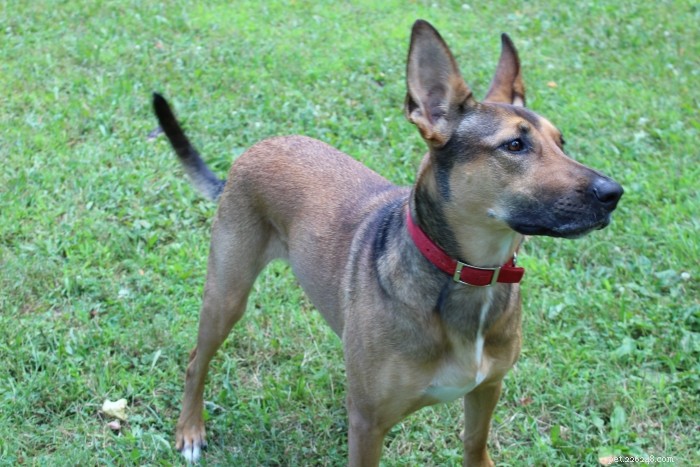
Laika was fearful of new people when we got her. She’d cower & grovel every time she was approached by someone new. To get her focus around new people I used the “look at me” cue and lots of yummy treats.
Since it was people that she was afraid of I did have the advantage of being able to tell people to approach her slowly – you might not have that option if your dog is fearful of other dogs. If your dog is fearful around new dogs I suggest taking it slowly when approaching, and don’t be afraid to walk away if you don’t think that initial meeting will go well. It’s much better to leave on a neutral note with your dog than have a bad experience.
Helping a shy or fearful dog will take patience & dedication, and it’s something you’ll need to continually work on when your dog becomes nervous in a new situation. But teaching your dog a few basic commands that they can focus on when dealing with new situations will be a great help. Here’s the five steps I used to build up my dogs confidence.
1. Start With Basic Obedience On Walks
Never knowing when we’d be running into someone that would trigger her fear I decided prepare myself every time we left the house. I’d take a bunch of yummy treats (chicken) along to make sure I had something that would be able to keep her attention if need be. If your dog’s not that into treats try using a game of tug to keep their attention.
Whenever I noticed someone off in the distance approaching we’d stop walking and start working on our cues. My favorite is the “look at me” cue followed by a simple sit & stay.
After doing this a few times I noticed that I was able to hold Laika’s attention for longer periods of time before she even noticed a new person coming towards us. Her focus was staying on me (and those awesome chicken treats) and away from the scary person.
2. Move Onto New & Scary Situations
After she was comfortable with people approaching us on walks we moved onto the pet store & vets office. That was a whole new beast. Lots of interesting sights, sounds & smells – and a lot of new people she needed to get comfortable around.
The first few trips we took to the pet store were pretty disastrous. If you’ve ever tried getting your dog’s attention in the middle of a pet store with 15 other dogs, 25 people & multiple cats running around you know what I’m talking about.
It was too much too soon. And when you’re working with a fearful dog you’re going to have days where you get discouraged – but don’t give up. You can always start again, and the more you practice the more familiar you’ll get with your own dogs fear threshold.
Since the first few trips to the pet store had gone so badly I decided to only go during off hours when there were far less people coming in and out. We’d work on “look at me” down one aisle for awhile and then move onto the next one.
When we took our time (and when it wasn’t full of 25 people & their dogs) it went much smoother.
We’d also take trips to the vets office to get her used to being in that often over stimulating environment. We’d walk in and I’d have her sit on the scale to be weighed and she’d get praised like crazy. The staff got to know us and after awhile Laika wasn’t bothered at all when we went there.
3. Start Far Away from Scary Things
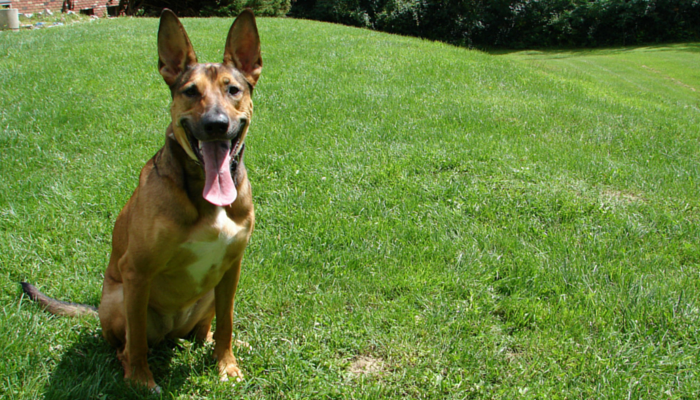
When facing something new or scary dogs have a certain stress threshold. You’ll notice that the closer you get to the scary object the more uneasy your dog becomes. When working with a fearful dog it’s important to remember not to cross that threshold too fast. Let your dog get used to that new scary person or dog in the distance, and then slowly make your way towards it.
When you get too close to the stimuli it’s hard, if not impossible, to divert your dogs attention. Many dogs won’t even take a treat when they’re that close to something scary. When you go out to work on some obedience training you’re going to want to start far enough away from the scary situation that your dog is still able to focus onto you.
If you notice that you’ve gotten too close to the scary situation and are unable to get his focus you’ll need to move back. After a few tries you’ll start to see where your dogs fear threshold is and you’ll be able to find an area that works for your dog.
4. Your Dog Will Associate Training With Good Things
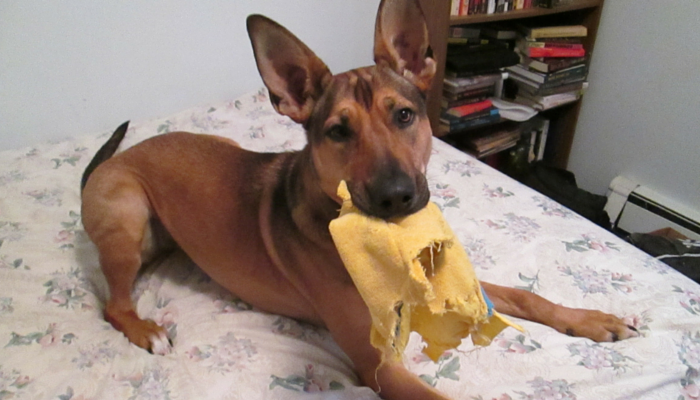
Whether you’re brushing up on old skills like “sit” or teaching new commands like “look at me” you’re going to want to use lots of praise and treats. Keep these little obedience lessons fun for your dog. The more you praise them & keep it fun the more likely they’ll be to pay attention to you when you ask them to do it when faced with a new situation.
Don’t punish your dog if they don’t perform the action right away. Chances are you’re either too close to the scary situation or you’re not clearly communicating what it is you want from them. If you punish a fearful dog you risk reinforcing that fear and making it worse.
If you keep the training positive your dog will begin to associate obedience work with praise & treats, and that will make facing scary situations easier on them.
5. Keep Working Your Way Through New Situations
If you take your time and make sure your dog is comfortable you can keep moving onto new places & scary situations. That’s what’s so great about something basic like obedience work – it’s simple and can be done nearly anywhere.
If your dog is comfortable around those kids that ride their bikes in your neighborhood move onto a trip to the park where there’s going to be even more bikes.
You Can Boost Your Dogs Confidence
Whether your dog’s afraid of hats, holiday decorations or spiders you can boost their confidence. Desensitization helps your dog focus on something other than fear, and in time it turns those negative emotions into positive ones.
As long as you keep training below threshold & while you have your dog’s attention you keep can moving forward. You can be that good friend to your dog, the one that shows you that heights aren’t so bad after all. You can help boost you dogs confidence by giving him direction. Show him what do to when faced with new & scary situations.

Recommended Reading
Here’s some more tips on how you can build up your dogs confidence in various situations:
- Building Your Dog’s Confidence Up
- Training Games for Shy Dogs
- How to Help Shy, Anxious, or Fearful Dogs
- 10 Tips for Walking a Reactive Dog
- Pet Behavior
- Pet Breeds
- Pet Names
- Pet Adoption
- Pet Training
- Pet Information
- Pet Health
- Adorable Pets
- Dogs
- Boost Your Dog’s Confidence: Proven Techniques for a Fearless Companion
- 5 Proven Benefits of Probiotics for Your Dog's Health
- Boost Your Dog's Focus: 5 Proven Techniques for Better Impulse Control
- Boost Your Dog’s Playfulness: 3 Proven Ways to Spark Joy and Strengthen Your Bond
- 10 Proven Ways to Boost Your Dog’s Mental Stimulation and Reduce Boredom
- 5 Proven Strategies to Enrich Your Dog's Life & Boost Happiness
- 6 Proven Ways to Keep Your Dog Engaged & Prevent Boredom