

Are Watermelons Safe for Dogs? Vet-Approved Guidance

Watermelon is known as a thirst-quenching summer fruit jam-packed with nutrients that many of us enjoy. As pawrents, we would love to share this wonderful fruit with our furiend, but is it safe for them to eat?
Based on our vet sources, the answer is yes! However, there are some parts of the watermelon that may pose a health risk to your furry companion.
Read on to find out more about the parts of the watermelon that your dog should avoid, the health benefits of this fruit, fun recipes and answers to some questions you may have!
*Disclaimer: This article provides general information that should not be used in place of professional advice from a vet. Please consult a vet before feeding your dog watermelon.
Benefits of Watermelon
Watermelon can offer various health benefits to your dog when fed in moderation.
Filled with antioxidants
According to Dr. Cuevas (MVZ), the antioxidants found in watermelon help to prevent cellular damage caused by free radical oxidation by neutralising them. Such antioxidants include:
• Vitamin A: Supports your dog’s vision and skin health
• Vitamin C: Slows down common health issues such as degenerative joint disease
• Lycopene: Reduces the risk of cancer in dogs
High in water content
Did you know that almost 92% of a watermelon is made of water? This makes it a great option for hydrating your dog, especially in tropical countries like Singapore.
With its high water content, your furry companion will definitely fall in love with this juicy, refreshing treat!
Contains many other vitamins and nutrients
Aside from antioxidants, this fruit contains many other vitamins and nutrients including potassium, fibre and Vitamin B6!
• Potassium
The potassium found in watermelons can help to support your dog’s heart functions and promote healthy bone density and muscular growth.
• Fibre
Fibre helps your dog maintain a healthy gut balance by preventing constipation and intestinal blockages.
• Vitamin B6
Vitamin B6 maintains fluid balance and builds protein in your dog. It also ensures that the hormones in your dog are balanced.
What Parts of The Watermelon Should Be Avoided?
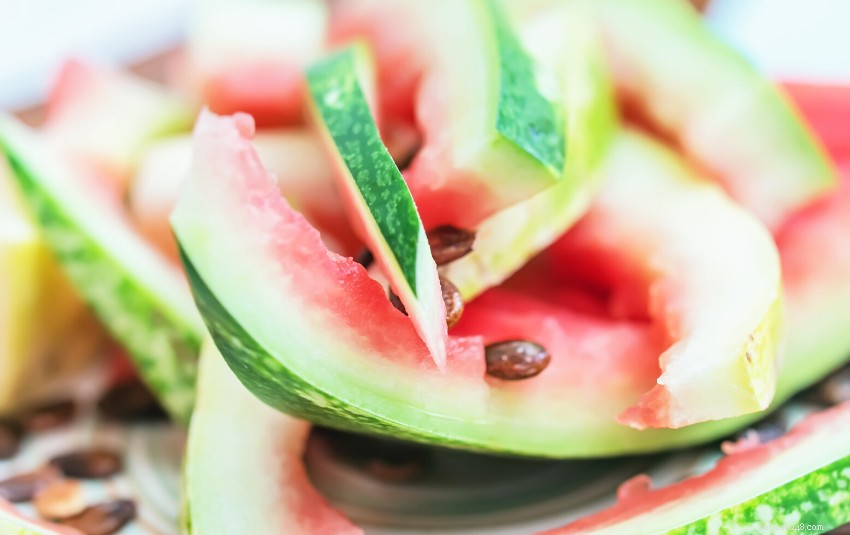
Despite the many benefits of this fruit, there are 2 parts of the watermelon that can cause health problems if consumed by your furiend.
Seeds
Consuming numerous seeds can pose the risk of a minor intestinal blockage to dogs, especially smaller ones, as they may be unable to pass the seeds from their digestive system. This can result in discomfort or in more severe cases, symptoms such as vomiting, pain and dehydration.
To avoid this issue, choose a seedless watermelon or remove the seeds before feeding it to your furiend.
Rind
According to Dr. Simon (MVB, MRCVS), it is recommended to avoid feeding the rind of the watermelon to your dog. It can be difficult to digest and may cause intestinal blockage if not chewed well.
Furthermore, it may contain a bacteria known as Listeria, which can cause fever, vomiting and diarrhoea.
How Much Watermelon Can a Dog Eat?

As a general guide, watermelon should only make up 10% of your dog’s daily calorie intake and be given as a treat rather than a meal.
Since the amount of calories consumed by your furry companion depends on factors such as his size, age, activity level and health condition, the recommended amount of watermelon would also differ.
In an example shared by Dr. Cuevas (MVZ), a golden retriever may have 2 cups of watermelon (92.4 kcal) while a chihuahua may only have about a third of the portion (30.8 kcal).
If you’re unsure of the amount of watermelon your dog should be consuming, consult your vet for advice!
Creative Ways to Offer Watermelon to Your Dog
The simplest way to prepare watermelon for your dog is to cut it into bite-sized pieces and offer it fresh or frozen (do remember to remove the seeds and rinds!). You can also puree the watermelon if your furiend is slightly older in age and not too fond of chewing.
If you’re looking for other fun ways your dog can enjoy this delightful sweet treat, here are some recipes you can try!
Watermelon sorbet
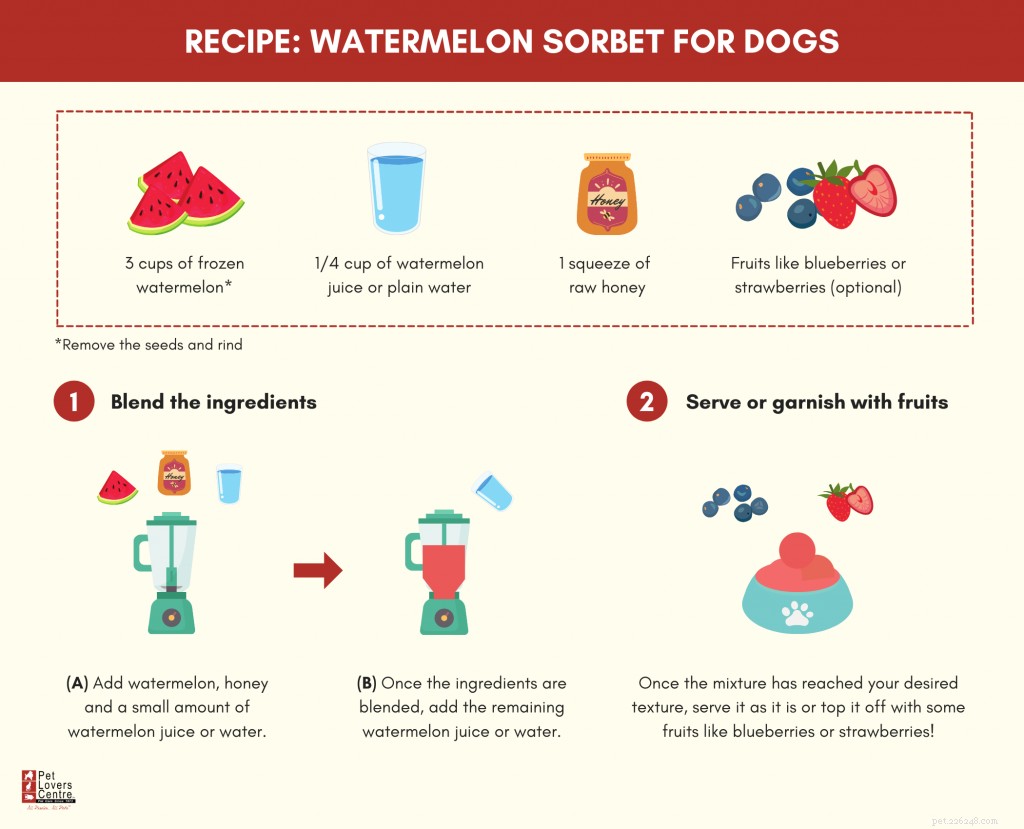
This is the easiest and quickest way to prepare a unique, delicious watermelon treat just for your furry friend!
Ingredients:
• 3 cups of frozen watermelon (cut into chunks with seeds and rind removed)
• 1/4 cup of watermelon juice or plain water
• 1 squeeze of raw honey
Step 1: Blend the ingredients
Add the frozen watermelon, honey and a small amount of watermelon juice or plain water into the blender. Blend the ingredients together and add the remaining watermelon juice or plain water slowly as you blend.
Step 2: Serve or garnish with fruits
Once the mixture has reached your desired texture, scoop and serve the treat in your dog’s favourite bowl. You can also add chopped fruit such as blueberries or strawberries as garnish!
Yoghurt watermelon popsicles
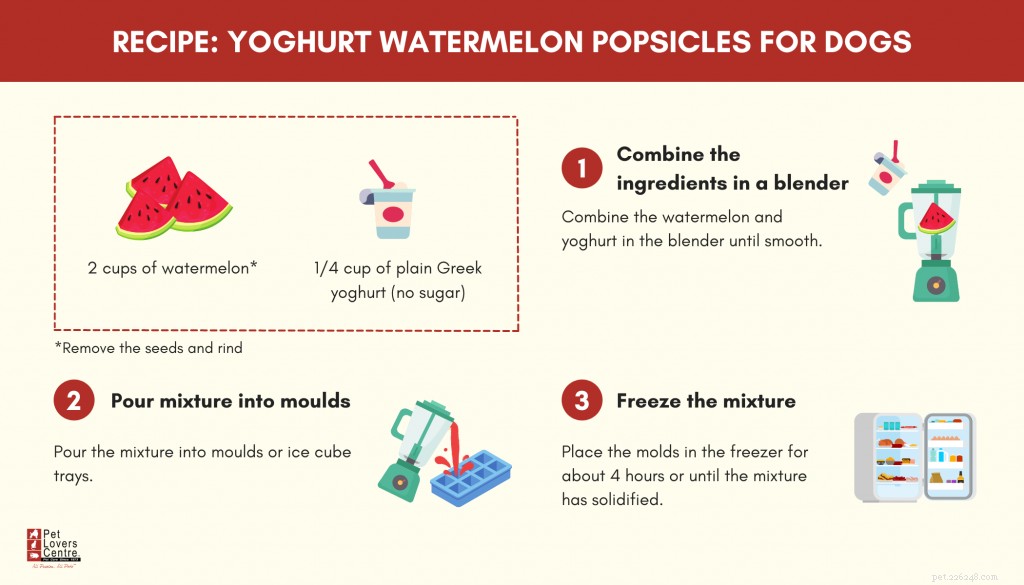
Yoghurt watermelon popsicles are a great homemade ice cream treat for your dog. It’s simple and only requires 2 ingredients — watermelon and Greek yoghurt!
Ingredients:
• 2 cups of watermelon
• 1/4 cup of plain Greek yoghurt (unsweetened)
Step 1: Combine the ingredients in a blender
Combine the watermelon and yoghurt in the blender until the mixture is smooth.
Step 2: Pour mixture into moulds
Pour the mixture into moulds or ice cube trays.
Step 3: Freeze the mixture
Place the moulds in the freezer for about 4 hours or until the mixture has solidified. Once it’s frozen, you can serve the popsicle to your furry friend!
Watermelon refresher
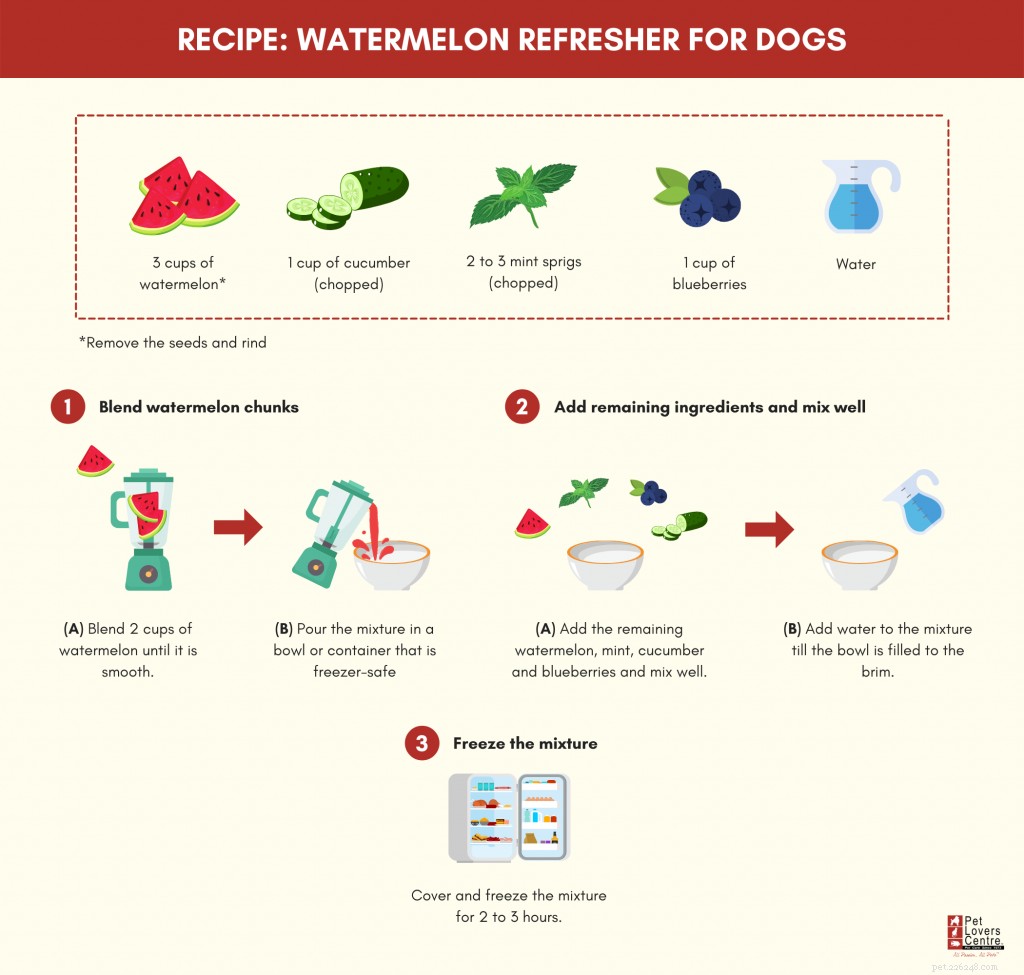
Though there are slightly more ingredients involved in this recipe, it’s still relatively easy to make and is the perfect refreshing treat for your dog!
Ingredients:
• 3 cups of watermelon (cut into chunks with seeds and rind removed)
• 1 cup of cucumber (chopped)
• 2 to 3 mint sprigs (chopped)
• 1 cup of blueberries
• Water (enough to top off bowl)
Step 1: Blend watermelon chunks
Blend 2 cups of watermelon until it’s smooth before pouring the mixture into a bowl or container that’s freezer-safe.
Step 2: Add remaining ingredients and mix well
Add the remaining watermelon, cucumber, blueberries and mint and mix well. Next, add water to the mixture till the bowl is filled to the brim.
Step 3: Freeze the mixture
Cover and freeze the mixture for 2 to 3 hours and serve the refreshing treat to your furry companion!
Other Fruits to Offer Your Dog

Apples
Apples are highly nutritious and contain vitamin A, vitamin C and fibre, all of which are beneficial for your canine friend. Since the fruit has low fat content, it’s an ideal snack, especially for older dogs.
However, do ensure that the seeds and core are removed before feeding it to your furiend!
Bananas
Bananas are a good treat for dogs as they contain nutrients such as potassium, vitamins, biotin, fibre and copper. However, due to the high sugar content, this fruit should only be fed occasionally and in moderation.
Blueberries
Blueberries are antioxidant-rich superfoods that prevent cell damage. In addition, they’re also high in fibre and phytochemicals (which help in cancer prevention).
Cantaloupe
Cantaloupe is a nutrient-dense fruit that’s low in calories and high in fibre. As such, it’s a healthy treat for your furiend.
However, the fruit is also high in sugar so it should be consumed in moderation, especially for diabetic or overweight dogs.
Peaches
Peaches are packed with nutrients such as vitamin A and fibre, and can even help to reduce infections in dogs. Do remember to remove the pit before feeding it to your furiend as it can lead to cyanide poisoning if consumed.
Strawberries
Strawberries are safe for dogs to consume. They’re a good source of fibre and vitamin C and contain an enzyme that’s able to whiten your dog’s teeth.
Frequently Asked Questions
How often can dogs eat watermelon?
Although this fruit is a good source of nutrients, it contains sugar and can lead to various health problems if not consumed in moderation. Thus, Dr. Ochoa (DVM) advises that watermelons should only be fed to your dog once a week.
Is too much watermelon bad for dogs?
Consuming too much watermelon can be bad for dogs as it can cause diarrhoea or an upset stomach. In addition, too much sugar can lead to obesity, diabetes and stomach and dental issues in your canine friend.
Is watermelon high in sugar content?
Watermelon has a relatively low sugar content, with each bite containing approximately 92% water and 6% sugar. However, it should still be offered in moderation as overconsumption can lead to high sugar levels.
Watermelon — A Healthy Treat For Your Dog
Watermelon is full of nutrients and vitamins and is a great source of water for your furiend! If it’s his first time trying the fruit, you can introduce it in tiny quantities to ensure that it’s suitable for his digestive system.
Otherwise, this fruit is a great, refreshing treat that your dog is sure to enjoy, especially in the hot summer months!
- Pet Behavior
- Pet Breeds
- Pet Names
- Pet Adoption
- Pet Training
- Pet Information
- Pet Health
- Adorable Pets
- Dogs
- Can Dogs Safely Eat Watermelon? Here’s What You Need to Know
- Are Eggs Safe for Dogs? Expert Guide
- Can Dogs Safely Eat Oatmeal? A Guide to Benefits & Precautions
- Is Watermelon Safe for Dogs? Expert Guidance
- Can Dogs Eat Carrots? A Veterinarian‑Approved Guide to Safe Snacking
- Is Cantaloupe Safe for Dogs? A Guide to Feeding Melon to Your Furry Friend
- Are Rib Bones Safe for Dogs? Vet-Approved Guidelines & Tips