

Proper Exercise for Puppies: Avoid Over‑Exertion for Health & Happiness
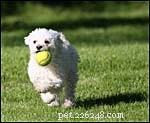
Exercise is vital to all living creatures. It maintains a healthy physical and emotional state of being. Dogs are no exception to this rule, but as always we stress all things in balance.
If your dog is acting out of control then you are advised to provide more exercise and increase her daily obedience work. The exercise will help her to vent her frustrations and exhaust her enough to slow the mischief down. The obedience drills will help her remember who’s in charge and whom she needs to check in with before she decides to chase the cat.
Young puppies should only get the same amount of exercise that they would playing around the den with their littermates. Do not over-tire your young pup.
When exercising older puppies, equate their “real” age to the age of a child – this will help you understand how much exercise is enough. A four-month-old puppy should exercise like a four-year-old child ~ would you take a four-year-old child for two mile walk around the park? Probably not. Puppies might seem like they can do it, but when they grow into their adult bodies they will begin to show the stress you put on them as puppies. Hip-dysplasia and arthritis can be environmental as well as genetic. You can create problems by over exercising a young body.
Good management begins early, it is much better to take your puppy out for 3 or 4 short walks (or play times) a day rather than 1 or 2 long ones. Here is a good guideline for planning your pup’s exercise regime. Begin at 3 months and add 5 minutes of exercise per outing per month old.
3 months = 15 minutes
4 months = 20 minutes
5 months = 25 minutes
6 months = 30 minutes
7 months = 35 minutes
8 months = 40 minutes
9 months = 45 minutes
10 months = 50 minutes
11 months = 55 minutes
1 yr = 1 hr
We recommend you alternate between physical exercise and mental stimulation. Remember that working your dog in obedience & relationship drills for 20 minutes is just as tiring as a 20-minute walk and it’s far better for your relationship and your dog’s manners.
Tip by Tenderfoot Training Reproduced by permission
Tenderfoot Training encourages responsible animal parenting, healthy socialization, humane use of training tools, natural nutrition, and sensitivity to the animal heart, mind, and body.
- Pet Behavior
- Pet Breeds
- Pet Names
- Pet Adoption
- Pet Training
- Pet Information
- Pet Health
- Adorable Pets
- Dogs
- Understanding Your Dog’s Anal Glands: Why They Scoot and How to Care
- Puppy-Proofing Your Home: Key Safety Tips for New Pet Owners
- Relieving Your New Puppy’s Teething Pain: Expert Tips
- Microchipping Your Pet: Essential Guide to Safety & Recovery
- Caring for Your Pet’s Remains: A Guide to Final Arrangements
- Puppy Chewing 101: How to Redirect Their Chew Habits to Safe, Appropriate Toys
- Effective Puppy House Training: Essential Tips and Common Pitfalls