

How Pets Help Kids Beat Obesity & Allergies: New Alberta Study
Research from the University of Alberta has found pet ownership could reduce obesity and allergic diseases in children. The study conducted by Anita Kozyrskyj, a pediatric epidemiologist, looked at 746 infants. They found babies from households with pets had higher levels of certain microbes in the gut. These microbes are linked to a reduced risk of obesity and allergic diseases such as food allergies, dermatitis and asthma .
This study builds on previous work investigating pet ownership and allergic diseases. One analysis of 6-10 year olds found no link between pets and asthma, but did show both dogs and cats reduced sensitivity to aero-allergens such as pollen .
Longitudinal studies in urban populations suggest that having pets may reduce the development of allergic disease in those without a family history of allergy. The greatest effect came from dog ownership during the final stages of pregnancy. .
Building a Strong Immunity in Infants
The hygiene hypothesis suggests we can be too clean for our own good. The hypothesis states our modern hygiene standards contribute to the development of allergic diseases . Of course, we should protect our children from infection, but early exposure to bacteria can help strengthen the immune system.
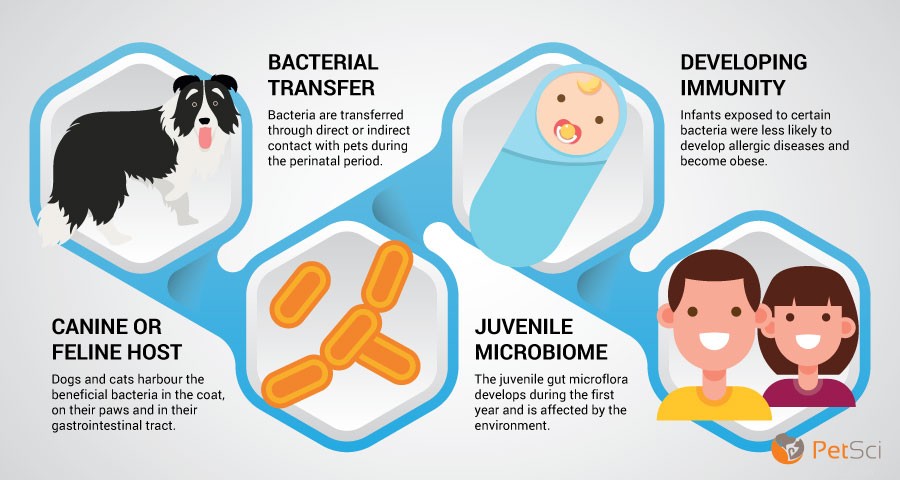
Dogs and cats are a source of bacteria, even in the cleanest of homes. Their coat, paws, and mouth all harbour dirt and bacteria. It might seem off-putting, but this bacterial ecosystem has been linked to the development of a healthy juvenile immune system. Exposure to pets before and up to 3 months after birth was shown to increase the amount of two types of bacteria associated with lower rates of allergic disease and obesity. These bacteria are:
- Oscillospira – A commensal gut bacteria that helps digest resistant starches and ferment them in our large intestines. A lack of this bacteria was correlated to a higher BMI in humans .
- Ruminococcus – Plays a major role in helping us digest robust starches. There is a strong link between this bacteria and development of food sensitisation .
Bacteria Transfer Begins at an Early Age
The gut microbiome is a complex web of symbiotic bacteria. The many different strains of bacteria in our gut don’t just appear however, they develop over time and are influenced by our lifestyles. The development of the gut microbiome begins even before birth, with evidence to suggest that the mother has an influence on this .
Throughout an infant’s first year of life, their gut microflora is constantly developing. The types of bacteria found in their gut can be affected by many factors such as birthing method, diet and exposure to antibiotics. Pets influence the gut microbiome too.
The bacteria linked to reduced obesity and allergic disorders (Oscillospira and Ruminococcus) can be transferred from pets to infants in a number of ways. For example, if a pet licks a child’s hand, bacteria contained in the saliva can be passed on through hand to mouth contact. Transfer of these bacteria can even occur before birth.
The presence of pets, specifically dogs, has been shown to have an indirect effect on the gut microbiome. Pets can even affect the the microbial composition of household dust, creating another route of entry for bacteria .
Positive Benefits for Children Through Pet Ownership
This study is just one of many that highlight the positive effect pets can have on a child’s physical health. Pets can also have positive effects on development and mental health.
Research like this highlights that parents should not avoid pets for fear of their children developing allergic diseases.
As we further our understanding of the gut microbiome, there could be a future where supplements similar to probiotics are available with these health boosting bacteria. Companies like Thryve are already trying to achieve this by creating targeted probiotics. They are confident that correlations between bacteria and health will be identified that can improve our health in the future.
Summary: Pet Ownership Reduces Allergies and Obesity
- Bacterial transfer from pets can affect the juvenile gut microflora before birth and through infancy.
- Ruminococcus and Oscillospira were correlated with lower rates of allergic disease and obesity in children.
- The abundance of these two bacteria increased twofold in households with pets.
- Possible opportunity for future research to develop health-boosting probiotics.
Featured Image – Sébastien Garnier; Vector Credit: Vecteezy.com
- Pet Behavior
- Pet Breeds
- Pet Names
- Pet Adoption
- Pet Training
- Pet Information
- Pet Health
- Adorable Pets
- Dogs
- Pet Allergies Explained: Signs, Causes, and Care Tips
- The Complete Pet Microchip Guide: How, Why, and Costs Explained
- Understanding Pet Food Allergies: Symptoms, Causes, and Management
- Combating Pet Obesity: A Veterinary Guide to Healthy Weight Management
- Key Insights on Pet Obesity: Prevention, Risks, and Care
- Managing Pet Allergies: Protect Your Health While Enjoying Your Furry Friends
- Pet Ownership: Weighing Risks and Rewards for a Happy, Healthy Home