

Can Dogs Benefit From Catnip? Understanding Its Effects and Safety

There are few legal pleasures in life as satisfying as feeding catnip to a kitty. Watching their brains get overwhelmed by the pleasure and witnessing them tear through the house chasing invisible mice make for cheap fun for both you and your cat, and it never gets old.
But what about your dog? Is there anything like that you can give them? If you did give them catnip, what would happen? Would it hurt them — or worse, turn them into cats?!
If you don’t know if something’s safe for your dog, you should never test it on them, but luckily for you, we have the answers that you seek here. Your dog never has to be in danger to quell your curiosity.

What Is Catnip and How Does It Work?
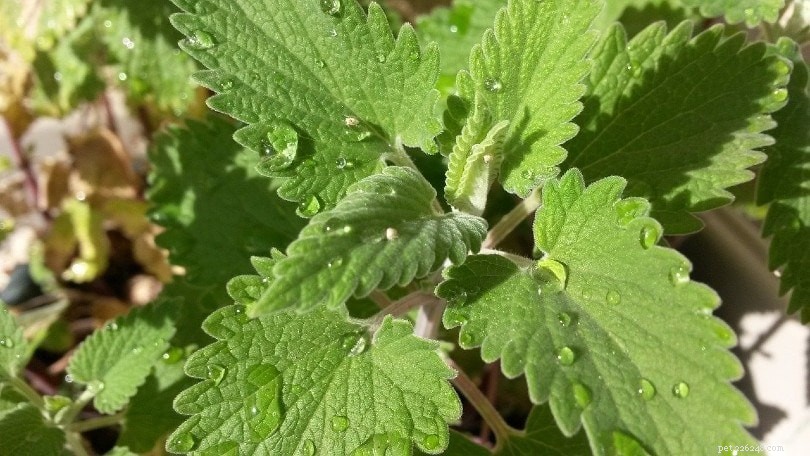
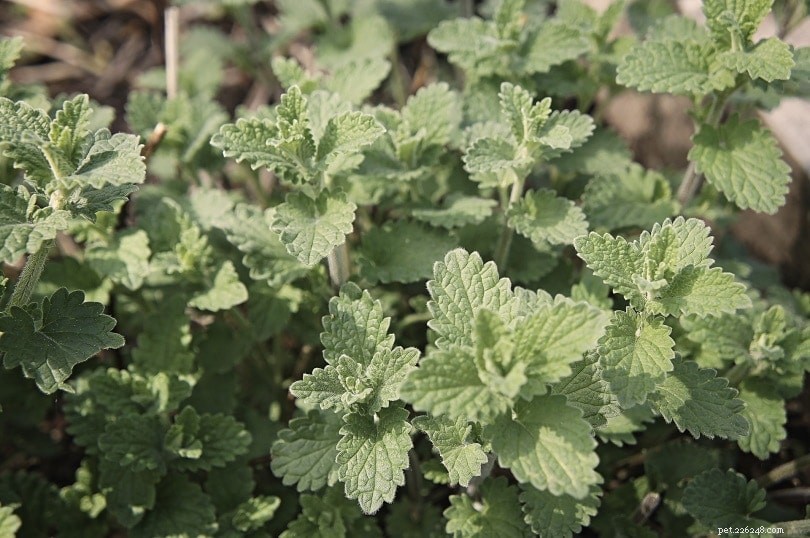
Catnip (a.k.a. Nepeta cataria) is an herb that’s actually part of the mint family. It’s native to parts of the Middle East, Europe, and Asia, but it’s also been grown in North America and New Zealand to such an extent that it’s fully naturalized there.
In addition to being fed to cats, it’s often used in herbal teas, and the oil can be used as a natural insect repellent.
There’s a compound inside catnip called nepetalactone, and when given to cats, it stimulates something called the vomeronasal organ, or Jacobson’s organ. This is an extra scent gland that cats have, so for catnip to have any sort of effect, the cat has to smell it — eating it alone won’t work.
Jacobson’s organ is responsible for other distinctly catlike behaviors, such as the telltale sneer that they get when they smell something unpleasant. However, cats are far from the only animals that have a Jacobson’s organ — even humans have them.
What we don’t have is a reaction to catnip, and it’s because, in cats, the herb mimics sex hormones. That’s why a cat that’s all hopped up on catnip will display behaviors like extreme affection, relaxation, and happiness — all signs of a cat in heat.
What Does Catnip Do to Dogs? What About Other Animals?
Several animal species can show signs of being affected by catnip, but none of them have anywhere near the same reaction that cats do. It doesn’t affect all cats equally either — it’s estimated that around 60% of cats will react to catnip in some fashion.
However, while catnip only affects 60% of cats, it affects 60% of all cats — including lions, tigers, leopards, and the rest. That said, some of the larger cats don’t react as consistently as smaller species like lynxes, servals, and cougars.
Catnip has been shown to have some effect on raccoons, and yes, even some dogs have reacted to it. However, the reaction is nothing like what’s seen in cats. The effect is more muted and much less sexual in nature.
In fact, while catnip tends to rev up cats, it has the opposite effect on canines. Of the relatively few individual dogs that react to it, catnip tends to have a calming effect, so if your dog responds to it, you may want to try giving them some catnip before vet trips and other stressful situations.
As far as other animals are concerned, the only species that seem to react to catnip are mosquitos, mice, and rats, all of whom are repelled by it. Then again, in the case of the rats and mice, they may just hate it because of how it attracts cats!
Is Catnip Bad for Dogs?
As long as you don’t let them gobble down tons of the stuff, catnip is completely safe for dogs. It’s actually pretty healthy for them.
It’s full of important minerals like magnesium, vitamin C, and vitamin E, and it also has essential oils that may help keep your dog’s digestive tract in fine working order. It also provides valuable fiber, which can ensure that everything keeps moving smoothly inside your pup’s GI tract.
If your dog experiences the calming effect that catnip can provide, that’s good for them too. Not only will it lower their stress levels, but it also makes doing things like going to the vet easier on everyone involved, which means you’re more likely to do it regularly, and that can have a profound effect on your dog’s overall health and life expectancy.
As far as any danger that might be involved, it’s minimal. The only thing that you have to worry about is the possibility that your dog eats so much, it causes a blockage in their intestines. It’s extremely unlikely that your pup would eat that much catnip, though, so unless your dog absolutely loses their mind around the stuff, you likely have nothing to worry about.
If you want something that can make dogs just as wild as catnip makes cats, we may have just the thing for you.
Related Read: Does Catnip Expire? What You Need to Know!
The Dog-Friendly Alternative to Catnip

While catnip may not do much for most dogs, there is something that might have more of a dramatic effect on your pooch. It’s called anise, and it’s a spice that’s related to parsley and carrots. (It’s also used in absinthe, which should give you some idea of its powers.)
Dogs can be given anise raw, as seeds or powder, or baked into treats. It causes most (but not all dogs) to react as if they’re on some sort of drug, much like catnip. The exact way that this behavior will manifest varies from pooch to pooch; some become highly energetic, while others get relaxed and mellow.
Beyond making dogs feel fantastic, anise has important health benefits. It can alleviate digestive issues, reduce respiratory problems, and curb the risk of seizures.
However, it’s not without its dangers. You’ll need to keep the anise far out of your dog’s reach, as too much can be toxic. Stick to pre-mixed anise treats (and follow the dosing recommendations religiously), or add seeds or powder sparingly to your dog’s food. Typically, you’ll only want to add about 5 seeds or half a spoonful of powder to every pound of food.

In Conclusion
If you feel like your dog’s been getting jealous of the fact that your cat gets to go on psychedelic adventures every time you bust out the catnip, you can finally even things up a little bit. While catnip is unlikely to have the same effect on your dog, there’s a good chance that they’ll feel something, and it’s safe for them to try.
On the other hand, if you want to give your dog their very own stash, you can buy “dognip,” a.k.a. anise. This licorice-like seed can have effects on dogs similar to those experienced by cats on catnip, allowing you to have a great time with every member of your pack (you’ll have to stay sober, though, of course!).
- Pet Behavior
- Pet Breeds
- Pet Names
- Pet Adoption
- Pet Training
- Pet Information
- Pet Health
- Adorable Pets
- Dogs
- Understanding Your Dog’s View on Your Cat
- Essential Guide to Antibiotics for Cats and Dogs – Safe & Effective Care
- Catnip Explained: How This Herb Affects Your Feline Friend
- The Science Behind Catnip: How It Affects Cats & Why They Love It
- Top 5 Dog Breeds That Coexist Peacefully With Cats
- The Science Behind Catnip: How It Affects Your Cat's Behavior
- What Happens When Cats Encounter Catnip – Science & Safety Explained