

Comprehensive Guide to Senior Dog Mobility: Tips, Care, and Product Insights
OK. Maybe not everything, but I’m going to try my best.
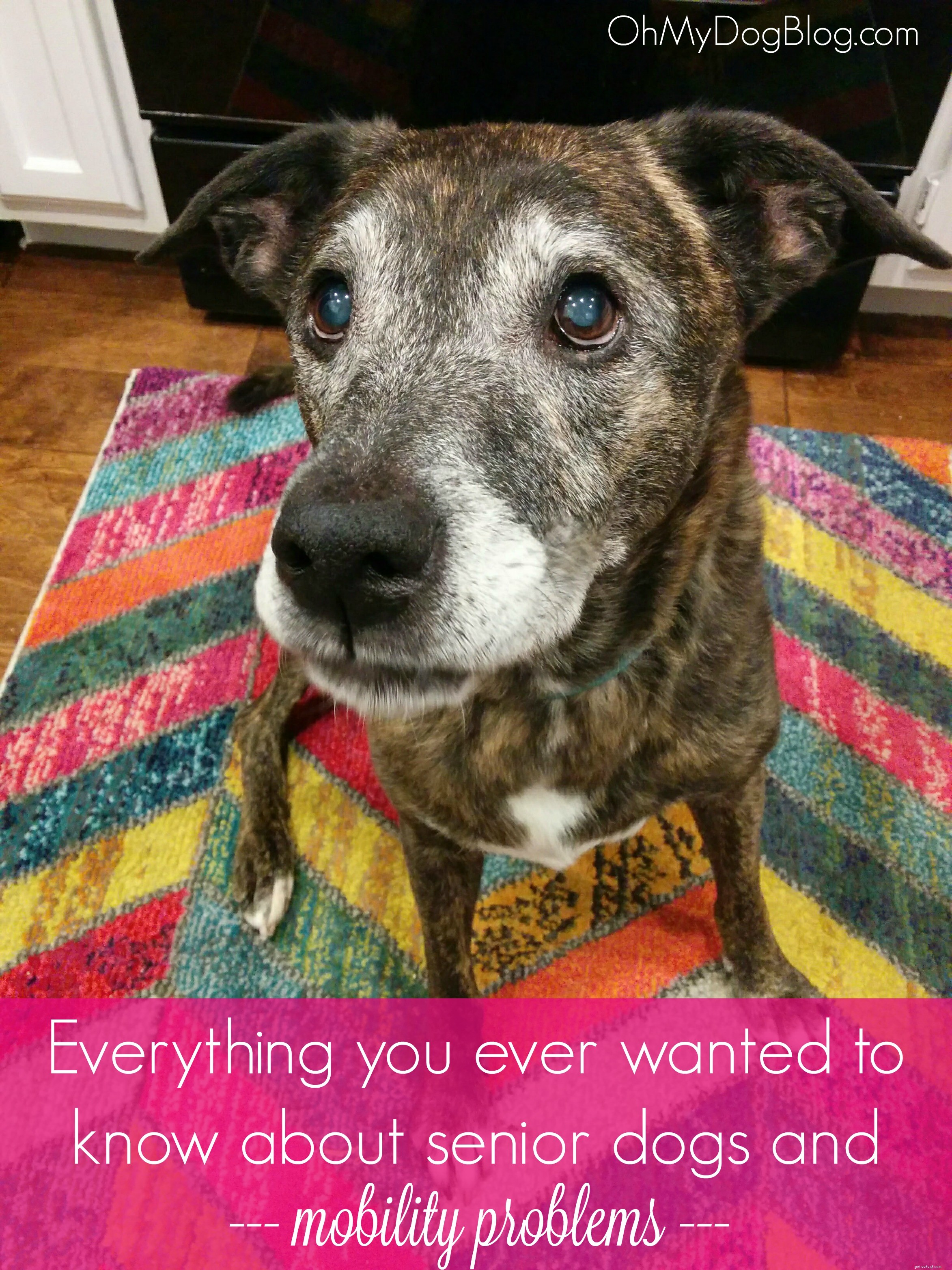
First, my usual disclaimers: I’m not a vet. I’m not a vet tech. I’m not in any capacity involved in any sort of medical field. I’m a writer and avid researcher who’s crazy obsessed with providing my dogs the best life possible. I’m simply sharing our experiences in the hopes that it might inspire someone else. Also, I mention a handful of products in this post. Every single product mentioned–except one, which I call out below–I purchased with my own money. The retailer I shop almost exclusively for him I love so much that I have become an affiliate partner with them, so if you purchase from one of the links I share, you won’t pay a cent more (in fact, you’ll pay less because I share some coupon codes at the end), but this site gets a teeny, tiny commission we use to offset the costs of running the site. I buy all of that from Only Natural Pet, again with my own money. Finally, none of this is medical advice or should be construed as such. Call your vet. Always the best place to start.
Whew! OK, now that that’s done, let’s dig in, shall we? I’ve broken this into sections knowing it would be kinda long, so skip around to find whatever info you need! Or, grab a cuppa something tasty, and settle in for a long read…
Senior Dogs and Mobility: An Overview
So, there are a number of issues that can cause mobility problems in senior dogs. For many, it’s arthritis and related problems. We actually thought that was the case for Em. We had him examined thoroughly, first by his regular vet who did think his issues maybe stemmed from arthritis, then by a neurologist at Purdue (where he goes for his cancer treatment) and by a sports rehab vet. Ultimately it was determined that his issues are neurological and not arthritis. However, if you’re wondering about signs and symptoms or if your dog could benefit from treatment, take a few minutes to read this super comprehensive article that we started with: Joint Health for Cats and Dogs.
Since arthritis and joint-related problems are the most common, definitely start there with your vet. If those issues are ruled out, neuro problems could be to blame. For Em, it’s a combo. It started with a slight tremor in his back legs. Initially there was some concern that it was cancer-related, but that was ruled out. Then, the sports rehab vet took a look–it was a super thorough, hour-long physical exam–and called out some arthritis along his spine that’s causing some nerve issues. The rest seems to be entirely neurological. So, for instance, his front left foot is perfectly healthy. His joints are fluid; there’s no arthritis. Yet, it gets stuck flipped upside down, and he tips forward and falls. His back right foot does something similar where he’s walking along and all of a sudden, it doesn’t plant paw down. Instead, the foot doesn’t turn up so he ends up dragging that leg.
Those orthopedic and neurological issues are among the most common reasons for loss of mobility in senior dogs, but they’re not all. There are all sorts of other possibilities ranging from muscle loss to pain to respiratory diseases to cancer to cognitive function disorders… and more. That’s why I want to again emphasize: Start with your vet to determine the cause of your senior dog’s mobility problems.
All that said, there are solutions to just about every problem. I’m going to share some of ours for Emmett’s orthopedic and neurological combo platter.
Food, Supplements, Medications
An ounce of prevention and whatnot… But that’s not always possible, right? We adopted Emmett when he was already a full-grown adult. And, anyway, health problems can still crop up regardless of lifestyle. There’s always a story about a competitive athlete contracting cancer or a life-long smoker living to 100. There are MANY factors that contribute to overall health, including genetics’ huge role, over which we have no control.
For years Emmett was on a joint supplement that we liked as a preventative measure. Unfortunately, it just didn’t hold up to the significance of his current issues. We had Lucas on a powerful, effective joint supplement after his amputation, so it made sense to switch Em to that one, just to see. It worked. I would still recommend the one Em was on before, but now, honestly, I tell everyone: DGP. It’s not cheap, but it works. The other one, Vetri-Science Glyco-Flex Joint Support
, is far more affordable, and I completely understand budget constraints so you can always start there and then ramp up, if needed. It’s a good supplement, just not for Em anymore.
{{Incidentally, Cooper is on a preventative joint supplement, but he had allergic reactions to both of those, so he’s on Diggin Your Dog Super Snouts Joint Support, which I’ll share in detail in a coming post about HIS health routine! It’s also less costly than the DGP so could be worth a shot, though I’ve never tried it with Em.}}
Emmett also receives a weekly acupuncture treatment. I know we’re SO lucky to have that resource available to us. I truly hope that, as demand for these additional modes of treatment grows, it becomes more widely available because I do think it’s helped him tremendously. If you want to learn more, I wrote about it in detail here: Can dogs benefit from acupuncture?
The acupuncture vet also prescribed him Gabapentin, which is actually a seizure med, but it’s used to treat chronic pain. It absolutely helps him. However, it took us a few tries to get his dosing right. Side effects include turning your poor old dog into a drunk monkey. TBH, we tried three doses per day because he seemed to be in more pain at night, so we went for an 8 hour instead of 12 hour spread. It did NOT work. Drunk monkey. So, he’s still on the Gabapentin every 12 hours and we’ve added Tramadol as needed, which isn’t often.
In addition, he gets a heap of coconut oil (it’s supposed to fix everything, so it can’t hurt), plus a senior-specific vitamin powder, Only Natural Pet Senior Ultimate Daily Vitamins, and he and Cooper both get a probiotic, Only Natural Pet Probiotic Blend
, at breakfast and dinner because some studies have shown that probiotics might reduce the cause of inflammation and joint pain. Again, can’t hurt.
He’s on a whole host of other medications for his cancer treatment, so we worked with our vets to make sure all these supplements wouldn’t interfere, nothing would react, and all the benefits of each piece outweighed the risks or side effects. I’m super happy with this routine, and we haven’t changed a thing about it in a couple years (except adding the acupuncture, which has still been like a year).
As for food, I’ve written about it extensively, so you guys know he’s been eating Wellness CORE Grain-Free Dry Dog Food exclusively for about a year, though we did recently switch him to the reduced-fat version because one of the things with dogs and mobility issues is WEIGHT! You want your dog to be slim and trim so that he isn’t having to heft around extra pounds on sore, stiff, painful joints. Emmett isn’t overweight, but he’s also not capable of exercise like he used to (a walk to the mailbox and back is it for him), so the risk of gaining compelled me to try this formula. So far, so good.
All that works from the inside, though, so what do you do about the actual, physical needs?
Support Equipment
Around the house: We have rugs everywhere. There’s a path from the back door, through the kitchen, to the living room, and from there to the front door. (Yet he somehow finds a way to land on the little spots between the rugs to slip and fall a thousand times a day…) He eats out of a raised feeding dish (the same NeaterFeeder we’ve used since 2010!) so he doesn’t have to lean forward. Side note: I was thinking about doing a FB Live tour of our accommodations for Em… would anyone be interested in that??
We are also committed fans of ToeGrips, and I recommend them high and low. He used them for probably about a year before his decline exceeded their abilities, unfortunately. They worked incredibly well for around the house and vet visits, though, right up until the end of last year when he even started to slip with them on.
Next came boots. He’s currently wearing the Ruffwear Sumitt Trex boots (which I linked here to my Amazon affiliate page because we bought them at a local retailer and paid $10 more than what’s available on Amazon… sigh) because they have a substantial rubber sole that provides a lot of traction for him. We keep him in the back pair most of the time and add the fronts when we leave the house. We take them off every night and clean his feet. I wish we could leave the fronts on, too, but where the Velcro sits rubs his foot right at his dewclaw. Ouch. I’m ordering another set from another retailer later this week for comparison and will let you know, but so far, these are the best we’ve tried.
Finally, the GingerLead. Two disclosures right up front: First, I met the incredible, kind, thoughtful GingerLead folks at BlogPaws last year. They are the real deal. I actually talked to them about how much I wish I had known about their product with Lucas and only mentioned in passing that Em was starting to face mobility issues. They so very kindly sent me two–in two different sizes–to see what worked for him.
The second disclosure: The first time we tried it with him, it did NOT go well. He was like, “Get this thing off of me, and why are you standing so close while I go to the bathroom?!” He’s always been weird about not going, particularly #2, when people are close. He’ll go to the verrry extent of his leash or the furthest spot in the yard or park to go, so it was weird for him at first. And, at that time, he didn’t really need much support. The ToeGrips were working, so we sort of said… OK, we’ll revisit this if we need to.
And, boy, did we. I’ve never been more grateful to a single product in all my pet-owning life. The GingerLead enabled us to take Emmett to his favorite park last weekend for a “walk” (OK, by walk, it’s really sniff around the path for a few then lay in the sun, but still!).
Now that he’s getting weaker, it enables us to help him navigate the vet’s office and, if he does stumble while going to the bathroom, we can catch him. It took some getting-used-to on his part, but we’re in good shape now. He walks down the driveway to get the mail with me, then he rests at the mailbox, and I can use the GingerLead to assist him to his feet to walk back to the house. And, on his super weak days–usually after a long day at Purdue or like his big adventure to the park this past weekend–we can use the lead to help him onto his bed or up the steps or whatever. Honestly, this product fills a much-needed gap in the mobility market. I’m SO grateful for it.
And, since they so generously gifted me with TWO, I would love to pass it on. At the very bottom of this post is a Rafflecopter widget with all the details of the giveaway! 🙂
The Bottom Line
No matter what’s causing your senior dog’s mobility issues, there is very likely some way you can support him! For us, it’s a combo of supplements, medications, and support equipment. We want him to be as happy and comfortable for all the days he has left, and I’m so grateful we’ve found each of these individual solutions to come together to support him in a big way.
I think I hit on everything… or, at least, I hope I addressed all the comments and questions I’ve been getting on my other posts about Emmett and aging. If I missed anything or you want additional info or detail about anything I mentioned here, please don’t hesitate to leave your Qs in the comments below!
And if you’ve been on the supporting end of a senior dog and mobility issues, I’d love to know: What solutions did you find? What worked for you and your pup? We can all help each other by sharing our stories!
a Rafflecopter giveaway
- Pet Behavior
- Pet Breeds
- Pet Names
- Pet Adoption
- Pet Training
- Pet Information
- Pet Health
- Adorable Pets
- Dogs
- The Complete Guide to Detecting and Treating Ear Mites in Dogs
- Running With a Pulling Dog: Expert Tips & Everything You Need to Know
- The Ultimate Guide to Loving and Caring for Your Senior Dog
- What Is a Service Dog? Key Facts About Service and Assistance Dogs
- What Your Cat’s Urine Reveals About Their Health: A Complete Guide
- Protect Your Dog: Key Facts About Leptospirosis and Prevention
- Dog Arthroscopy: Complete Guide to Minimally Invasive Joint Surgery