

How to Spot Anxiety and Distress in Your Dog: Key Signs & Symptoms
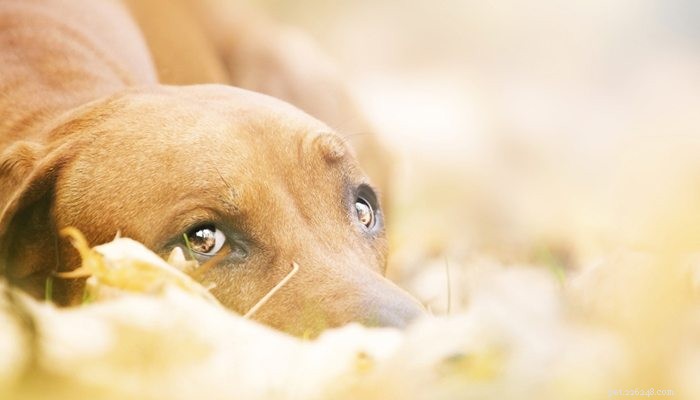
Dogs may not be able to use words to communicate how they’re feeling, but they certainly do feel things, and they have their own way of communicating. It’s really obvious when your dog is excited… his tail wags, he pants a little and he prances around happily without a care in the world. But what about when your dog is in distress? Can you recognize that behavior? You absolutely can. There are a few telltale signs to look out for that dog anxiety or discomfort.
Body Language
We as humans can say a whole lot about how we feel without ever using our words. For example, you may be sitting with your arms and legs crossed, looking down with a slight frown on your face – indicating that you’re upset or depressed about something. Dogs have body language, too. Your dogs tail is a huge indicator of his mood, as you can already see when it wags excitedly. If you’ve ever disciplined your dog, or seen him sad, you’ve seen that tail tucked down slightly. It’s how dogs show shame and negative emotion. Pair that with a droopy head, and you can be sure something’s not right.
Dog Not Eating
A more serious indicator that your dog may be in distress is if his food bowl remains full for days at a time. Dogs have unfailing appetites when they are happy and healthy, but just like humans, depression or distress often causes significant changes with the appetite. If you think your dog is in distress, keep an eye on his food bowl for another sign.
Acclimate A New Pet To Your Home
He/She Lay Around… All Day
Cats will sleep 18 hours of the day, humans will sleep for 7-8 hours every night… dogs? Most dogs are a little more like humans. They prefer interaction, they prefer active lifestyles, and they prefer plenty of sleep (usually at night). Barring a health condition or senior status in age, your dog should not be sleeping all day with little interest in play or interaction. If he is… something may be wrong.
Back To School Dog Separation Anxiety
He/She Become a Little Snappy
If your dog is in distress, you can assume his stress levels are up. If a dog’s stress levels are up, you can assume he might be a little more snappy than usual. Is your dog growling or barking, or giving you attitude more than usual? Is there a reason? If not, he may be in distress.
Look out for these signs of a dog in distress, and if you notice anything, think of why that could be. Is he missing a companion that used to be there? Is he feeling okay? Is there something different about his environment? If you can’t figure it out, take him to the vet. You want your pet to be happy and healthy, mentally and physically!
Have you dealt with dog anxiety or distress?
- Pet Behavior
- Pet Breeds
- Pet Names
- Pet Adoption
- Pet Training
- Pet Information
- Pet Health
- Adorable Pets
- Dogs
- Recognizing Blastomycosis in Dogs: Key Signs, Symptoms, and Early Detection
- Recognizing Heart Disease in Dogs: Key Signs & Symptoms
- Recognizing Labor in Dogs: Key Signs and Symptoms
- Key Signs of a Bladder Infection in Dogs – Spot Symptoms Early
- Recognizing Stroke Symptoms in Dogs: A Guide for Pet Owners
- Recognizing Dog Anxiety: Key Signs & Effective Solutions
- Understanding Dog Bloat: Causes, Symptoms, and Prevention Tips