

Ramshorn Snail Care: A Complete Guide for Aquarium Enthusiasts
 I keep adorable (yeah I think snails are cute) pink ramshorn snails in my aquariums. When I first started keeping them I had 5 but now I have….way more than 5. You know how people say “breed like rabbits”? Having worked closely with both species I can honestly say rabbits got nothing on snails!
I keep a lot of my snails in my community tank which also happens to be the tank I breed my N class Endlers in. That tank gets fed a lot because I want to make sure all the baby Endlers are getting enough food. That coupled with a recent algae bloom means the aquarium is basically full of snail food, and my snails have been breeding like…well, like snails. Recently I started thinning the herd a bit by selling off groups of snails and because I’m weird and snail lives matter I wrote a care sheet to give out to the people who get snails from me. Then I figured, since I had already written it, why not post a version of it here too!
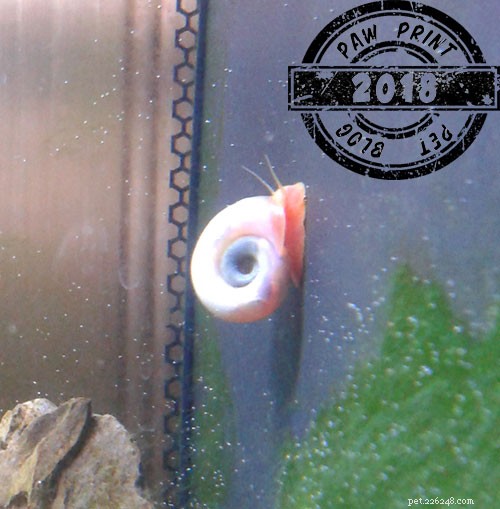 Ramshorn snails, considered pests by many aquarists, can actually make interesting as well as beneficial aquarium inhabitants. They make great clean up crews, consuming things like dead fish, dead plants, algae, and uneaten fish food. While they will often eat dead and decaying plant matter, Ramshorns generally leave healthy, living plants alone. This makes them great for keeping in planted aquariums. They also breed readily, making them especially useful if you are interested in using snails as a food source for your fish.
Ramshorn snails come in a number of shell colors, including red, pink, blue, brown, ivory, and gold. Shells can be either a solid color or leopard patterned. The body of the snails can be red/pink or brown. With so many interesting colors to choose from, your bound to find some snails that will look awesome in your tank!
~ Quick Care Facts ~
- Ideal temperature: Between 70*F – 80*F (21*C – 27* C)
- Ideal pH: 6.5 – 7.5
- Lifespan: 1 – 2 years
- Tank size: 5 + gallons
- Temperment: Peaceful
- Average size: 0.5 inches (1 cm)
Ramshorn snails, no matter their color, do best in aged, cycled aquariums. If added to newer aquariums extra attention should be paid to ensure tank parameters stay healthy/stable. Because newer aquariums often don’t contain as much algae as older ones, snails may need more supplemental feeding in newer setups.
Luckily these little snails are pretty hardy and can adapt to a wide range of water conditions, but try to avoid sudden shifts in water parameters.
In tanks with plenty of algae, dead plant matter, and/or leftover fish food you shouldn’t have to feed your snails at all. If you need or want to provide supplemental feeding you can offer fresh vegetables such as blanched green lettuce leaves, slices of zucchini, and carrots. Commercial foods such as fish flakes, sinking pellets, and algae wafers are often readily consumed as well.
Ramshorn snails grow beautiful shells rather quickly in ideal conditions. Offering foods fortified with calcium helps them develop strong, crack free shells. Cuddle fish, often sold in pet stores for pet birds, can be bought cheaply and broken into small pieces. Sticking a small piece or two in your aquarium, hidden behind some plants or a tank decoration, is a good way to provide a source of calcium for your growing snails.
Take care not to overfeed your snails, as too much food in the tank often leads to population booms – the main reason why these snails are often considered to be pests.
If you actually want your snails to breed, just sit back and wait. Healthy, well fed adult snails will lay egg clutches inside the water usually on the tank walls, plant leaves, or aquarium decor. Egg clutches look like small jelly like masses, you can sometimes see small round areas where the baby snails are developing. It generally takes 2 – 3 weeks for snail eggs to turn into tiny baby snails that will wander your aquarium and feed just like the adults do.
If you find you have too many snails in your aquarium, you can remove some and feed the remaining snails less. The more they have to eat, the more they reproduce. An easy way to remove snails from your aquarium is to offer them something tasty to eat. Snails will gather in groups around the food source where they can be more easily removed.
Interesting fact – Keep an eye on your snails, as they can be a great indicator of the general health of your aquarium! Huge snail population booms might mean you are overfeeding your tank. Snails will also rise to the top and sometimes rest at or above the water line when water conditions are poor.
I currently keep pink ramshorn snails (the pictures in this post are some of mine) and they look like pretty pink pearls tooling around my aquarium. They are interesting (to me, at least) to watch and do a great job at eating things I don’t really want in my tank, like leftover fish food, dead plant matter, and algae. They do breed quickly which I can see being annoying to someone who doesn’t want them in their tank but I’ve never had trouble getting rid of my extra snails. Like I mentioned above I usually just sell my extras to other aquarium hobbyists.
Comment below! If you’ve ever kept aquariums did you keep snails? Do you like them in your tank(s) or consider them to be pests?
- Pet Behavior
- Pet Breeds
- Pet Names
- Pet Adoption
- Pet Training
- Pet Information
- Pet Health
- Adorable Pets
- Dogs
- Safeguard Your Dog: Proven Ways to Prevent Snail Consumption
- Top 13 Goldfish Tank Mates – 2022 Compatibility Guide
- Comprehensive Guide to Caring for Your Pet Snail: Housing, Diet, and Health
- How Long Do Snails Sleep? Insights into Their Rest Patterns
- Essential Guide to Choosing the Right Pet Snail
- How to Effectively Eliminate Problem Snails from Your Aquarium
- Effective Strategies to Eliminate Snail Overpopulation in Freshwater Aquariums