

Pet Obesity Awareness Day: Spotting Obesity in Your Cat—Signs & Solutions
There’s really no such thing as “fat and happy” when it comes to your cat. Though they may seem to be fine, obesity in cats can put them at risk for diabetes, lameness, oral disease, skin conditions and lower urinary tract disease. Additionally, your chubby tabby may be less inclined to be active and may actively seek out food more often, two behaviors that will only exacerbate the problem. But how do you tell when your cat is just pleasantly plump or actually obese?
Since it’s National Pet Obesity Awareness Day, we’re offering this handy infographic to help you determine how to tell if your chubby tabby is fat or just big-boned.
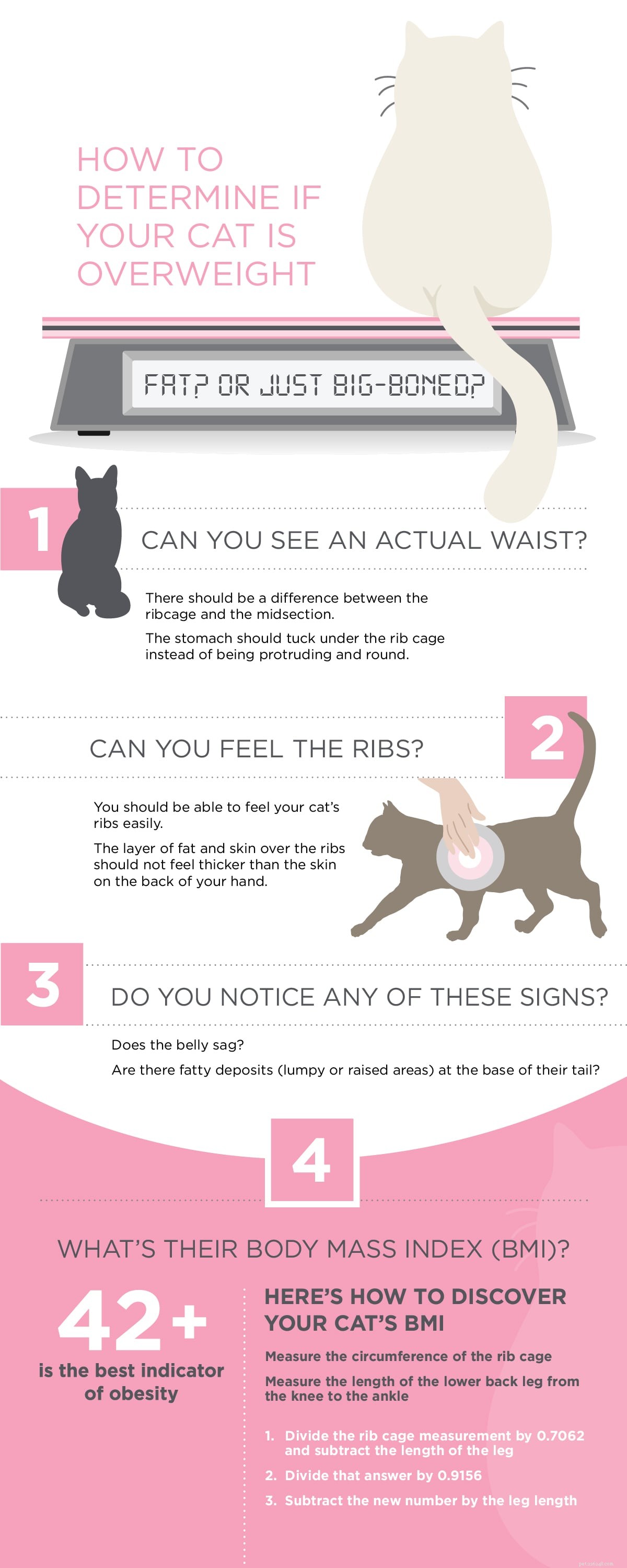
Cats of a healthy weight can live up to 2.5 years longer than overweight cats. If you detect any of the signs we’ve mentioned or determine that your cat’s BMI is 42 or higher, call your veterinarian for a full checkup and to determine a plan of action, which may include a change of diet.
- Pet Behavior
- Pet Breeds
- Pet Names
- Pet Adoption
- Pet Training
- Pet Information
- Pet Health
- Adorable Pets
- Dogs
- How to Determine if Your Dog or Cat Is Overweight: Simple Signs & Tips
- Expert Guide to Petting Your Cat: Proven Tips for a Happy, Healthy Bond
- How to Detect Fleas on Your Cat: A Quick Guide
- Is Your Cat Overweight? How to Spot the Signs and Protect Their Health
- How to Determine Your Cat’s Age: Quick Tips & Vet Guidance
- Is Your Cat Overweight? Spotting the Signs and Reducing Health Risks
- How to Know If Your Cat Truly Loves You: Signs of Affection