

Caring for a Nursing Mother Dog: Essential Post-Birth Care Tips
Things You'll Need
Whelping box
Clean bedding
Food dishes
Puppy food
Water
Dog brush
Warning
Avoid using all medications on pregnant and nursing dogs. See your veterinarian if the mother dog requires any medications.
Tip
During pregnancy, a large amount of the dog’s hair may enter into the resting phase of the hair growth cycle, resulting in large losses of hair, frequently in clumps. When the new hair grows in, it is often darker and less dense. Brush the dog daily to remove clumps and increase circulation.
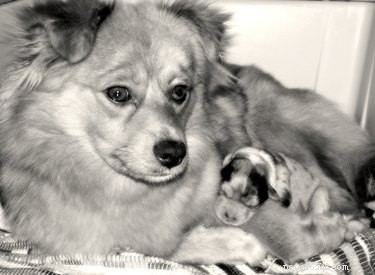 Proper care of the mother dog will ensure both puppies' and mother's health.
There is much joy, excitement and relief when puppies arrive. You have a lot work ahead of you with a new litter of puppies. The mother dog also requires special care after giving birth. You will need to monitor her closely to ensure that she is eating and resting properly and that she remains healthy. A mother dog requires adequate nutrition to nurse and care for puppies. You should feed a mother dog high-quality puppy food and a vitamin/mineral tablet. She should ideally weigh the same when the puppies are weaned as when she was bred.
Step 1
Take the dog outside to urinate and defecate after she has given birth; use a leash and take along a flashlight if it is dark outside. Watch her closely in case she has another puppy.
Step 2
Take the mother dog and puppies to be examined by a veterinarian within five to six hours of giving birth.
Step 3
Offer the dog food and water by setting the dishes into the whelping box as she will not want to leave the puppies. Do not leave the dishes in the whelping box, but offer them to her every two to three hours.
Step 4
Change the bedding of the whelping box at least once a day. After giving birth, the dog will have a heavy bloody discharge from the vulva for several days, gradually decreasing in amount and darkening over the next two to three weeks.
Step 5
Examine each mammary gland and nipple once a day for redness, hardness, discharge or streaking color to ensure that mastitis does not develop. If mastitis does develop, you should contact a veterinarian immediately. If caught early, milking out the affected gland and applying warm compresses will prevent mastitis from spreading.
Step 6
Move the dog to an area close to but separate from the whelping box once the puppies are two to three weeks old. The mother dog will need a place to rest from the puppies but will still need to be within close reach of them.
Always check with your veterinarian before changing your pet’s diet, medication, or physical activity routines. This information is not a substitute for a vet’s opinion.
- Pet Behavior
- Pet Breeds
- Pet Names
- Pet Adoption
- Pet Training
- Pet Information
- Pet Health
- Adorable Pets
- Dogs
- Guidelines for Supporting a Mother Dog During Labor and Delivery
- How Long After Water Breaks Does a Dog Deliver? Key Signs and Timing
- Postpartum Care Guide for Female Dogs: Nurturing Mamas After Puppies
- Easily Reduce Swelling in a Dog’s Mammary Glands After Giving Birth
- The Complete Guide to How a Dog Gives Birth to Puppies
- How to Raise a Healthy Runt Puppy: Expert Care Guidelines
- Expert Guide to Caring for Your Senior Dog