

Veterinarian Reveals Key Insights on Dog Pyoderma: Symptoms, Causes, and Treatment
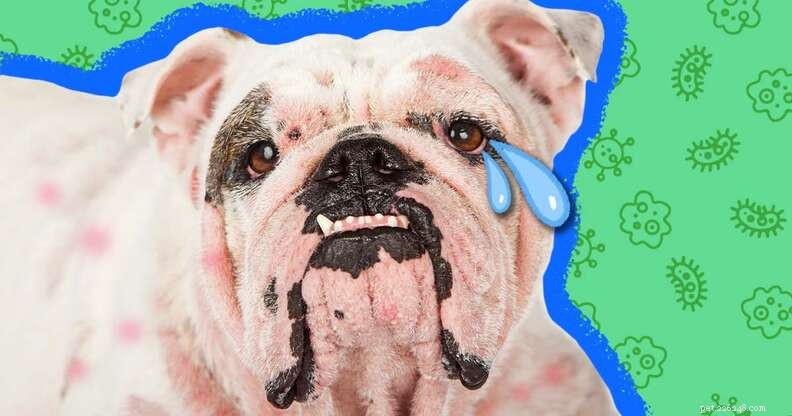
If your pup’s itching like crazy or getting hot spots, he could have a skin infection, like pyoderma.
It’s important to know what the signs of pyoderma are, not only because you definitely don’t want your pup to be scratching or uncomfortable, but also because pyodermas are infections and can be caused by other conditions that need treatment, like parasites.
We reached out to Dr. Fiona Lee, a veterinary dermatologist and medical director at Pet Dermatology Center, to find out what pyoderma in dogs is and how it’s treated.
What is pyoderma in dogs?
Pyoderma (which means “pus in the skin”), also called impetigo, is a bacterial skin infection that’s usually caused by an overgrowth of bacteria. There are a variety of symptoms, but one of the common signs is bumps that look like pimples.
A common cause is Staphylococcus (staph) bacteria, according to Dr. Lee. This bacteria lives on the skin normally, but when it overgrows, it can lead to infection.
Other causes of pyoderma include:
- Parasites, such as mites or fleas
- Allergies
- A weakened immune system (like in puppies or dogs on immunosuppressive drugs)
- A wound becoming infected
- Autoimmune or hormonal diseases, such as hypothyroidism or Cushing’s disease
- Poor hygiene
Signs of pyoderma in dogs
Common symptoms of pyoderma in dogs include:
- Hot spots
- Papules
- Pustules
- Crusted skin or scabs
- Redness
- Dry or flaky skin
- Furuncles (similar to ingrown hairs)
- Itching
- Hair loss
- Hyperpigmentation
- Swelling
- Pain
“In short-haired dogs, this can look like a moth-eaten haircoat,” Dr. Lee told The Dodo. “In long-haired dogs, this can look like a large spreading area of hair loss with scabs at the periphery (superficial spreading pyoderma).”
Dogs can develop pyoderma all over their bodies or in only certain spots. It often occurs in places where skin rubs together or where there’s a moist, warm environment, like the armpits or groin. Because of this, dogs with skin folds, like bulldogs, are more susceptible to developing it.
To diagnose your dog, your vet will examine him and take a biopsy to look at the skin cells under a microscope (called cytology), Dr. Lee said.
Your dog might also need to be tested for allergies if the pyoderma is from an allergic reaction.
- Pet Behavior
- Pet Breeds
- Pet Names
- Pet Adoption
- Pet Training
- Pet Information
- Pet Health
- Adorable Pets
- Dogs
- Understanding Female Dog Heat Cycles: Health & Care Guide
- The Complete Guide to Teacup Dogs: Facts, Care, and Myths
- Cadaver Dogs: Their Critical Role in Missing Person Investigations
- Gabapentin in Dogs: Uses, Doses & Side Effects Explained
- What Dog Owners Need to Know About Canine Dilated Cardiomyopathy (DCM)
- Understanding and Treating Dog Hot Spots: Causes, Care, and Prevention
- Understanding Resource Guarding in Dogs: Causes, Signs, and Prevention Tips