

Common Shoulder Injuries in Dogs: Causes, Symptoms, and Care
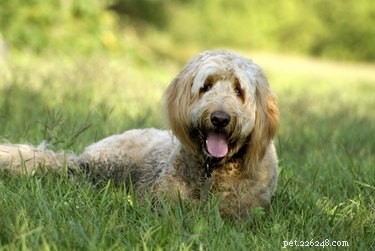
Practice makes perfect when it comes to schooling your canine athlete, but the constant repetition of agility training can cause or contribute to common shoulder problems -- all that jumping, weaving and climbing takes a toll. But your dog doesn't have to compete in agility to injure a shoulder. Canine shoulder issues include those resulting from trauma, soft tissue injuries and arthritis.
Shoulder Injury Symptoms
Dogs suffering from a shoulder injury generally exhibit lameness in the corresponding front leg. The lameness might initially come and go, becoming progressively more pronounced, especially after any activity. Over a few months -- although the amount of time varies depending on the individual animal and his pain level -- the muscle mass on your dog's leg will decreases. Affected dogs might exhibit gait abnormalities rather than outright lameness.
Medial Shoulder Instability
Medial shoulder instability is among the most common shoulder injuries in performance dogs. It's similar to human rotator cuff injuries. MSI in dogs usually occurs because of joint overuse rather than actual trauma. While it's important to train your dog for competitions, overdoing such practice can eventually lead to MSI. Initial signs in canine athletes are subtle, such as unwillingness to make certain turns in agility training. Most dogs with MSI react painfully to any shoulder hyperextension. Medium-size to large breeds are most likely to suffer from MSI.
Shoulder Injury Diagnosis
Your veterinarian or veterinary orthopedic surgeon uses X-rays and ultrasound to determine the cause of your dog's shoulder lameness. To identify soft tissue injuries, such as a biceps tendon rupture, your vet might use magnetic resonance imaging. Other diagnostic tools include an arthroscope, which permits your vet to view the joint and remove fluid or tissue for analysis. Your vet will benefit from learning the history of your dog's athletic activity, or any known injuries, such as slipping and falling during play.
Shoulder Injury Treatment
Treatment depends on the severity and type of injury. Dogs with mild injuries might require rest for a prescribed period, along with medications such as non-steroidal anti-inflammatories. Other treatments include massage, acupuncture and chiropractic. More severely affected dogs might require surgery, followed by a physical therapy and other rehabilitation. While your dog might recover sufficiently for normal activity, he might not be able to return to a competitive career.
Always check with your veterinarian before changing your pet’s diet, medication, or physical activity routines. This information is not a substitute for a vet’s opinion.
- Pet Behavior
- Pet Breeds
- Pet Names
- Pet Adoption
- Pet Training
- Pet Information
- Pet Health
- Adorable Pets
- Dogs
- Toxoplasmosis in Dogs: Causes, Symptoms, and Prevention
- Understanding and Treating Toe Injuries in Dogs
- Understanding Dog Eye Injuries: Causes, Symptoms & Effective Treatments
- Holistic Care for Your Dog’s Injuries: Natural & Effective Solutions
- Understanding and Preventing Common Toenail Injuries in Dogs
- Do Dogs Experience Muscle Pulls? A Comprehensive Guide to Canine Muscle Strain
- Effective Orthopedic Injury Rehabilitation for Dogs: Restore Mobility & Comfort