

Restore Your White Dog’s Coat to Pristine White: A Proven Grooming Guide
White dog owners understand that a dog doesn't stay white for very long. Your snow princess might be fresh from the groomer, but even one trip outdoors can leave her looking worse for wear — especially after an impromptu roll in the mud. And if you're frequenting the dog park regularly, you know just how easily dirt and dust can get trapped in your dog's coat (and find its way into your clean house!).

Dealing with white dog stains
While a bath will remove most stains from your white dog's coat, bathing too often isn't ideal for your dog and can cause dry skin over time. Though it depends on your dog's coat, skin, health, and other characteristics, groomers and veterinarians typically recommend bathing your dog once every four to six weeks.
To touch up stains in the interim, simply wipe them down with a pre-moistened pet wipe, typically found in pet supply stores, a baby wipe, or a wet paper towel. This will be gentle on your dog's skin and help get rid of both stains and odors between baths. Brushing your dog's fur regularly can also help shake loose dirt, debris, and dust that may be dulling his white coat.
Dog tear stain remover
Tear stains can give your dog an unkempt appearance, but they're an inevitability for certain dog breeds — and they're especially obvious on dogs with bright white coats. These stains may seem to appear almost immediately after bathing or grooming. Unless you want your white dog to spend her life in the tub or at the groomer, it's necessary to conquer these stains without undertaking the full bathing process.
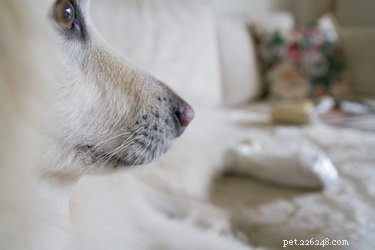 Tear stains are especially obvious on dogs with white coats.
To prevent tear stains from forming in the first place, wipe your dog's eyes two times each day with a tissue to remove wetness. You can also pat a very small amount of cornstarch under the eyes to absorb wetness and prevent the stains from forming. To deal with existing stains, you can use a dog tear stain remover, available at pet retailers, or you can use a cotton ball moistened with sterile saline solution. Never use anything around your dog's eyes that isn't formulated specifically for that use, as you could inadvertently damage or harm your dog's eyes. Trimming the longer hairs around your dog's eyes can also help, since these hairs have a tendency to trap bacteria and debris.
Tear stains can be caused by genetics, excess tears, or blocked tear ducts. Schedule a visit with your veterinarian to rule out potential medical issues that could be contributing to excess tear staining.
- Pet Behavior
- Pet Breeds
- Pet Names
- Pet Adoption
- Pet Training
- Pet Information
- Pet Health
- Adorable Pets
- Dogs
- Create a Safe, Chemical-Free Dog Tear Stain Remover at Home
- DIY Dog Pants: A Step‑by‑Step Guide for a Cozy, Stylish Pup
- DIY Rawhide Dog Chews: Safe, Homemade Treats for Your Pup
- DIY Low-Protein Dog Food: A Trusted Guide for Veterinary‑Recommended Diets
- Step-by-Step Guide to Building a Safe, Weighted Dog Harness
- DIY Natural Dog Shampoo: Easy Homemade Formula
- DIY Dog Sweatshirt: Step‑by‑Step Guide to a Cozy, Custom Coat