

Why Do Dogs Chase Their Tails? Understanding the Behavior and When to Worry
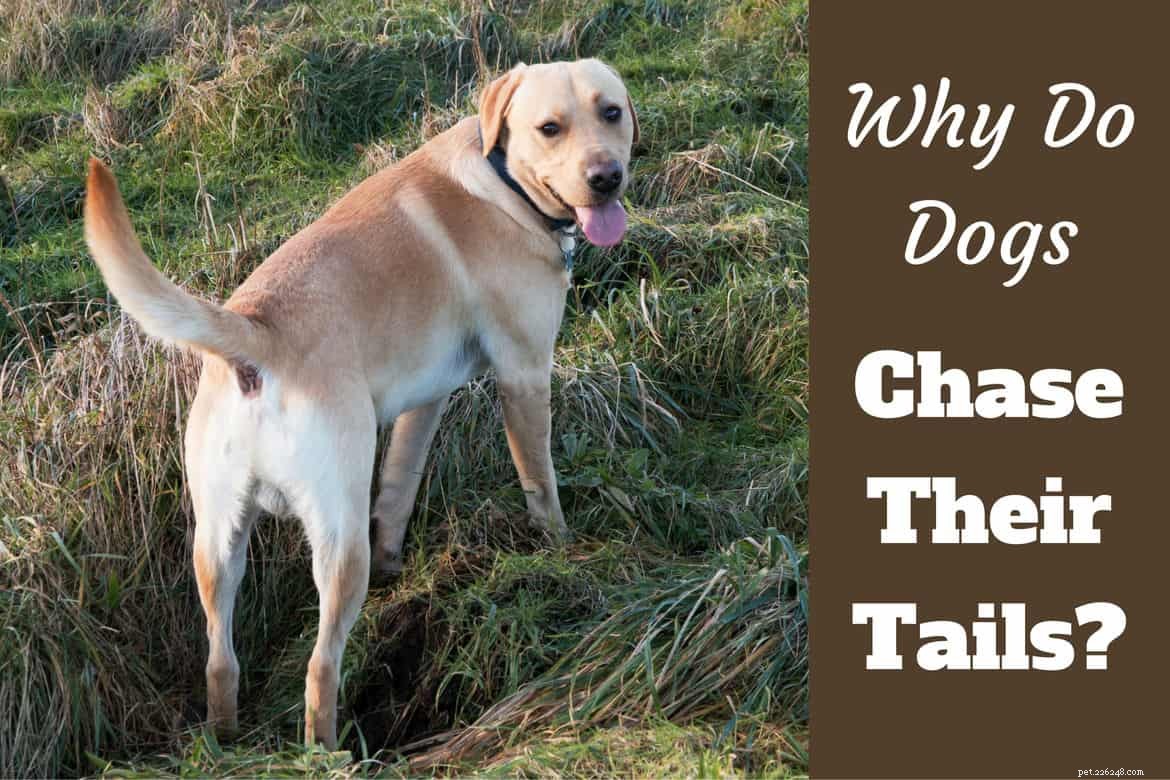
It’s a classic and very entertaining canine behavior: a dog chasing its own tail in a never-ending 360-degree whirlwind.
And just when the worn out pup thinks the intruder is gone, suddenly it appears again from behind and the chase is back on!
We’ve all seen it, we’ve all laughed at it. But do we understand why it’s happening? Why do dogs chase their tails?
If you’ve ever wondered what would possess an intelligent animal to hunt a part of its own body, we’ve got the answers for you.
Curious Puppies Love to Play
Puppies are naturally curious and playful, and they love to explore with their mouths.
When they catch sight of their tail moving behind them, they don’t always know that it’s a part of them!
So naturally they are going to try their best to grab hold of this fascinating thing that seems to always be behind them.
As a puppy grows, it learns to ignore its tail a bit better, but may turn to it for entertainment when bored.
Puppies need almost constant entertainment (when they’re not napping!), which explains the prevalence of tail chasing in the formative months.
A Bored Dog Will Try to Entertain Itself
If a dog is lacking for entertainment, it may turn to its tail, as it were, to find a little fun.
While amusing to watch, an older dog chasing its own tail may be sending you a signal, indirectly, that it needs some interaction and/or some new toys to play with.
Keeping a dog entertained and mentally engaged is a key part of maintaining a healthy mind and body.
If you see your adult dog chasing its tail, consider interrupting the behavior by offering a game of tug-of-war, or some other substitute activity.
If this behavior is ongoing, you’re going to need to find some ways to keep your dog active and happy. Take time for more walks and active play-sessions, or get out to the dog park for some canine social time.
Seeking Attention Through Reinforced Behavior
Your dog is smart enough to pick up on signs that you are happy with what it’s doing.
If you laugh and encourage your dog when it chases its tail, it may perpetuate the behavior to elicit a positive response from you. Simply put, your dog will turn circles to make you happy!
If the behavior seems non-destructive, then there’s nothing to really worry about. Keep an eye on your dog’s tail, though; if you notice hair loss or scabs on the skin, you’ll want to limit tail chasing by turning to other activities and perhaps using some negative reinforcement, if necessary. (Verbal commands such as “no” and “leave it” should be sufficient.)
You might also be interested in:
- Why do dogs howl at sirens?
- Why do dogs lick their paws all the time?
- Why do dogs love to fetch things for us?
- Why do dogs eat grass?
- Why do dogs bark when somebody comes to the door?
An Itchy Behind Is Hard to Reach
A dog that seems to be chasing its tail with the intention of chewing on it, or that is attempting to gnaw at its back end may be experiencing irritation or discomfort. Some possible causes are:
- Fleas
- Infection
- Irritated anal glands
- Worms
You may also catch your dog dragging its backside along the ground (what we affectionately refer to as “bum-scooting” at my house).
This is a good indication something is bothering your dog. Have a look and see if you can find the problem, as it may be easily dealt with, like something stuck to the fur. A visit to the vet may also be in order.
Anal glands, or sacs, seem to be a common area of irritation for dogs. Not a fun topic, but certainly one worth exploring. To learn more about them, here’s a video telling you all you need to know about your Lab’s anal glands.
Compulsion or Other Mental Disorders
Although not common, some dogs do develop a compulsive disorder that causes them to fixate on chasing their tail. In rare cases, this may need to be treated with medication.
A dog that can’t be distracted from a spin may have a compulsive disorder.
A disorder like this may be caused by past trauma or abuse, anxiety, or from confinement in a small space.
Obsessively worrying at a spot on the tail or hind quarter can lead to injury and/or skin infections. In extreme cases, the excess exercise combined with skipping meals to spin may lead to unhealthy weight loss and malnutrition.
You’ll need to work carefully with your vet or possibly a trainer to help your dog to unlearn this behavior.
High Cholesterol May Impact Brain Function
Remarkably, a study conducted in Turkey found that most dogs that exhibit obsessive tail chasing were found to have high levels of cholesterol.
Backing up the connection, dogs that don’t chase their tails typically had lower levels than dogs that do.
What does cholesterol have to do with tail chasing? It’s believed that microscopic cell membranes may become clogged, and this impacts the flow of brain hormones.
The resulting diminished flow impacts the dog’s mood and behavior. Similar results have been found in people suffering from OCD.
Overeating is unlikely to be the cause, but the protein source might be an issue.
A change in your dog’s diet may be all that’s needed to reduce cholesterol levels. Switch to high-quality sources of fat, such as salmon, and avoid table scraps.
Conclusion
Whether or not tail chasing is a desirable behavior largely depends on the reasons for the behavior.
If your puppy is having fun whirling around, don’t be concerned: this is perfectly ordinary youthful exuberance.
In an older dog, however, do look for tell-tale signs of an underlying cause for the behavior that may be health or happiness related.
- Pet Behavior
- Pet Breeds
- Pet Names
- Pet Adoption
- Pet Training
- Pet Information
- Pet Health
- Adorable Pets
- Dogs
- Understanding Why Dogs Chase Their Tails: Causes, Signs, and What to Do
- Understanding Why Dogs Chase Their Tails: Causes, Signs, and When to Seek Help
- Top 5 Reasons Why Dogs Chase Their Tails (and How to Address It)
- Understanding Why Dogs Chase and Bite Their Tails: Causes and Treatments
- Why Dogs Keep Their Tails Up: Decoding Canine Body Language
- Why Dogs Prefer Not to Have Their Tails Touched: Understanding Tail Sensitivity
- Why Dogs Chase Their Tails: Understanding the Causes and How to Help