

The Ultimate Guide to Crate‑Training Your Dog
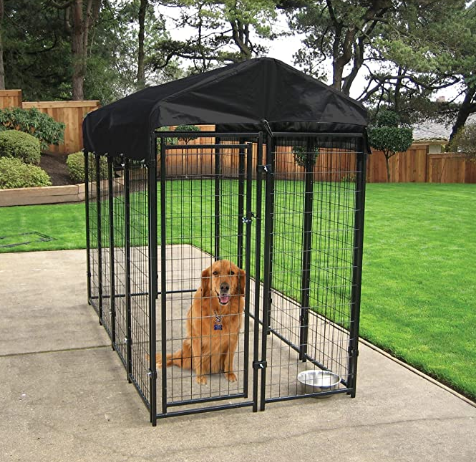
In this article, I explained how you can crate train your dog.
When my friend first told me about putting my dog in a crate, I was not comfortable with the idea. After much persuasion though, I gave in and both Jetty and I are happy with the new development. He loves his new home.
But it was not an easy job getting him accustomed to the crate. I even had to employ the services of a professional dog trainer. But it was worth all the effort in the end.
If you are a dog owner and you are not sure whether to put your dog in a crate or not; you will be convinced after reading this article.
In this post, you will learn
- What It Means To Crate Train Your Dog
- Why It Is Important To Crate Train Your Dog
- How To Crate Train Your Dog
- Sample Crate Training Schedule
- List Of Crates You Can Choose From
Are you ready? Let’s get started!
What It Means To Crate Train Your Dog
To crate train your dog means taking the time to help your dog accept his crate as a safe abode.
And yes, the crate can indeed be your dog’s favourite place even when he is locked in. He can play, eat, rest, and chill in the crate.
The goal is for your dog to be able to move into the crate at will. Also, you want your dog to be peaceful and happy whenever he is in the crate.
This will take some effort to achieve but it is definitely worth it. I assure you!
Next, let’s look at the benefits of crate training your dog.
Why It Is Important To Crate Train Your Dog
Crate training your dog comes with a lot of benefits both for you and your dog. These benefits include:
- Your dog can relax safely and stay out of the way when your house is bubbling with activities.
- It is an effective way to house train your dog
- When you crate train your dog, you protect your stuff (sofa, rug, drapes, etc.) from damages.
- The crate provides a relaxation centre for your dog.
- With your dog calm in his crate, it is a lot easier to convey him in your car when you have the need.
- Your dog will have no problem staying in a crate at the vet’s or elsewhere.
- Being in the crate protects your dog from harm (injuries, poisoning, etc.) when you are not with him.
- It gives you peace of mind (priceless!)
Now to the main business of this article, let’s learn how you can crate train your dog.
Read on!
How To Crate Train Your Dog
As mentioned earlier, crate training your dog is not easy. However, bearing the above benefits in mind will motivate you to go through with it.
Follow this guide to crate train your dog
-
Pick The Right Crate For Your Dog
If you will achieve your goal, you should begin by picking the right crate for your dog. Go for a crate that is flexible, comfortable, and durable.
Your dog should be able to lie down, sit, stand up, and turn around in his crate. Be careful not to get a crate that is too big though (extra space will lure your dog to poo/pee in there. And you don’t want that).
Think about what your dog will prefer. Usually, most dogs are cool with wire crates. But if your dog loves to sleep in the dark, you should consider getting a more enclosed crate.
Another factor that should determine your choice of a crate for your dog is how big your dog will become. Buy a crate that will fit the adult size of your dog.
Not just that, get a divider alongside. This will help you control the space in the crate. You can then grant your dog more space as he grows. Cool!
What Crate Material Should You Go For?
Crates are available in different materials: plastic, metal, cloth, or wood.
The plastic and metal crates are more durable and easy to clean. For something fancier, go for the cloth type. It also makes it easier to transport your dog.
Dog owners sometimes go for a well curved wooden crate that will blend with their home doors.
It is better to start with an enclosed or wire crate. You can advance to cloth crate or wooden crate much later.
Where Can You Place Your Dog’s Crate?
I cannot tell you the exact position in your home for your dog’s crate. It depends on what works for you. However, you should consider the following when choosing a spot:
- The spot should be quiet and free from traffic
- It should not be in direct contact with a source of heat
- Ensure there are no harmful objects around like power cables or poisonous house plants.
-
Set Up The Right Mindset In Your Dog
Here, the goal is to help your dog develop the right mindset around the crate. The first mindset you want to establish is ‘a crate is a place of rest.’
To achieve this, bring him into the crate when he is calm. You can leave him there for 10 minutes at a time. Then increase the duration gradually.
Also, you want your dog to know that he can play in the crate. Throwing his toys when he is an excited state will help him realize that he can play in the crate. You can try different crate fun games as well.
Another approach is to use treats. When you lead your dog into the crate, and he follows, you can reward him with treats. Hence, your dog believes you are happy when he is in the crate.
Additionally, you can use this as a trick to get him to stay longer. Use treats that will take him longer to finish like a KONG toy filled with frozen peanut butter.
Thus, he gets used to spending ample time in the crate while enjoying himself.
-
Create The Most Comfort
Depending on what your dog is used to, you can determine the level of comfort the crate will provide.
Will there be blankets, dog bed towels? While these may provide some comfort, there is a high tendency that your dog may pee on them or tear them.
You can consider leaving him to sleep on the bare crate mat. Your dog may prefer the hard surface. Most dogs do.
-
Have A Time Schedule
Your dog cannot do everything in the crate you know. He needs to pee, eat, play in a wider place.
Developing a time schedule for your dog’s different activities will help a lot. It will also help your dog get accustomed to the routine.
As the days progress, your dog leaves and returns to the crate at will (which is your goal).
-
Leave Your Dog In The Crate Little By Little
I am sure there will be times when you want to leave your dog behind and go about your business. Well, do it gradually. Don’t leave your dog in the crate for hours from the beginning.
You can start by leaving to get a glass of juice. Return to see your dog’s reaction, reward his good behavior (i.e. staying put in the crate), and build from there.
A quick tip: use a recording device to know what your dog does while you’re away.
Next, I will show you the dos and don’ts of Crate training your dog.
Keep reading!
Dos and Don’ts Of Crate training
The Don’ts
- Don’t punish your dog while he is in the crate. He will relate the crate with stress and ruin your training efforts.
- Don’t abandon your dog in the crate an entire day. He may develop anxiety and depression. Plus he needs to exercise daily.
Quick Tip: If you really have to be away all day, get a pet sitter, or take your dog to daycare.
- Don’t leave your dog in the crate for more than 3 hours at a time. He needs to go as many times as possible.
- Don’t leave the house until your dog is carried away with activity or well relaxed in his crate. And be sure not to draw his attention on your way out.
The Do’s
- Maximize short training sessions and work within your dog’s pace.
- Use lots of treats and compliments.
- Utilize calming pheromones and soft music.
- Allow your dog ample playtime and a chance for the outdoor potty before any crate training session.
- Take your dog outside for a potty break when you let him out of the crate. This will facilitate your dog’s potty training.
At this point, you’re probably thinking, ‘crate training is a lot of work’. It is but I’d rather you look on the bright side and get through with it.
To help you further, I shared a Sample Crate Training Schedule with you. Check it out in the next section
Sample Crate Training Schedule
Time – Dog’s Activity
06:00 am – Potty break then playtime in the crate.
07:00 am – Breakfast
– Potty break while on a walk
– Then play and nap in the crate.
08:00 am – Potty train then playtime or a nap in the crate.
09:30 am – Potty break.
– Training or playtime.
– Potty break then nap in the crate
12:00 pm – Lunchtime
– Bathroom break.
– Play and potty train.
– Then nap in the crate.
02:00 pm – Potty train.
– Playtime.
– The potty train then nap in the crate
05:00 pm – Potty break before Dinner.
– Rest.
– Potty Break (and maybe a walk at night)
– Nap or play in the crate
06:00 pm – Potty Break
– Playtime or walk.
– Potty Break then nap in the crate
08:30 pm – Potty break before bedtime.
09:30 pm – Bedtime
10:00 pm – 06:00 am – Bathroom/potty breaks as necessary
I hope it helps. You can adjust the schedule to better suit you.
Before we call it a wrap, take a look at these crate suggestions:
List Of Crates You Can Choose From
Soft Dog Crate
Plastic Dog Crate
Wire Dog Crate
Petmate Sky Kennel Pet Carrier
Pet Magasin Hard Cover Collapsible Cat Carrier – Pet Travel Kennel with Top-Load & Foldable Feature for Cats, Small Dogs Puppies & Rabbits
SportPet Designs Large Pop Open Kennel, Portable Cat Cage Kennel, Waterproof Pet bed, Carrier Collection
Conclusion
Crate training your dog is tasking but it is definitely worth the stress. Remember to be patient with your dog. Mastering the crate may take him a while even up to 6 months. It will also help if you are consistent with your methods.
And now we have come to the end of this article. I hope you found it helpful.
Let’s hear from you:
Will you take the time to crate train your dog?
Or, have your dog mastered the crate already? What was it like training him?
Also, are there useful steps you think we missed in this article?
Tell us in the comments section right now!
Before you go, click on the share icons. Thank you!
- Pet Behavior
- Pet Breeds
- Pet Names
- Pet Adoption
- Pet Training
- Pet Information
- Pet Health
- Adorable Pets
- Dogs
- Master Leash Training: Guide to a Calm, Controlled Walk
- Master Dog Training: Proven Techniques for a Stronger Bond
- Expert Guide to Crate Training Your Puppy or Dog
- The Complete Guide to Crate‑Training Your Dog for Comfort & Confidence
- Master Clicker Training: A Positive Reinforcement Guide for Dogs
- Effective Crate Training: Teach Your Dog to Calmly Enter and Stay Safe
- Effective Crate Training for Dogs & Puppies: A Step‑by‑Step Guide