

GPS Dog Fence vs Tracker: Which One Is Right for Your Dog?
A GPS dog tracker and a GPS dog fence both appear in the "keep my dog safe" budget, but they serve fundamentally different purposes.
A tracker alerts you when your dog leaves a designated area and helps you locate them. A GPS fence tries to stop the dog from crossing an invisible boundary in the first place.
One records an escape; the other attempts to prevent it. Neither physically contains your dog, and neither is essential for every pet parent.
After testing Fi, Tractive, SpotOn, and Halo—and living with two senior coonhounds who still chase prey over six miles a day—I’ve learned that most owners are better off with a long line, a reliable GPS tracker, and a physical fence.
GPS fencing can be useful on large rural properties or for nomadic lifestyles, but it’s not a default recommendation and certainly isn’t a magic force field.
This article contains affiliate links. If you purchase through them, I may earn a commission at no extra cost to you. I only recommend products I have personally used or would genuinely consider.
GPS Tracker vs GPS Fence at a Glance
| Feature | GPS Tracker | GPS Fence | Physical Fence |
|---|---|---|---|
| Main job | Finds your dog after an escape | Warns your dog at a boundary | Creates a real barrier |
| Physical barrier? | No | No | Yes |
| Tracks an escape? | Yes | Usually No | Not applicable |
| Training required? | No | Basic boundary habits | Depends on fence type |
| Minimum area | One month subscription (basic) | Large or mobile properties | Most homes |
| Best for | Escape‑prone dogs | Large/rural lands, nomadic owners | Standard residential yards |
What Does a GPS Dog Tracker Actually Do?
A GPS tracker uses satellite positioning to pinpoint your dog’s location and a cellular connection to send that data to your phone. Most apps let you set a “safe zone” around your home; if the dog leaves, you receive an instant alert and can switch to live‑tracking mode.
The safe zone is sometimes called a virtual fence, but it’s only a notification boundary—there’s no warning or corrective stimulus for the dog.
Key point: A GPS tracker tells you the dog has escaped; it does not contain the animal.
I rely on Fi trackers for my two senior coonhounds, Lucy and Shelby. When I left a gate open while feeling ill, the Fi app showed their locations a mile away, allowing my husband to retrieve them quickly. The tracker didn’t prevent the escape, but it turned a potential disaster into a quick recovery.
Read my full Fi Series 3 review or compare other options in my guide to the best GPS trackers for dogs.
Leading Dog GPS Trackers in 2026
Fi Series 3+
Fi offers up to three months of battery life under optimal conditions (GPS use, Wi‑Fi, cellular signal, and Lost Mode frequency affect it). I’ve used Fi continuously on two active senior hounds in remote, heavily wooded terrain.

Tractive DOG 6
Tractive provides live tracking, escape alerts, location history, and activity monitoring. Its “Virtual Fence” is an alert zone—not a containment system. Battery life is advertised up to two weeks for the standard model, with longer life for larger versions. A cellular subscription is required.
What Does a GPS Dog Fence Do?
A GPS fence stores a virtual boundary on the collar. As the dog approaches, the collar issues a warning that can progress from sound to vibration to mild electrical stimulation if the dog keeps moving forward.
Because the fence is virtual, it needs no posts, wires, or Wi‑Fi, making it attractive for:
- Large or oddly shaped rural properties
- Land where a physical fence is impractical
- RV travelers and other nomadic households
- Temporary locations where a portable boundary is useful
Most modern GPS fence collars also include location tracking. SpotOn’s containment works without a cellular subscription, but live tracking and breach alerts require an optional plan. Halo combines fencing and live tracking through its membership service.
In my experience, the tracking built into a well‑tested GPS fence collar is sufficient; adding a separate Fi tracker is usually unnecessary and adds cost.
SpotOn vs. Halo: Field Test Findings
Testing on our one‑acre, heavily wooded property showed SpotOn’s boundary placement and warnings remained consistent, while Halo experienced drift, delayed alerts, and occasional failures under tree cover. Terrain matters—open suburban land behaves very differently from dense woodland.
SpotOn GPS Dog Fence
SpotOn’s Nova Edition works on properties of roughly one‑third of an acre and larger. The narrowest side of the virtual fence should be at least 80 ft, with a 15‑ft safety buffer from hazards like roads. The system costs about $999 (excluding the optional tracking subscription) and offers roughly 33 hours of runtime with tracking enabled.
Halo Collar 5
Halo Collar 5 provides up to 48 hours of battery life and combines virtual boundaries with continuous location tracking. It can create smaller boundaries, but on a typical suburban lot the warning zone may leave little room between the property line and potential hazards.
A GPS Fence Is Not a Physical Fence
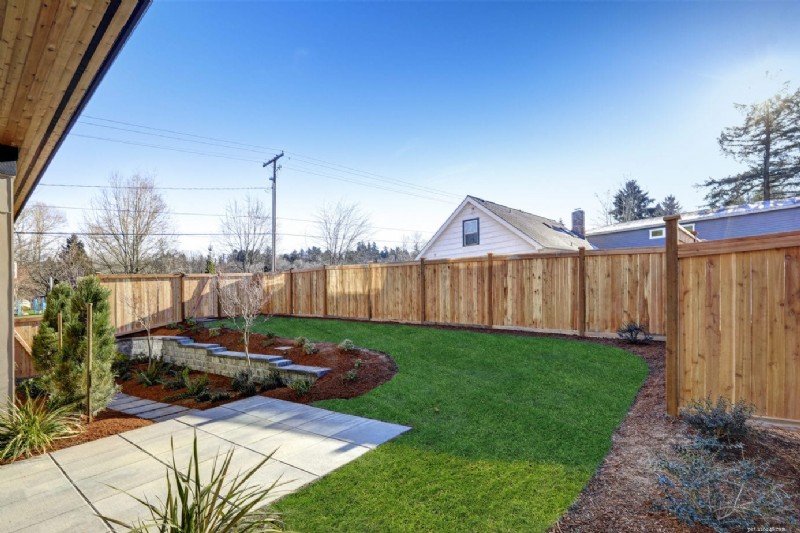
A physical fence creates a tangible barrier; a GPS fence creates a consequence for crossing an invisible line. Consequently, a GPS fence cannot stop:
- A loose dog entering your property
- Predators approaching your dog
- People walking onto the land
- Children approaching the dog
- Dogs running into traffic after crossing the boundary
- Dog theft
- GPS drift moving the effective boundary
- Battery depletion leaving the system offline
If a physical fence is feasible, it’s the preferred solution. For renters, no‑dig fencing offers a removable alternative that can often be funded with the money saved by skipping a $1,000‑plus GPS fence.
Before spending on electronic containment, consider these steps:
- Purchase a sturdy long line for supervised freedom
- Invest in a reliable GPS tracker for escape recovery
- Explore no‑dig or renter‑friendly physical fencing
- Upgrade gates, latches, and any weak spots in existing fences
Prey Drive vs. Virtual Boundary
Highly prey‑driven dogs may ignore warnings when a chase is triggered. In such cases, the dog can bolt through the stimulus and become reluctant to return, turning a virtual fence into a loose‑dog problem.
I did not deliberately test this on my hounds because we already have a physical fence, and it would be unsafe to provoke a high‑risk escape.
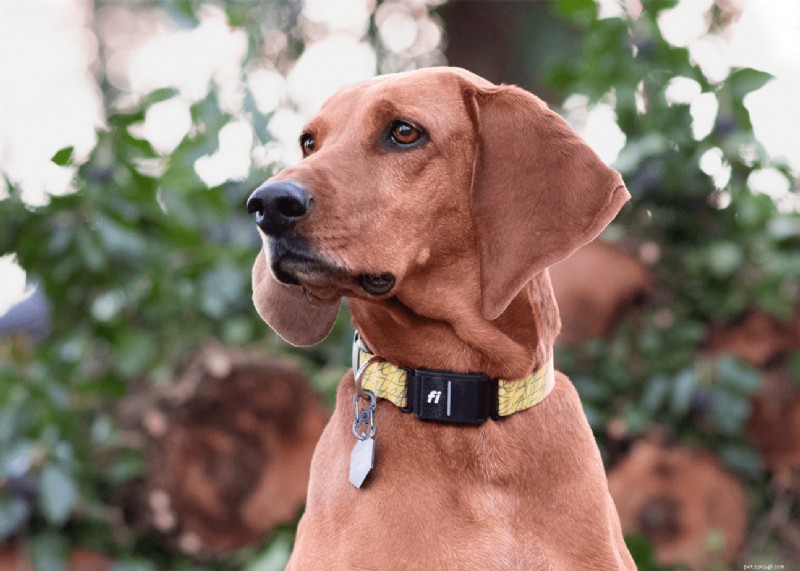
During testing I verified collar fit, battery life, GPS accuracy, boundary stability, and warning reliability. I did not apply the highest electrical stimulation level to the dogs; instead I confirmed the output with an oscilloscope.
Are Tone and Vibration Safer Than Electrical Stimulation?
Sound and vibration are less physically intrusive than static shock, but they still rely on aversive learning. A startled or noise‑sensitive dog may react poorly, and a warning tone can become associated with unrelated stimuli (children, wildlife, etc.).
The American Veterinary Society of Animal Behavior recommends reward‑based training and cautions against aversive methods. That aligns with my own positive‑reinforcement approach.
Dogs Unsuitable for a GPS Fence
- Highly prey‑driven dogs in wildlife‑rich areas—chase can override the warning.
- Nervous, fearful, or noise‑sensitive dogs—aversive cues may increase anxiety.
- Dogs with aggression or redirected‑bite risk—boundary stimulus could provoke a bite.
- Very small dogs—most GPS fence collars require a minimum weight of ~15 lb and neck size of 10 in.
- Dogs without proper boundary training—a fence is not a plug‑and‑play solution.
How Long Does GPS Fence Training Take?
Allocate at least one month for basic training: teach the dog to turn back calmly when the warning begins. Full reliability around wildlife, other dogs, or strong distractions often takes much longer, and for some dogs it may never be safe enough.
Training should be gradual, supervised, and continuously reinforced. Ongoing checks are essential:
- Boundary location accuracy
- Consistency of warnings
- Performance under tree cover
- Battery charge level
- Cellular tracking reliability
- Dog’s willingness to return
- Seasonal signal changes
- New distractions in the environment
What If GPS Coverage Fails?
A GPS fence relies on a charged collar receiving satellite signals and correctly calculating its position. Failure points include dense foliage, tall structures, GPS drift, depleted batteries, incorrect boundaries, firmware bugs, loss of cellular service (for tracking/alerts), collar damage, or poor fit.
Even if the boundary remains active, a dead battery or lost cellular connection means you won’t see live location or receive breach alerts. GPS trackers share similar cellular dependencies but are not required to make split‑second containment decisions.
Rural vs. Suburban Use
Large rural properties—where fencing acres is costly—are the primary scenario where a GPS fence makes sense. The boundary can be placed far from roads, and generous buffers mitigate GPS drift.
On typical suburban lots, space is limited, hazards are close, and neighbors are nearby, making a physical fence a more sensible investment.
Do You Need Both a Tracker and a Fence?
Most premium GPS fence collars already include tracking, so a separate tracker is usually redundant. Carrying two devices means double the weight, two charging schedules, potentially two subscriptions, and more maintenance.
For most households the optimal formula is:
Long line + standalone GPS tracker + physical‑fence budget
versus
GPS fence collar with built‑in tracking
For the average dog parent, the first option provides more flexibility and reliability.
My Verdict
If you can install a physical fence, do it. While you wait, use a secure long line and a proven GPS tracker (Fi and Tractive are solid choices). A GPS dog fence is not my default recommendation; it only makes sense when physical fencing is truly impossible—typically on large rural lands or for a nomadic lifestyle—and when the dog’s temperament suits it.
Among the systems I tested, SpotOn performed better in our dense, wooded environment than Halo. Even then, I would require at least a month of careful training, generous safety buffers, and extensive real‑world testing before relying on it.
Do not use a GPS fence for nervous dogs, dogs with redirected‑bite risk, or highly prey‑driven dogs living near abundant wildlife. Remember: a virtual boundary is not a barrier.
So, which does your dog actually need?
For most escape‑prone dogs: a long line, a GPS tracker, and better physical security.
For a small minority of suitable dogs on properties that truly cannot be fenced: a carefully tested GPS fence may be a workable compromise.
And for many well‑managed dogs? Neither—expensive tech isn’t necessary just because it exists.
- Pet Behavior
- Pet Breeds
- Pet Names
- Pet Adoption
- Pet Training
- Pet Information
- Pet Health
- Adorable Pets
- Dogs
- Frill‑Necked Lizards (Frilled Dragons): Comprehensive Species Guide
- Train Your Dog to Love Vet Visits: Stress‑Free Techniques for Calm, Enjoyable Check‑Ups
- Effective Ways to Eliminate Your Dog’s Bad Breath
- Fiona May: Athletic Achievements and Personal Journey
- Essential Bird Health Issues Every Owner Should Know
- 4 Key Insights Every Cat Owner Should Know From Top Veterinarians
- Signs Your Yorkshire Terrier Is About to Deliver: What to Watch For