

Critical Care Tip: Female Turtles Must Have Nesting Sites, Even When Unmated
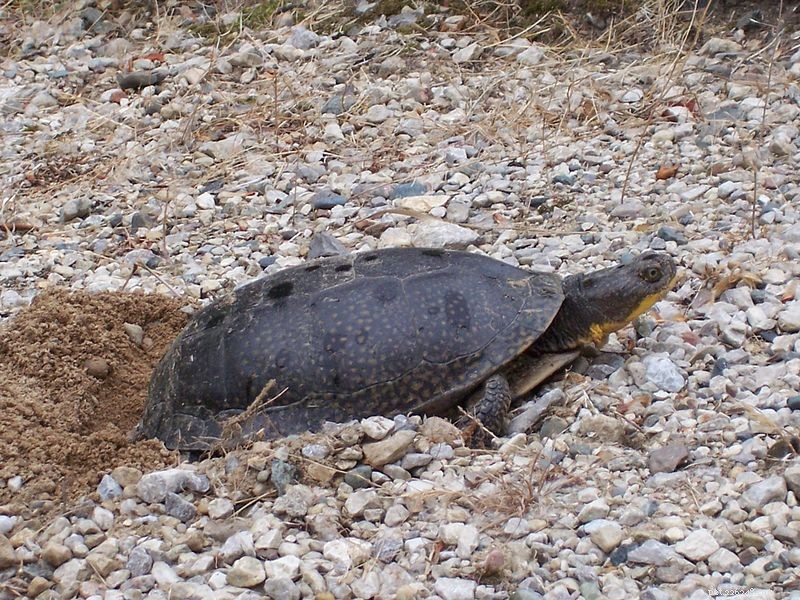 Spring weather often brings me questions concerning aquatic turtle nesting behavior. As temperatures warm (and sometimes before, as indoor turtles may be “ahead” of schedule) pet female turtles should be checked for signs that they are carrying eggs. While Red-Eared Sliders, Painted and Snapping Turtles and other largely aquatic turtles are among the hardiest reptilian pets, providing for gravid (egg-bearing) females can be very difficult…failure to do so, however, can result in the turtle’s death.
I’ve written about the problem of Dystocia, or retained eggs, in the past. Today I’d like to dispel a commonly-held belief concerning turtle reproduction, and add a few cautions.
Turtle Reproduction: Facts
Female turtles may develop eggs even if they have not mated. Animals that have mated in the past may retain sperm for years, so it’s always wise to incubate any eggs that are produced.
Unlike some amphibians, which may absorb eggs that are not deposited, turtles, as far as we know, must expel their eggs once they have formed; otherwise, fatal infections invariably develop.
Turtle Reproduction: Misconceptions
Even among reptile keepers in zoos, it was until recently believed that, if unable to find a nesting site, gravid female turtles would deposit their eggs in the water; this was thought to be a simple alternative to providing a large, earth-filled nesting site. Many turtles will deposit their eggs in water if other options are denied them; the problem is that they will not do so in a safe manner.
If a suitable nest site is not available, the eggs will be retained and deposited in small numbers over 2-5 weeks, or longer, not in a single clutch as would be normal. Calcium is continually added to the retained eggs, draining the female’s supplies and rendering the eggs ever-more difficult to pass. Eventually, the eggs will break and/or decay, and an infection known as egg yolk peritonitis will set in. If untreated, the female will die.
Determining if your Turtle is Gravid
Another misconception is that developing eggs can easily be felt via physical palpation. This is not always the case, and in any event in-expert palpation may break the eggs.
Rather, one should note changes in the female’s behavior such as restlessness and a lack of appetite; keeping notes concerning prior egg-laying is also useful. Radiographs should be taken if you are unsure. Turtles with retained eggs may strain or become listless and unable to walk and/or swim normally.
Nesting Sites for Pet Turtles
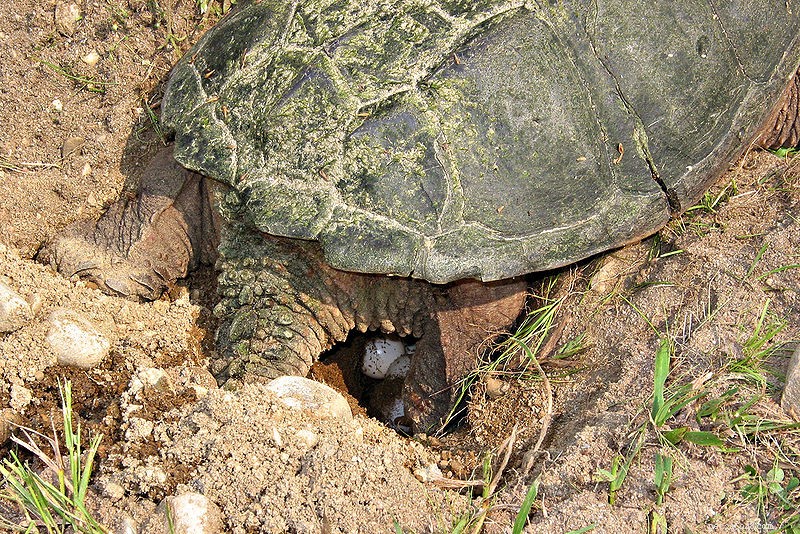 In the article linked below, I provide some thoughts on nesting sites and treatments for Dystocia.
To it I would add that you should always strive to provide the largest nesting site possible. Bear in mind that females may be very picky when it comes to nest site selection…I’ve observed gravid turtles of many species to dig and abandon numerous nests before settling down to lay, so be prepared to change your set-up as needed.
At the minimum, the nesting area should be 2-3x as large as the turtle, and the substrate should be at least as deep as the carapace is long.
- Fun Ways to Engage Your Turtle Safely
- How to Tell if Your Young Red‑Eared Slider Is Male or Female
- How to Spot a Gravid Leopard Gecko: Simple Signs & Home Tips
- Turtle Mating Explained: Natural Reproduction and Courtship Habits
- Turtle Eggs and Nests Explained: Images & Insights
- Giant Turtles: Insights from Working with the World’s Largest Freshwater Species
- Urgent Turtle Conservation Update: Protecting USA’s Native Species Amid the Asian Turtle Crisis