

Top 5 Beginner-Friendly Snake Pets for Reptile Enthusiasts
 Snake enthusiasts are faced with an embarrassment of riches these days…with so many interesting and formerly rare species being bred, choosing a pet can be very difficult. Today I’d like to spotlight several species that are hardy enough for beginners yet so interesting that they are also favored by specialists and zoos – the Garter, Rat and King Snakes and the Rosy Boa and Ball Python. Please see the articles linked below or write in for detailed husbandry information.
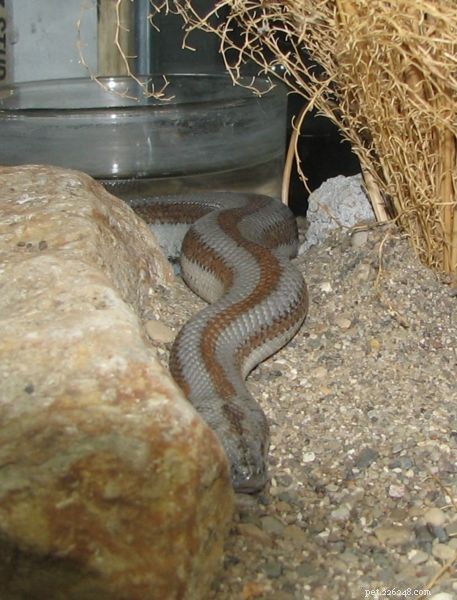
Rosy Boa, Lichanura trivirgata
Common and Red-Tailed Boa Constrictors are among the world’s most popular snakes, but their large size makes them impractical in many collections. The beautiful Rosy Boa, which tops out at a bit over 3 feet long, is a far better choice for most folks.
Many people do not realize that 2 boas are found in the USA, the Rosy and the Rubber Boa (more on this interesting little fellow in the future). Ranging from southern California and southwestern Arizona through Sonora, Mexico, the Rosy Boa is something of a “big snake in a small package”, and provides a great introduction to constrictor-keeping.
Calm in demeanor, it is a good choice for those who want a handle able snake. A wide variety of captive-bred color strains are available, and those wishing to breed snakes will be pleasantly surprised at how cooperative the Rosy Boa can be. They are live bearers, so breeders are spared the trouble of incubating eggs, and the 3-6 young typically produced are large enough to accept pink mice.
Garter Snakes, Thamnophis spp.
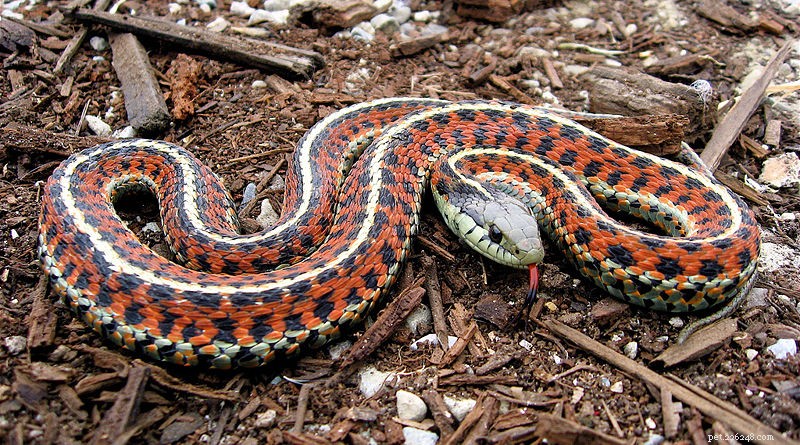 Over 30 species of these attractive, interesting snakes may be found in North America. Garter Snakes are ideal for those who enjoy setting up planted, naturalistic terrariums, where they will readily display all of their normal behaviors and even breed. Their young are born alive, and are easy to rear.
Unlike many snakes, Garters are quite active and have high metabolisms – ideal for those who enjoy feeding their charges. They do well on small fishes and earthworms – a bonus for people who prefer not to use rodents as food.
The San Francisco Garter Snake is one of the scarcest and most colorful of all snakes; others, such as the Butler’s, Eastern and Aquatic Garter Snakes, are often bred by hobbyists. Please see the article below for more on these and other species.
American Ratsnakes and Corn Snakes, Pantherophis obsoleta, P. guttata
These snakes are pet trade staples, and with good reason. Hardy and easy to breed, Ratsnakes are large enough to satisfy those who want a snake of substantial size, yet small enough to be housed comfortably in a 30-55 gallon terrarium (unusually large specimens may exceed 6 feet, but most average 3-4 feet long). Captives have exceeded 30 years of age.
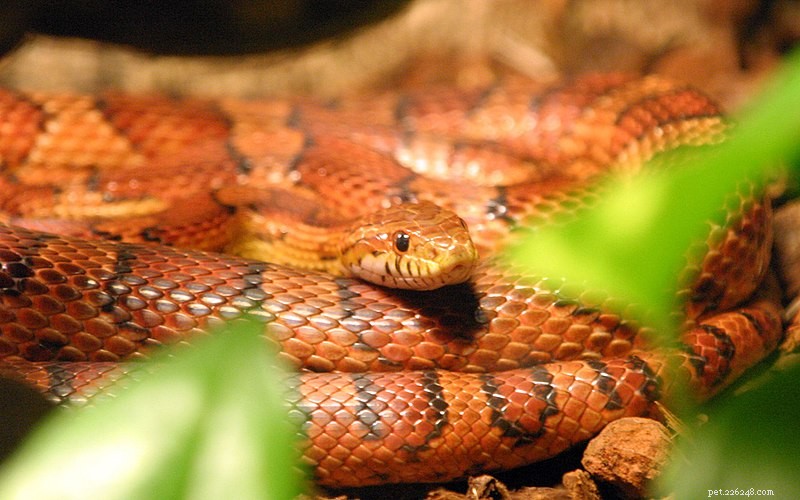 Ratsnake taxonomy has been revised recently, with several former species being eliminated. However, hobbyists tend to retain the older common names – Black, Texas, Gray, Everglades and Yellow Ratsnakes are among the most popular species/races, and a variety of color phases and hybrids have been produced (the Corn Snake, sometimes known as the Red Ratsnake, is available in at least 25 distinct color phases).
Ratsnakes can be defensive, but most calm down quickly. They do well at 72-78 F, with a warmer basking site, readily accept mice and small rats, and provide a great introduction to the breeding of egg-laying snakes.
Eastern Kingsnake, Lampropeltis getula
Another snake enthusiast’s favorite, the 7 subspecies of the Eastern Kingsnake are all well-suited to captivity. Related species, including the California, Desert and Florida Kingsnake, are also well-established in private collections. Most top out at 3-4 feet in length, with rare individuals reaching 6.5 feet.
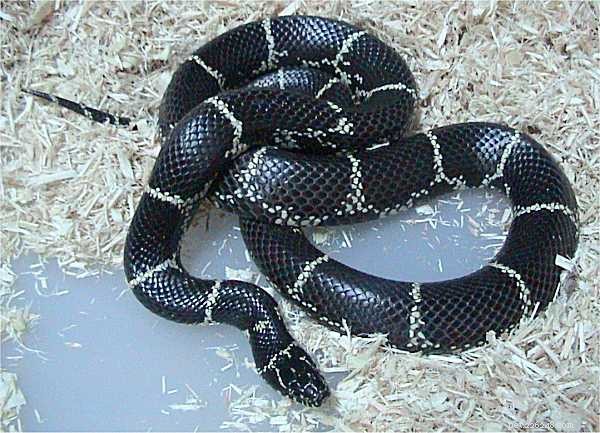 Kingsnakes are known for the unusually wide range of prey they take –venomous snakes (please see video below), lizards, rodents, frogs, turtle eggs, insects and birds are all on the menu. Captives are rarely particular, however, and fare well on mice.
Kingsnakes are quite hardy and breed readily, but cannot tolerate damp conditions. Cannibalism is a definite concern as well, and some individuals persist in trying to swallow one’s fingers – not an aggressive response, just a “sampling” of a new food, perhaps. Care in handling is therefore essential.
Ball or Royal Python, Python regius
This popular, stoutly-built snake gives the appearance of being much larger than its usual 4 foot length (rarely, odd specimens may reach 6 or even 7 feet). Ball Pythons are not very active, and an ideal choice for those who desire a large snake, but lack space.
 Although generally mild in temperament, Ball Pythons can bite when threatened, and so must be handled carefully. Wild caught specimens can be extremely choosy concerning their food, but most these days are captive bred and accept mice and rats. Prolonged fasts are common, and may upset new owners – please see the article below for further information. Albino, pastel and a variety of other color phases are available, but the wild form is also quite spectacular.
- Top Pet-Friendly Carpets for a Clean, Durable Home
- Top 5 Small Pet Snakes for New Owners
- How to Choose the Ideal Pet Snake: A Comprehensive Guide
- Choosing Constricting Snakes as Pets: What You Need to Know
- Top Pet Choices for Seniors: Comfort, Companionship, and Care
- 10 Best Pet-Friendly Gecko Species
- 15 Beginner-Friendly Pet Snakes You Can Care For with Confidence